Fungal extracellular vesicles mediate conserved cross-species communication and immunomodulation
Renan E. A. Piraine, Julia L. Froldi, Henrique T. Oliveira, Patrick W. Santos, Bianca T. M. Oliveira, Caroline P. Rezende, Lucas Alves Tavares, Gabriel E. S. Trentin, Lucas F. B. Nogueira, Arnaldo L. Colombo, Arturo Casadevall, Marcio L. Rodrigues, Fausto Almeida

TL;DR
Fungal extracellular vesicles (EVs) help fungi communicate across species and influence immune responses, potentially offering new targets for treating fungal infections.
Contribution
This study reveals fungal EVs mediate cross-species communication and modulate immune responses, with species-specific effects.
Findings
Fungal EVs associate with recipient cells and increase gene expression linked to antifungal resistance.
EVs enhance biofilm adhesion and dispersion, indicating roles in phenotypic modulation.
EVs trigger pro-inflammatory immune responses in macrophages, with effects varying by species.
Abstract
Extracellular vesicles (EVs) play crucial roles in fungal communication and host immune modulation, representing potential therapeutic targets for fungal infections. This study investigated the role of fungal EVs in both intra- and interspecies communication, focusing on their effects on virulence and immune responses. Co-incubation experiments were performed using EVs derived from Candida albicans and Candidozyma auris to assess interactions with C. albicans planktonic cells and biofilms, as well as Cryptococcus neoformans and Cryptococcus gattii EVs interacting with C. neoformans cultures. EVs were observed associating with recipient cell surfaces, suggesting subsequent internalization. Functional assays revealed that EV exposure led to increased expression of CAP59, LAC1, URE1, and ERG11 genes, correlating with reduced antifungal susceptibility in both planktonic and biofilm forms.…
Genes, proteins, chemicals, diseases, species, mutations and cell lines named across the full text — each resolved to its canonical identifier and authoritative record.
Click any figure to enlarge with its caption.
 Figure 1
 Figure 2
 Figure 3
 Figure 4
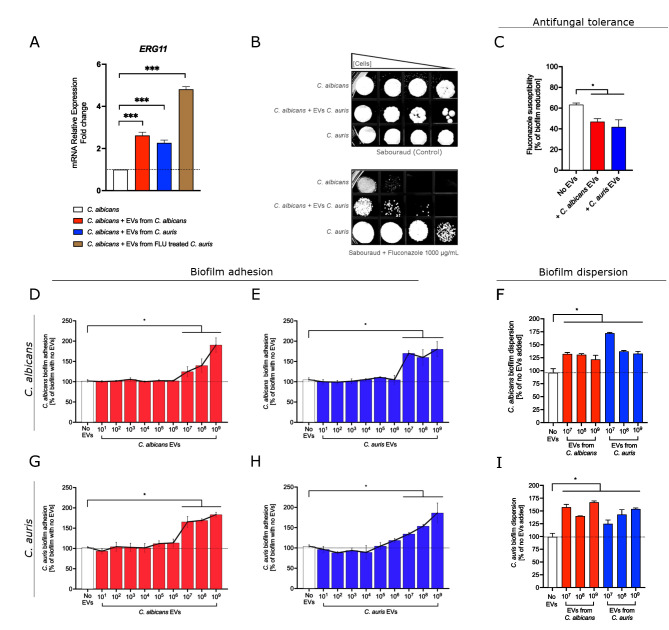 Figure 5
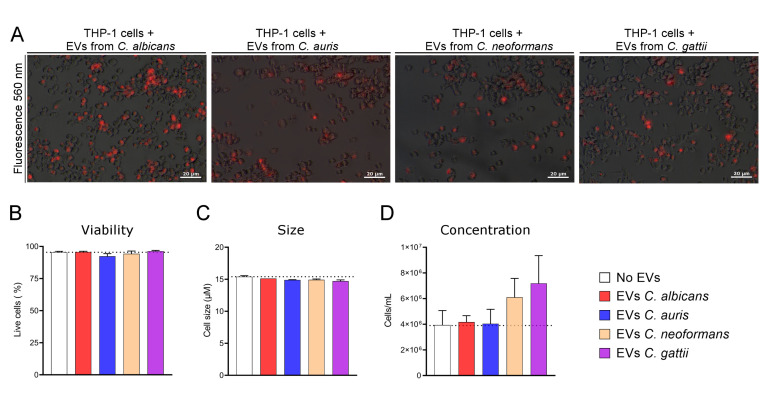 Figure 6
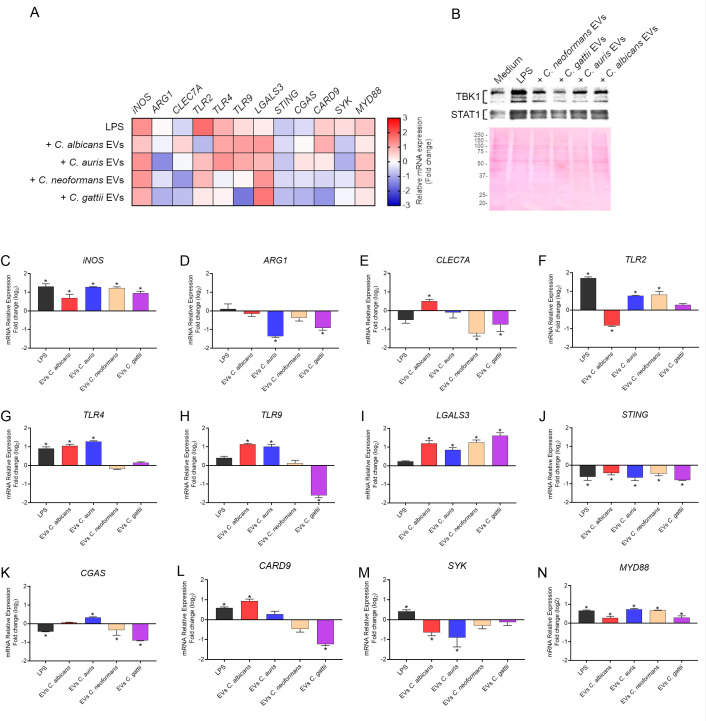 Figure 7
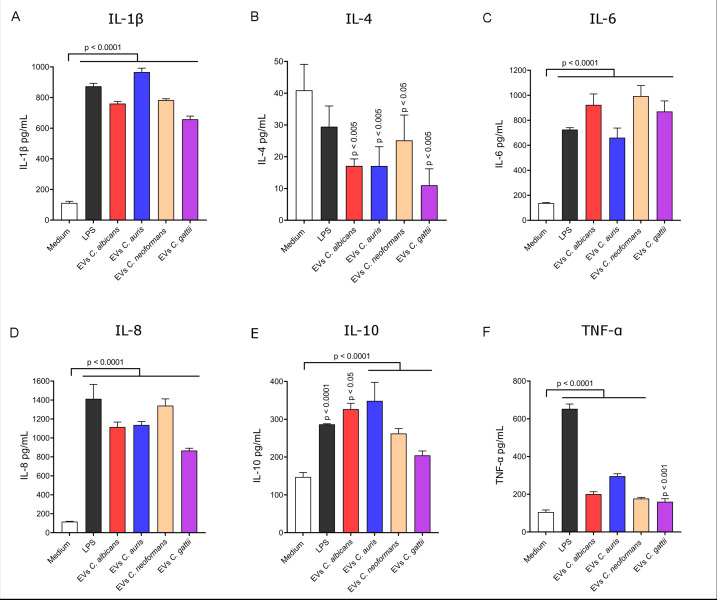 Figure 8
Peer Reviews
No public reviews on file for this paper yet. If you reviewed it on a platform where reviews are public (OpenReview, ICLR, NeurIPS, ICML), you can paste yours below so the community can read it here.
Videos
No videos yet. Explain this paper in a talk, walkthrough, or lecture? Add one.
Taxonomy
TopicsFungal Infections and Studies · Antifungal resistance and susceptibility · Bacterial Infections and Vaccines