Mutations in ERG11, TAC1B, and CDR1 reduce fluconazole accumulation in drug-resistant Candidozyma auris isolates
Brooke D. Esquivel, Amanda Santos, Jeffrey M. Rybak, Darian J. Santana, P. David Rogers, Theodore C. White

TL;DR
The study finds that mutations in ERG11, TAC1B, and CDR1 genes are linked to reduced fluconazole accumulation in drug-resistant Candidozyma auris isolates.
Contribution
The study identifies specific ERG11 mutations as a novel factor in fluconazole resistance and reduced drug accumulation in C. auris.
Findings
Drug-resistant C. auris isolates show significantly reduced fluconazole uptake compared to susceptible isolates.
ERG11 mutations (F126L, K143R, V125/F126L, Y132F, Y501H) correlate with fluconazole resistance and reduced drug accumulation.
Mutations in TAC1B and CDR1 are associated with resistance but do not fully explain reduced drug accumulation.
Abstract
Fluconazole (FLC)-resistant Candidozyma auris isolates have reduced drug accumulation compared to azole-susceptible isolates. Of 119 C. auris isolates, 83 out of 87 resistant isolates (~95%) had extremely low fluconazole uptake, whereas 30 out of 32 susceptible isolates (~93%) had high fluconazole uptake. In search of a genetic explanation for this phenomenon, we compared metadata for TAC1B and CDR1 single-nucleotide polymorphisms (SNPs) and found overlap with many but not all isolates that are FLC resistant. We found that CDR1 mutations are common in resistant isolates from Clade 1, and TAC1B mutations are commonly found in resistant isolates from clades 1 and 3. There is clearly an association between FLC resistance and certain CDR1 and TAC1B polymorphisms, but mutations in these genes do not account for all mechanisms of resistance in this species and do not account for the…
Genes, proteins, chemicals, diseases, species, mutations and cell lines named across the full text — each resolved to its canonical identifier and authoritative record.
Click any figure to enlarge with its caption.
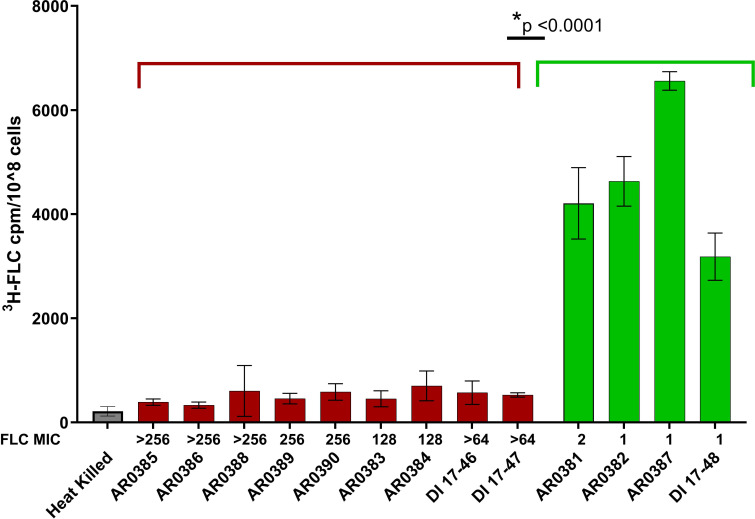 Figure 1
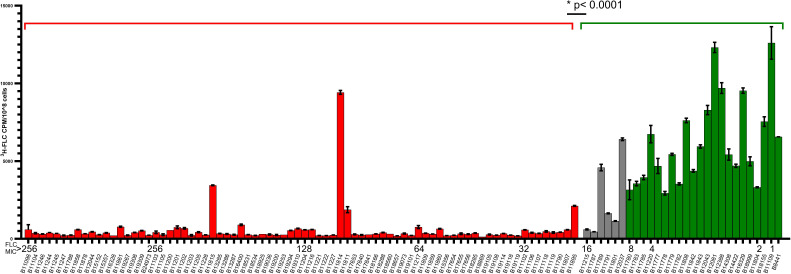 Figure 2
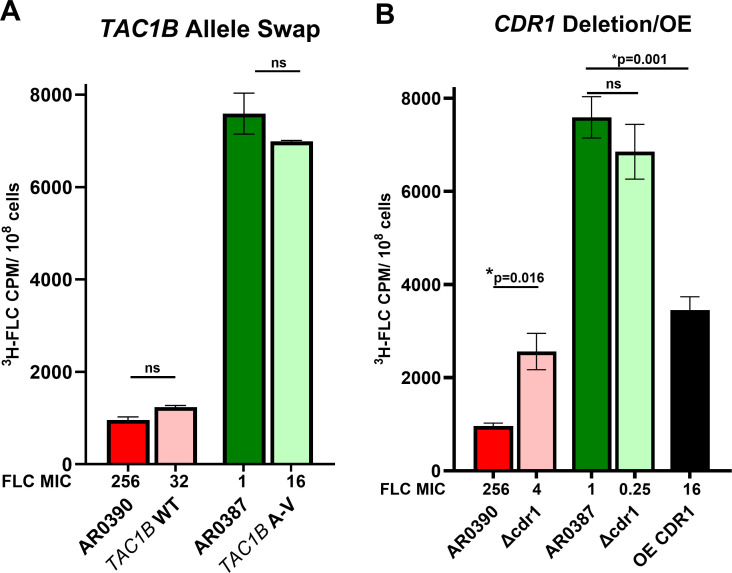 Figure 3
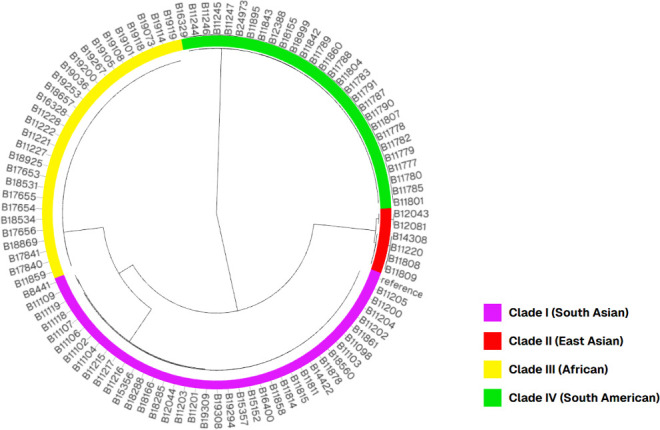 Figure 4
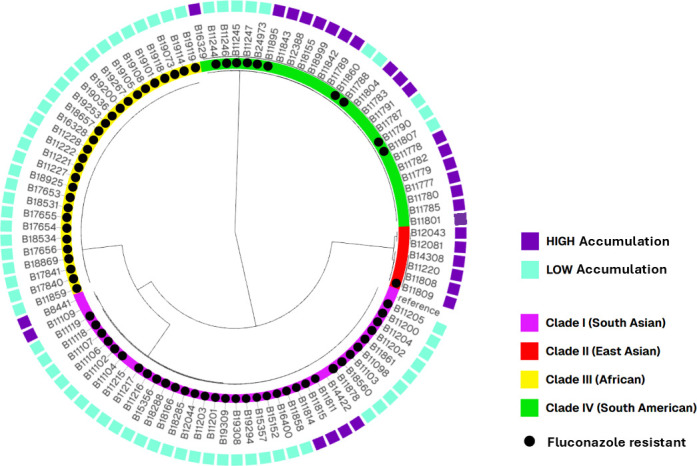 Figure 5
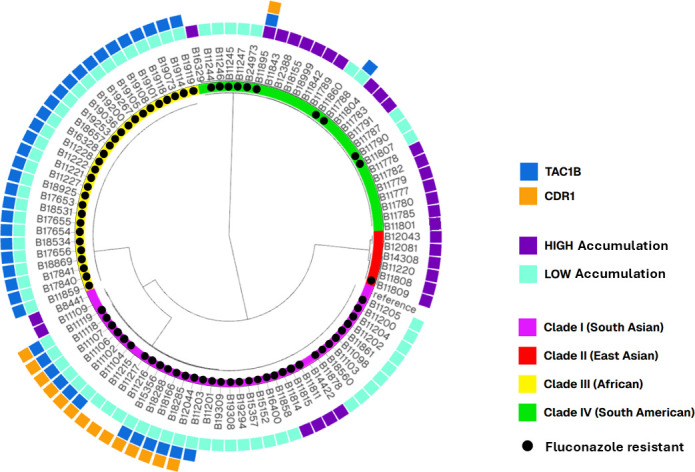 Figure 6
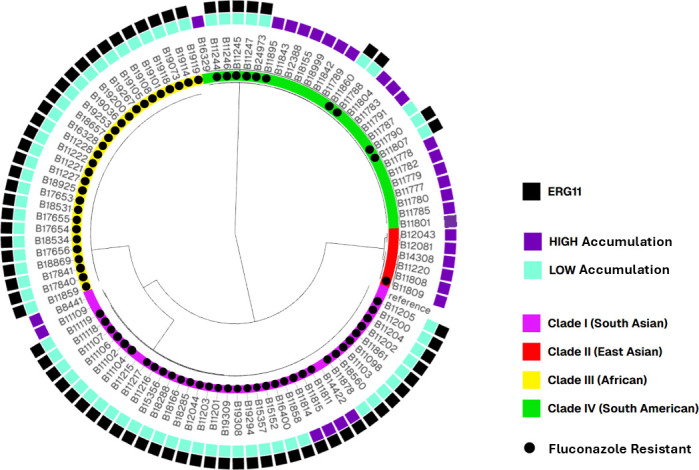 Figure 7
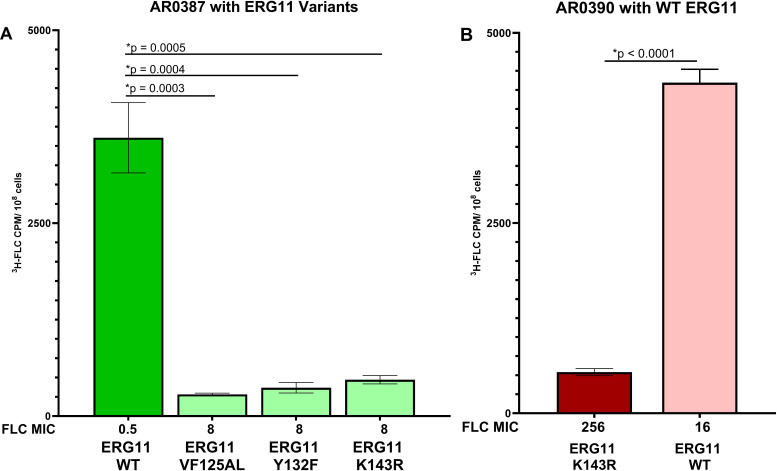 Figure 8
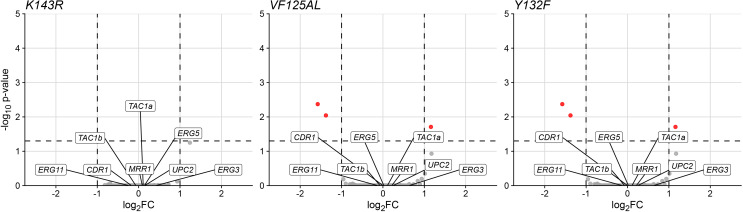 Figure 9
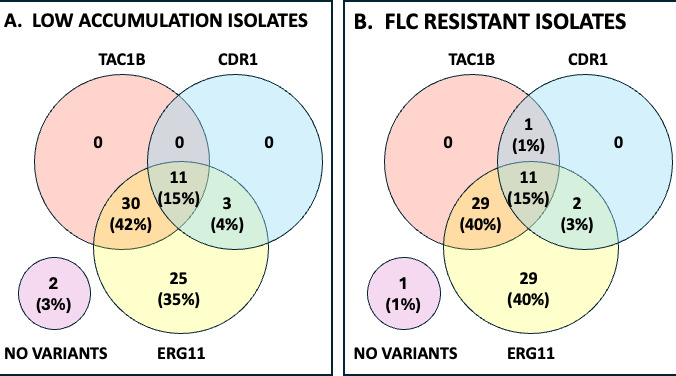 Figure 10
 Figure 11
 Figure 12
 Figure 13
 Figure 14
 Figure 15
 Figure 16
 Figure 17
Peer Reviews
No public reviews on file for this paper yet. If you reviewed it on a platform where reviews are public (OpenReview, ICLR, NeurIPS, ICML), you can paste yours below so the community can read it here.
Videos
No videos yet. Explain this paper in a talk, walkthrough, or lecture? Add one.
Taxonomy
TopicsAntifungal resistance and susceptibility · Infectious Diseases and Mycology · Nail Diseases and Treatments