Disruption of methionine synthesis repressor makes Escherichia coli mutualistic to host stinkbug
Yayun Wang, Ryuichi Koga, Minoru Moriyama, Takema Fukatsu

TL;DR
A single-gene mutation in E. coli makes it beneficial to a stinkbug host by increasing essential amino acid production.
Contribution
A single-gene mutation in E. coli can transform it into a mutualistic symbiont for a stinkbug host.
Findings
Disruption of metJ in E. coli increases hemolymphal methionine levels and improves stinkbug adult emergence rates.
Tryptophan-overproducing E. coli mutants also improve stinkbug emergence but affect adult body color.
Combining methionine and tryptophan mutations in E. coli reduces rather than enhances host fitness.
Abstract
Degenerative genome evolution is widely found among obligatory bacterial mutualists, as observed in plant-sucking hemipteran insects whose symbiont genomes are highly reduced and specialized for provisioning of essential amino acids. Originally, such symbionts must have been derived from environmental free-living bacteria. It is elusive, however, what evolutionary changes are involved in the early stages of such elaborate mutualistic associations. Here, we addressed this evolutionary question using the experimental symbiotic system consisting of the stinkbug Plautia stali and the model bacterium Escherichia coli. In E. coli, metJ encodes a repressor of the methionine synthesis pathway, and its disruption upregulates production of the essential amino acid methionine. We found that, when metJ-disrupted E. coli was inoculated to P. stali, the insects exhibited significantly elevated…
Genes, proteins, chemicals, diseases, species, mutations and cell lines named across the full text — each resolved to its canonical identifier and authoritative record.
Click any figure to enlarge with its caption.
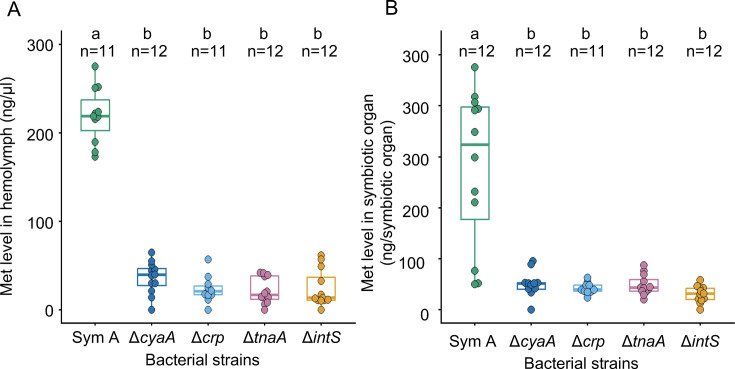 Figure 1
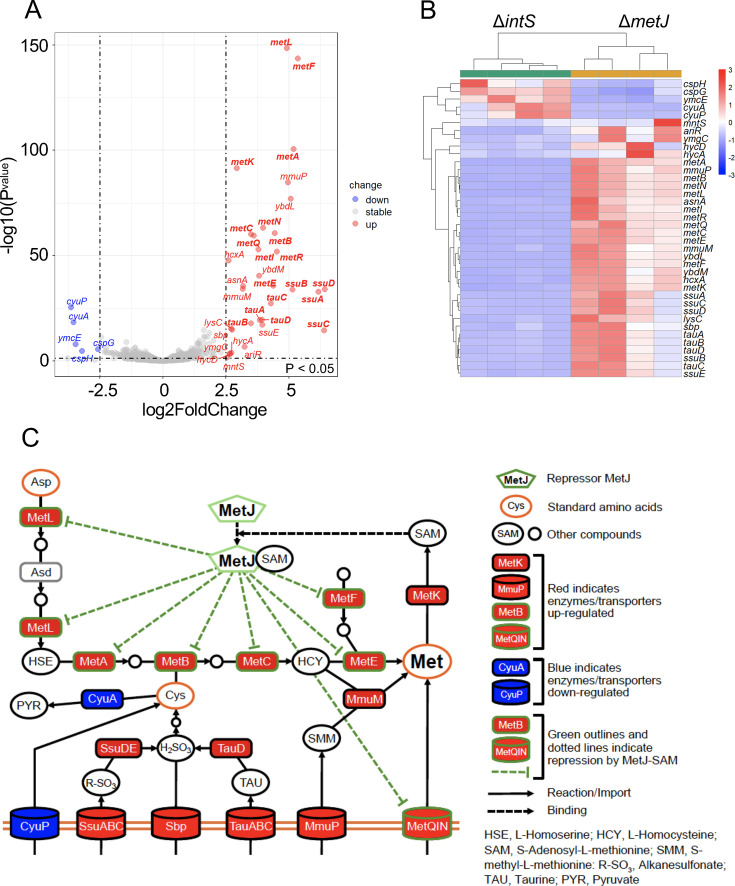 Figure 2
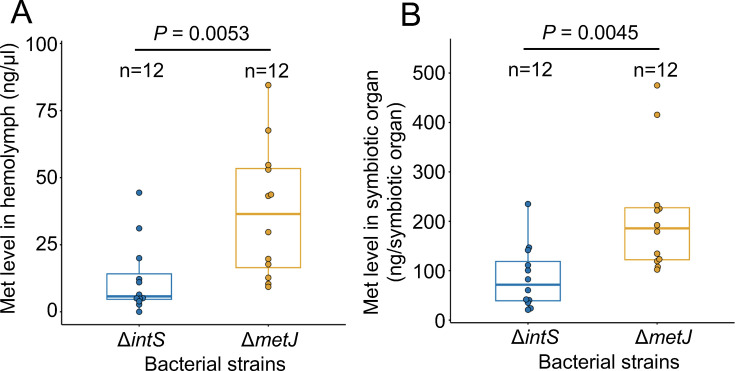 Figure 3
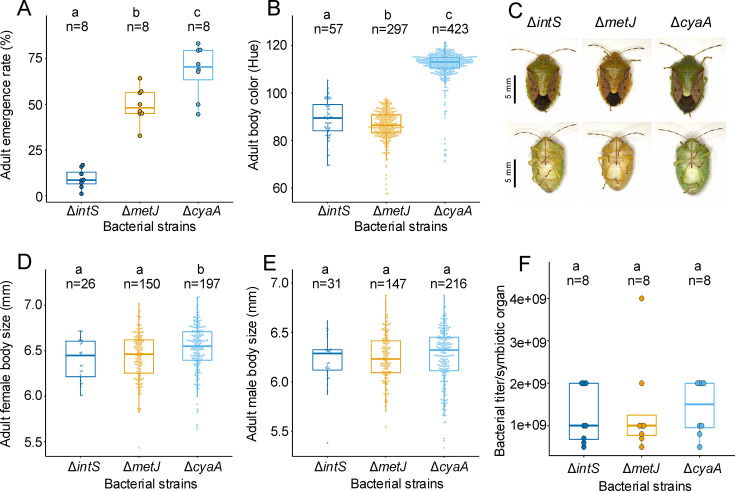 Figure 4
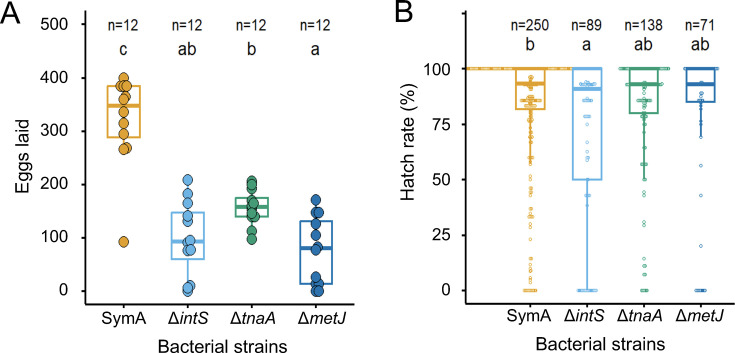 Figure 5
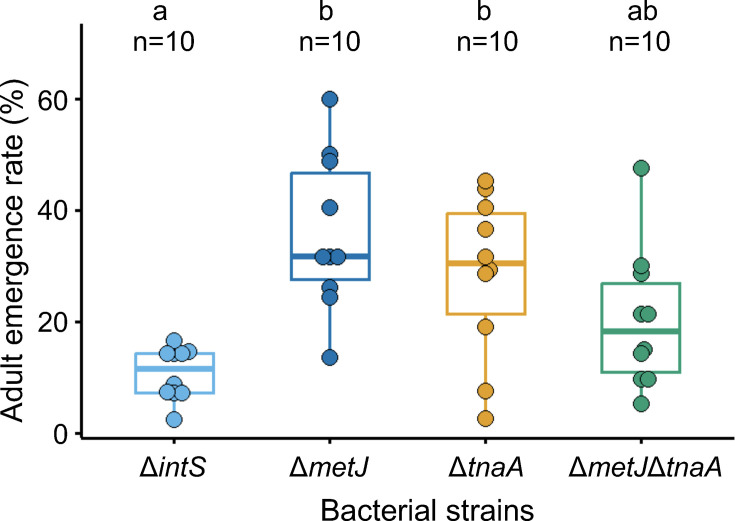 Figure 6
Peer Reviews
No public reviews on file for this paper yet. If you reviewed it on a platform where reviews are public (OpenReview, ICLR, NeurIPS, ICML), you can paste yours below so the community can read it here.
Videos
No videos yet. Explain this paper in a talk, walkthrough, or lecture? Add one.
Taxonomy
TopicsInsect symbiosis and bacterial influences · Insect-Plant Interactions and Control · Invertebrate Immune Response Mechanisms