Proteome microarray-guided identification of mycobacterial antigens and ELISA-based peptide mapping for improved serological detection of Mycobacterium bovis infection in European badgers
Gareth A. Williams, Sabah Rahou, Ollie Bateman, Andy A. Teng, Angela Yee, Joseph J. Campo, Laura Arnold, Richard J. Delahay, Thomas Holder, Dipesh Davé, Mark A. Chambers, H. Martin Vordermeier

TL;DR
Researchers identified a new protein, Rv3616c, that improves detection of tuberculosis in badgers, which could help control the spread of the disease to cattle.
Contribution
A novel antigen, Rv3616c, was discovered using proteome microarrays and peptide mapping, offering improved diagnostic accuracy for Mycobacterium bovis infection in badgers.
Findings
Rv3616c-based ELISA achieved 85.71% sensitivity and 94.80% specificity in detecting M. bovis infection in badgers.
Combining Rv3616c ELISA with an existing test increased overall sensitivity to 91.84% with minimal loss of specificity.
The Rv3616c-derived peptides are scalable and adaptable for use in various diagnostic platforms.
Abstract
Bovine tuberculosis, a zoonotic disease caused primarily by Mycobacterium bovis, poses a significant threat to cattle health and farming livelihoods within the United Kingdom (UK). Disease control in cattle is complicated by the persistence of M. bovis in European badgers, the UK’s principal wildlife reservoir. Accurate diagnostic tools for both species are essential for effective surveillance and disease control. Many existing badger serodiagnostic tests, which include MPB70, MPB83, and ESAT6-CFP10 antigens, have relatively modest sensitivities (~50%–60%), limiting their utility in surveillance. To address this issue, we used an unbiased and comprehensive antigen discovery approach to identify new diagnostic targets. This strategy identified Rv3616c as a novel antigen with promising diagnostic test potential for M. bovis infection in badgers. Overlapping peptides spanning the full…
Genes, proteins, chemicals, diseases, species, mutations and cell lines named across the full text — each resolved to its canonical identifier and authoritative record.
Click any figure to enlarge with its caption.
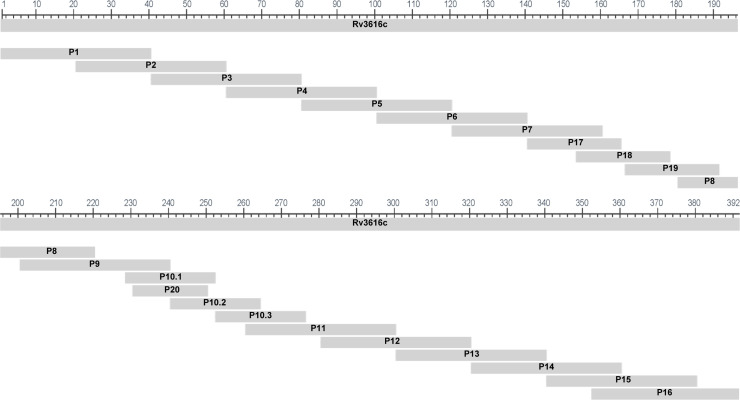 Figure 1
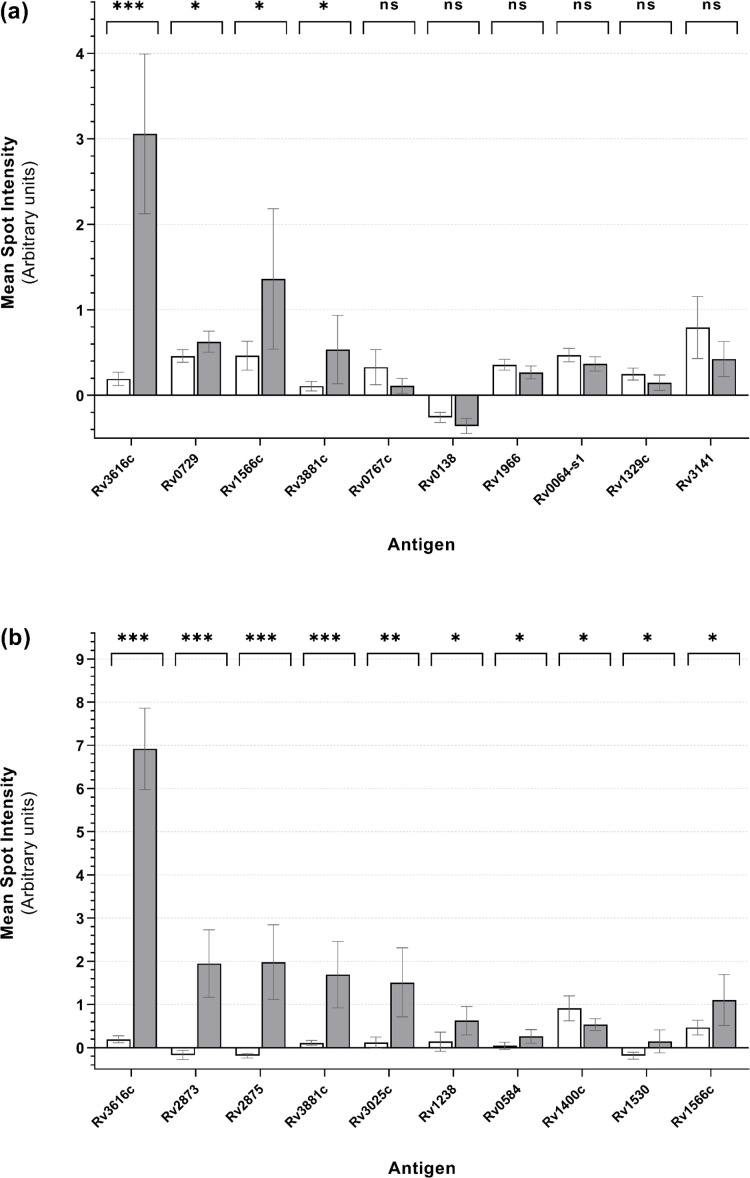 Figure 2
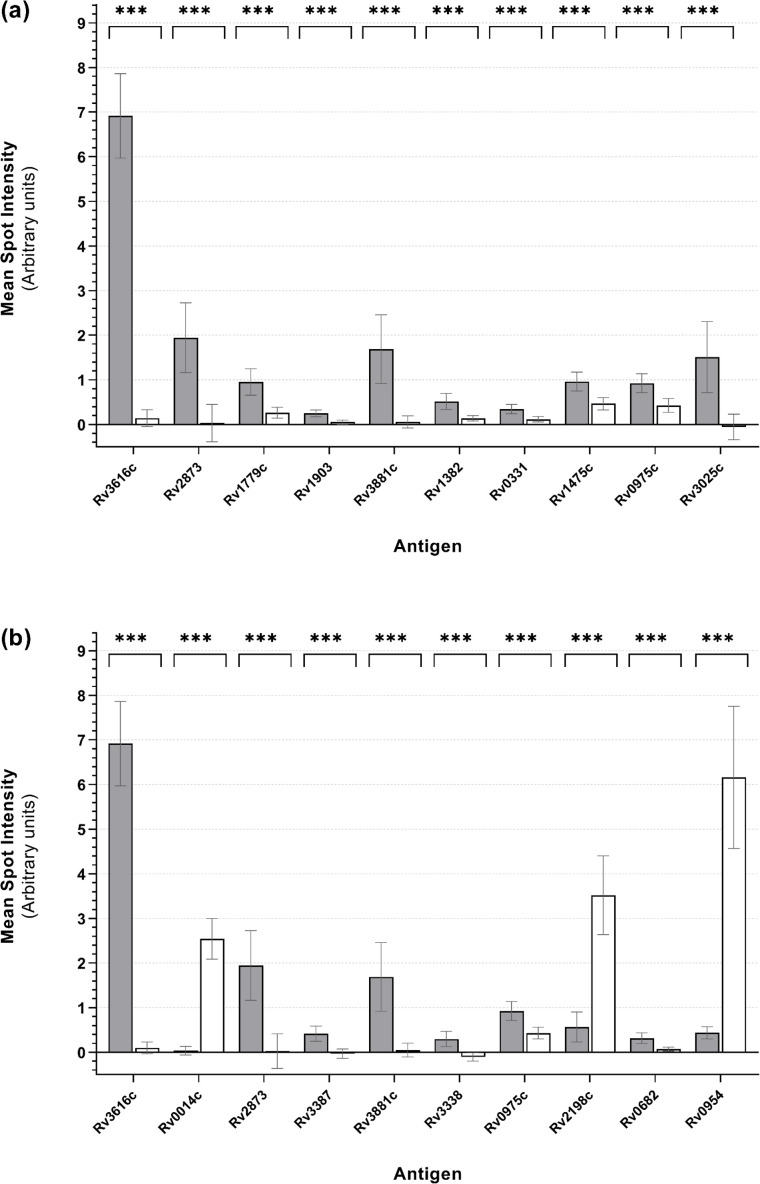 Figure 3
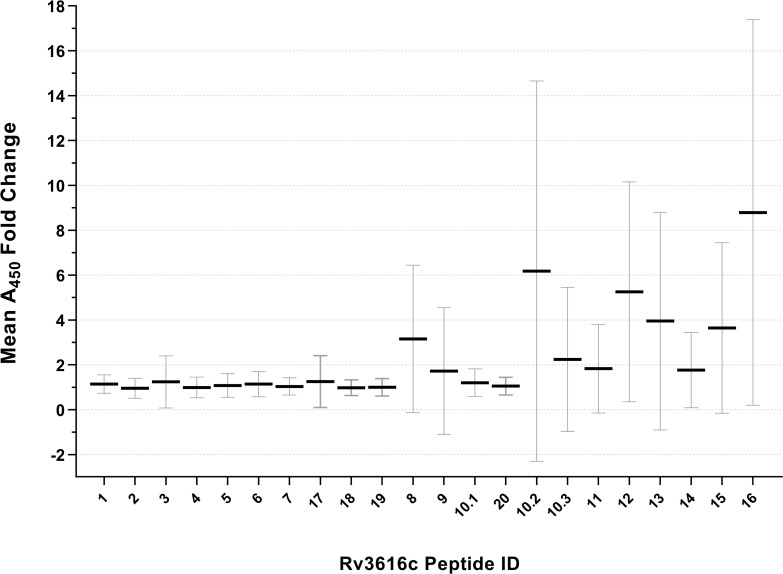 Figure 4
Peer Reviews
No public reviews on file for this paper yet. If you reviewed it on a platform where reviews are public (OpenReview, ICLR, NeurIPS, ICML), you can paste yours below so the community can read it here.
Videos
No videos yet. Explain this paper in a talk, walkthrough, or lecture? Add one.
Taxonomy
TopicsTuberculosis Research and Epidemiology · Mycobacterium research and diagnosis · Image Processing Techniques and Applications