Analytical and clinical performance of in-house and commercial real-time PCR assays for diagnosing L. infantum visceral leishmaniasis: a study from a hub center in Northern Italy
Tommaso Gritti, Beatrice Mola, Lisa Argnani, Bianca Granozzi, Michele Bacchiega, Fraia Melchionda, Arianna Dondi, Giacomo Nigrisoli, Silvia Castaldini, Luca Prodi, Tiziana Lazzarotto, Matt Denwood, Stefania Varani, Margherita Ortalli

TL;DR
This study compares three PCR tests for diagnosing visceral leishmaniasis and finds that the kDNA-targeting test is the most sensitive for detecting low levels of the parasite in blood.
Contribution
The study demonstrates that kDNA-based PCR is more sensitive than rDNA-based assays for diagnosing visceral leishmaniasis in clinical settings.
Findings
The in-house kDNA PCR showed the highest analytical and clinical sensitivity for detecting L. infantum DNA.
The kDNA PCR had slightly lower specificity (95%) compared to rDNA assays (100%) in clinical samples.
All three PCR assays showed excellent agreement in identifying VL cases (Cohen’s Kappa ≥ 0.9).
Abstract
Molecular methods are increasingly used to diagnose visceral leishmaniasis (VL), a life-threatening disease caused by Leishmania infantum in the Mediterranean basin. In this study, we compared the analytical and clinical performances of three real-time polymerase chain reaction (PCR) assays used for VL diagnosis at the University Hospital of Bologna, Northern Italy. The first test, which is commercially available, targets the small subunit of the 18S ribosomal RNA gene of Leishmania (rDNA). The second and third methods, developed in-house, target the rDNA and the kinetoplast minicircle conserved region (kDNA). The three PCR assays were performed on standard samples prepared using a L. infantum reference strain, as well as on 90 peripheral blood samples from patients with clinical suspicion of VL. Among these, 33 were confirmed as VL cases. The in-house kDNA PCR exhibited the highest…
Genes, proteins, chemicals, diseases, species, mutations and cell lines named across the full text — each resolved to its canonical identifier and authoritative record.
Click any figure to enlarge with its caption.
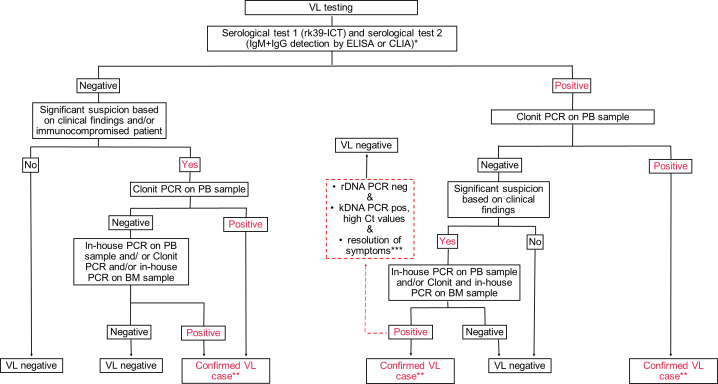 Figure 1
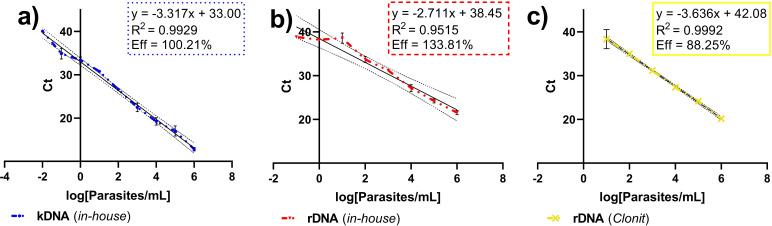 Figure 2
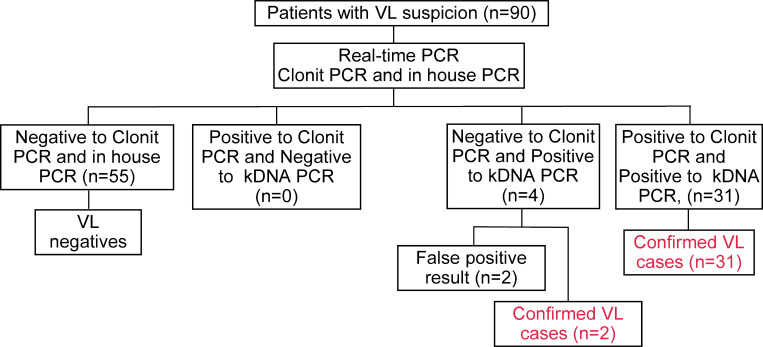 Figure 3
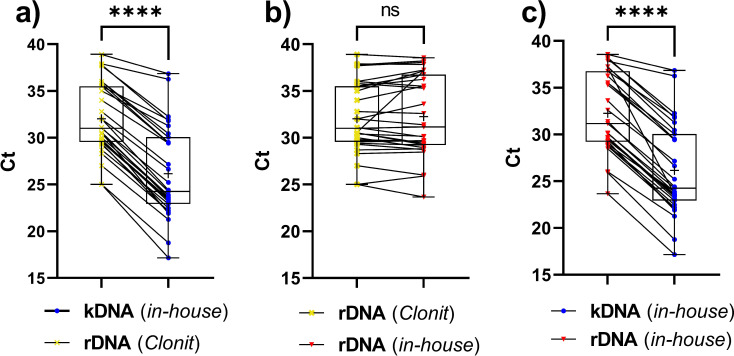 Figure 4
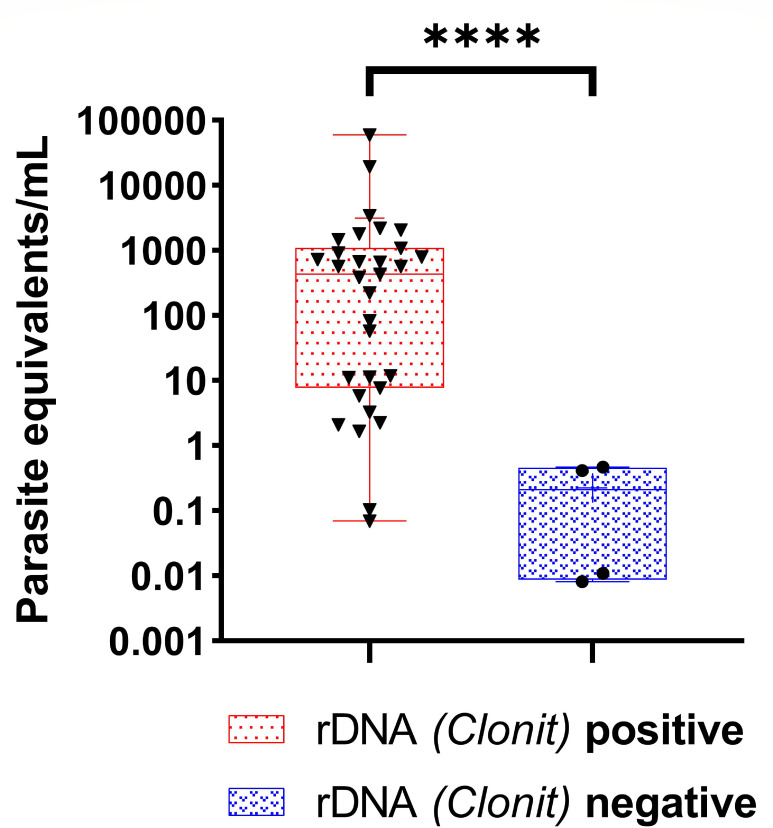 Figure 5
Peer Reviews
No public reviews on file for this paper yet. If you reviewed it on a platform where reviews are public (OpenReview, ICLR, NeurIPS, ICML), you can paste yours below so the community can read it here.
Videos
No videos yet. Explain this paper in a talk, walkthrough, or lecture? Add one.
Taxonomy
TopicsResearch on Leishmaniasis Studies · Parasites and Host Interactions · Trypanosoma species research and implications