c-di-AMP–DasR signaling axis mediates mycobacterial acid resistance
Yu Fu, Xue-Qin Xie, Zhan-Hui Xu, Yi-Fan Liang, Shi-Qi Yang, Bang-Ce Ye, Di You

TL;DR
The study reveals how Mycobacterium tuberculosis survives acidic conditions inside the host by using a signaling pathway involving c-di-AMP and the DasR protein.
Contribution
The discovery of DasR as a pH-sensitive c-di-AMP receptor that regulates acid resistance in mycobacteria through a multilayer network.
Findings
DasR binds c-di-AMP with 20-fold higher affinity under acidic conditions, linking environmental pH to transcriptional responses.
DasR regulates stress metabolite pathways and upregulates HtpG, a chaperone that stabilizes the DasR complex during acid stress.
The c-di-AMP–DasR pathway represents an evolutionarily optimized system for mycobacterial acid resistance and persistence.
Abstract
Pathogenic mycobacteria encounter acidic environments during host invasion, necessitating sophisticated acid resistance mechanisms. Here, we identify the GntR family regulator DasR as a conserved cyclic di-AMP (c-di-AMP) receptor in Mycobacterium tuberculosis that orchestrates acid adaptation through a multilayer network. Biochemical analyses demonstrated that DasR binds c-di-AMP with 20-fold higher affinity under acidic conditions than under neutral conditions, as evidenced by a Kd shift from 226 μM to 11.4 μM. This pH-sensitive binding aligns with acidified host niches during infection. ChIP-seq revealed that DasR directly targets nucleotide second-messenger metabolism genes, dynamically balancing intracellular pools of (p)ppGpp, cyclic AMP (cAMP), and c-di-AMP via positive feedback regulation. Concurrently, DasR upregulated the expression of the molecular chaperone HtpG, which…
Genes, proteins, chemicals, diseases, species, mutations and cell lines named across the full text — each resolved to its canonical identifier and authoritative record.
Click any figure to enlarge with its caption.
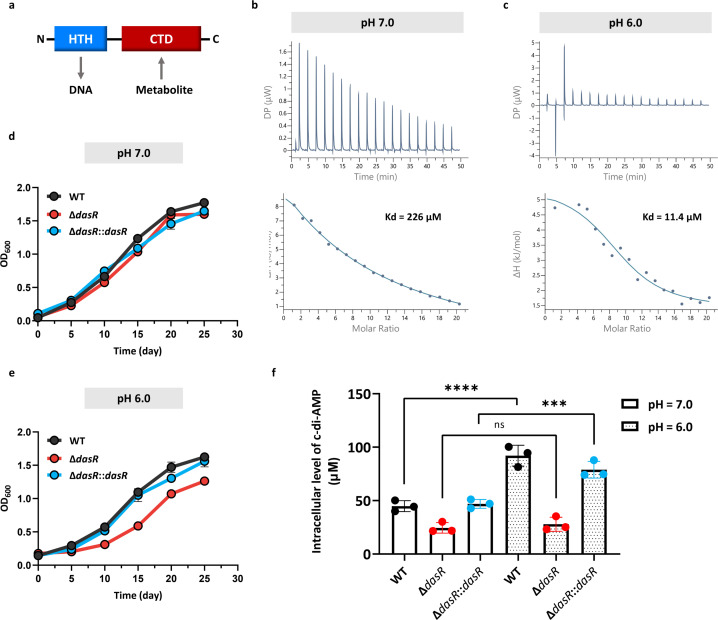 Figure 1
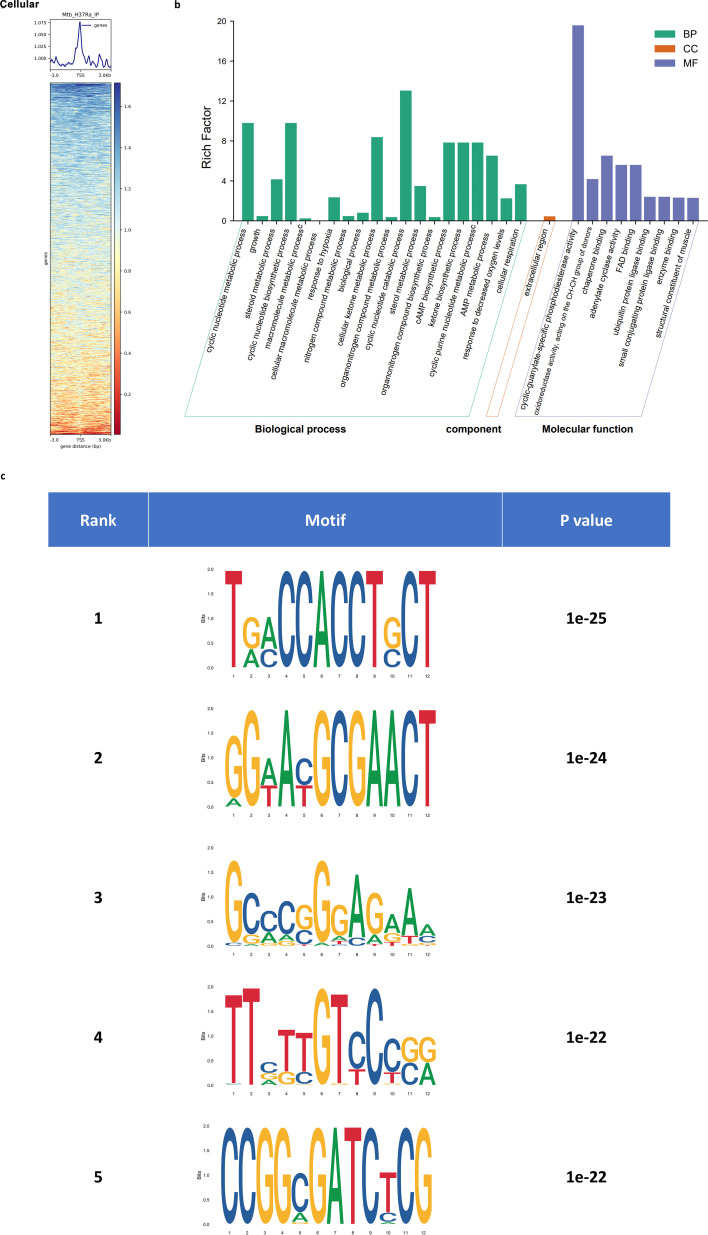 Figure 2
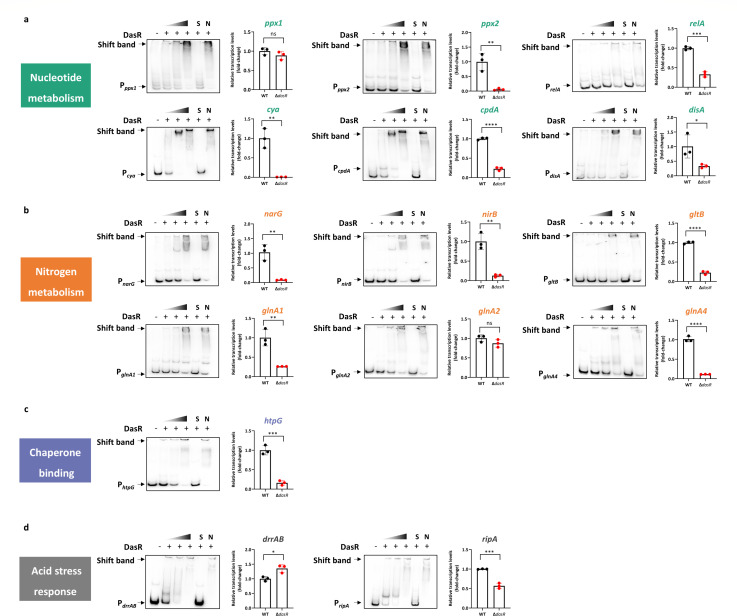 Figure 3
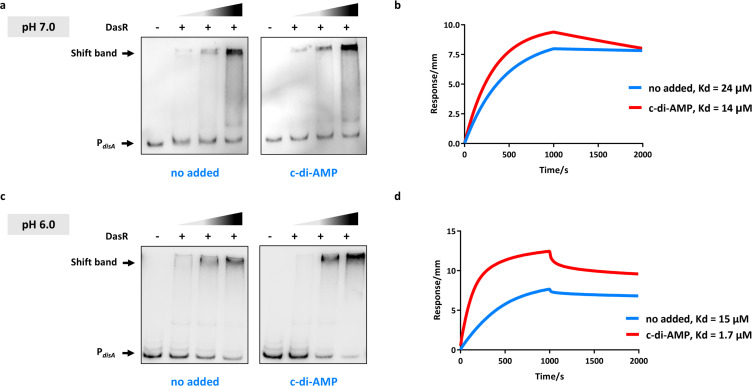 Figure 4
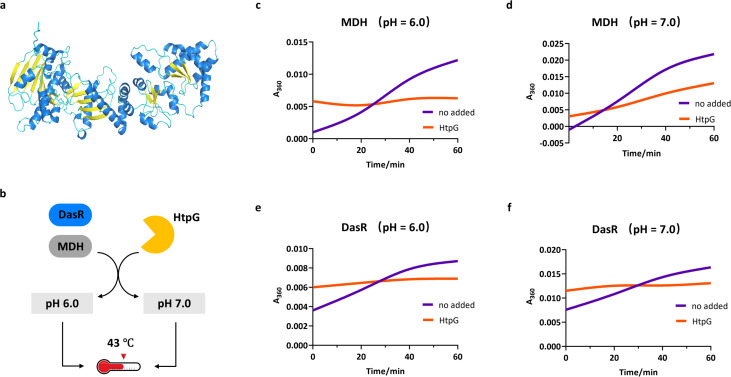 Figure 5
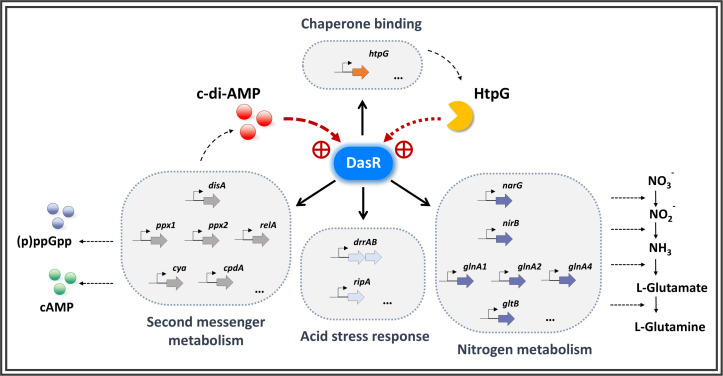 Figure 6
Peer Reviews
No public reviews on file for this paper yet. If you reviewed it on a platform where reviews are public (OpenReview, ICLR, NeurIPS, ICML), you can paste yours below so the community can read it here.
Videos
No videos yet. Explain this paper in a talk, walkthrough, or lecture? Add one.
Taxonomy
TopicsTuberculosis Research and Epidemiology · Bacterial Genetics and Biotechnology · Pneumonia and Respiratory Infections