Genomic population structure, antimicrobial susceptibility, and clinical features of Mycobacterium xenopi isolates, Frankfurt, Germany, 1995–2020
Margo Diricks, Lisa Marschall, Teodora Biciusca, Ann-Sophie Zielbauer, Max Kevane-Campbell, Martin Kuhns, Sönke Andres, Stefan Niemann, Thomas A. Wichelhaus, Nils Wetzstein

TL;DR
This study analyzed M. xenopi isolates from Germany to understand their genetic structure, drug resistance, and clinical relevance, finding clusters that suggest long-term transmission.
Contribution
The study provides the largest genomic dataset of M. xenopi to date and identifies hospital-associated transmission clusters and drug susceptibility patterns.
Findings
Only 26.5% of patients met criteria for clinically relevant NTM-PD.
Three large hospital-associated clusters persisted for over 18 years.
Clofazimine and most guideline drugs showed good in vitro efficacy, except rifampicin.
Abstract
Mycobacterium xenopi causes non-tuberculous mycobacterial pulmonary disease (NTM-PD) that is difficult to treat. However, data on the genomic population structure, antimicrobial susceptibility, and the clinical significance of this pathogen remain scarce. We analyzed 76 clinical M. xenopi isolates from 70 patients collected between 1995 and 2020 in Frankfurt am Main, Germany. All isolates underwent phenotypic drug susceptibility testing and whole-genome sequencing. Cluster analysis, including isolates from this study and all hitherto available high-quality M. xenopi genome data sets in the Sequence Read Archive (n = 11), was performed by core genome multilocus sequence typing. In our cohort, only 26.5% of patients met criteria for clinically relevant NTM-PD. Phylogenetic analysis identified three large hospital-associated clusters (≤10 allelic difference), each involving between 7 and…
Genes, proteins, chemicals, diseases, species, mutations and cell lines named across the full text — each resolved to its canonical identifier and authoritative record.
Click any figure to enlarge with its caption.
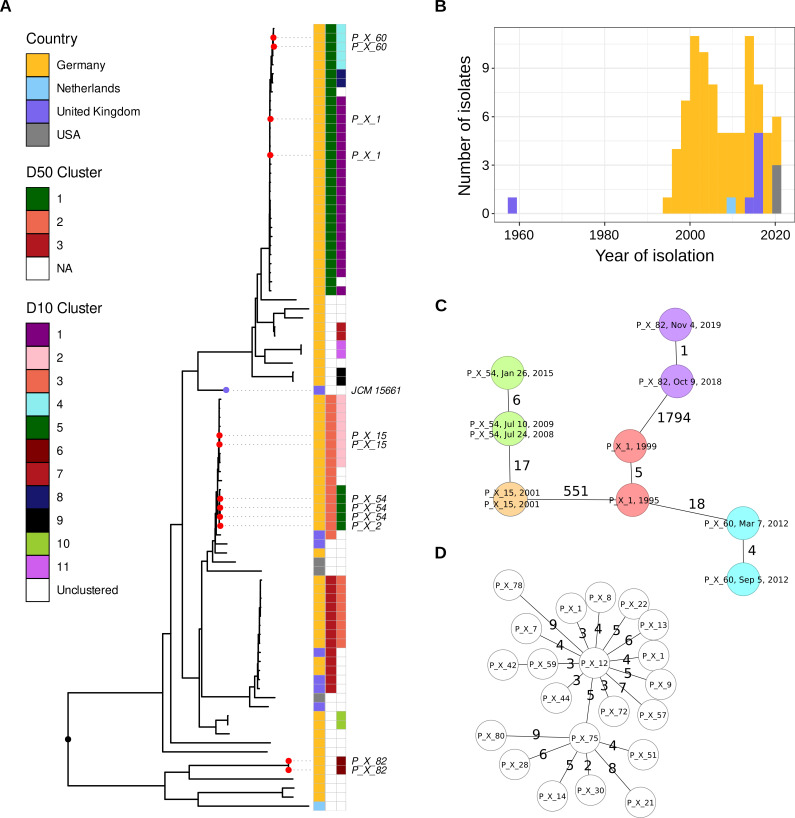 Figure 1
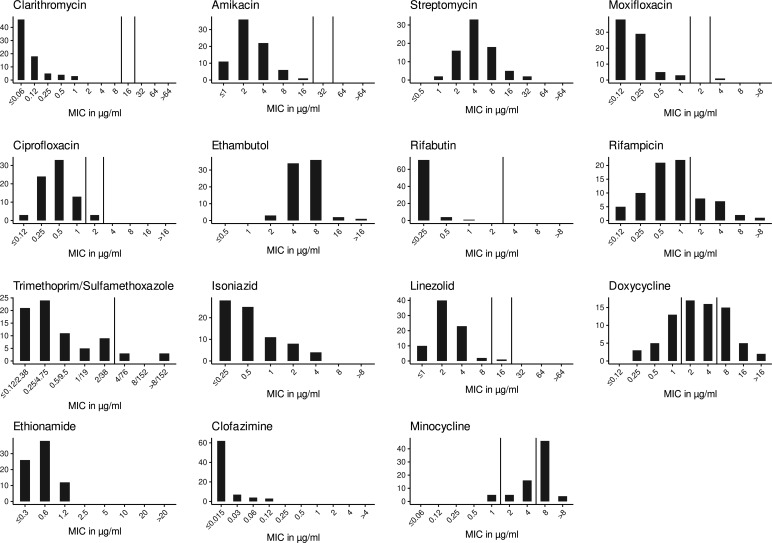 Figure 2
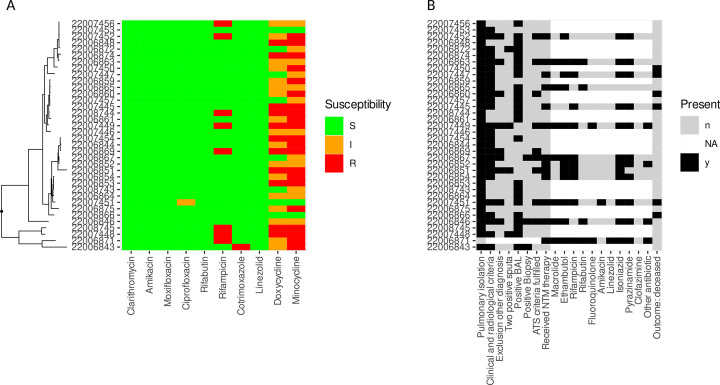 Figure 3
Peer Reviews
No public reviews on file for this paper yet. If you reviewed it on a platform where reviews are public (OpenReview, ICLR, NeurIPS, ICML), you can paste yours below so the community can read it here.
Videos
No videos yet. Explain this paper in a talk, walkthrough, or lecture? Add one.
Taxonomy
TopicsMycobacterium research and diagnosis · Tuberculosis Research and Epidemiology · Diagnosis and treatment of tuberculosis