Staphylococcus species infected by a bacteriophage with a tail that is both curved and contractile
Sabrina Suhani, Yan Li, Laura Perlaza-Jiménez, Denis Korneev, Cara Press, Tze Y. Thung, Han-Chung Lee, Joshua J. Iszatt, Ralf B. Schittenhelm, Christopher J. Stubenrauch, Rhys A. Dunstan, Joshua M. Hardy, Anthony Kicic, Trevor Lithgow

TL;DR
A new bacteriophage with a unique curved and contractile tail was found to infect multiple Staphylococcus species, including drug-resistant strains.
Contribution
Discovery of a novel phage with a morphologically distinct tail and broad host range across Staphylococcus species.
Findings
Phage JS1 infects seven non-aureus Staphylococcus species and clinical S. aureus strains, including methicillin-resistant isolates.
JS1 has a 252 nm long, curved, contractile tail with a 1/R curvature value of 7.6 ± 1.3 μm−1, distinct from known phage morphotypes.
JS1 encodes hydrolases, including JS1_0224, which etches the Staphylococcal cell wall.
Abstract
Using a selective plating strategy for staphylococci, we surveyed the local community wastewater and purified 16 independent isolates representing the following seven species of Staphylococcus: S. cohnii, S. equorum, S. lentus, S. nepalensis, S. sciuri, S. shinii, and S. xylosus. Staphylococcus aureus was not detected. The wastewater also served as a source to identify a bacteriophage (phage), referred to here as JS1, that could infect all these species of Staphylococcus, as well as a range of clinical S. aureus strains, including methicillin-resistant isolates. The class Caudoviricetes are tailed phages, and classification systems recognize the following three major morphotypes: the Myo-like (medium-to-long, straight, contractile tails), Sipho-like (long, flexible, non-contractile tails), and Podo-like (very short, rigid tails). Electron microscopy showed that JS1 virions have 252 nm…
Genes, proteins, chemicals, diseases, species, mutations and cell lines named across the full text — each resolved to its canonical identifier and authoritative record.
Click any figure to enlarge with its caption.
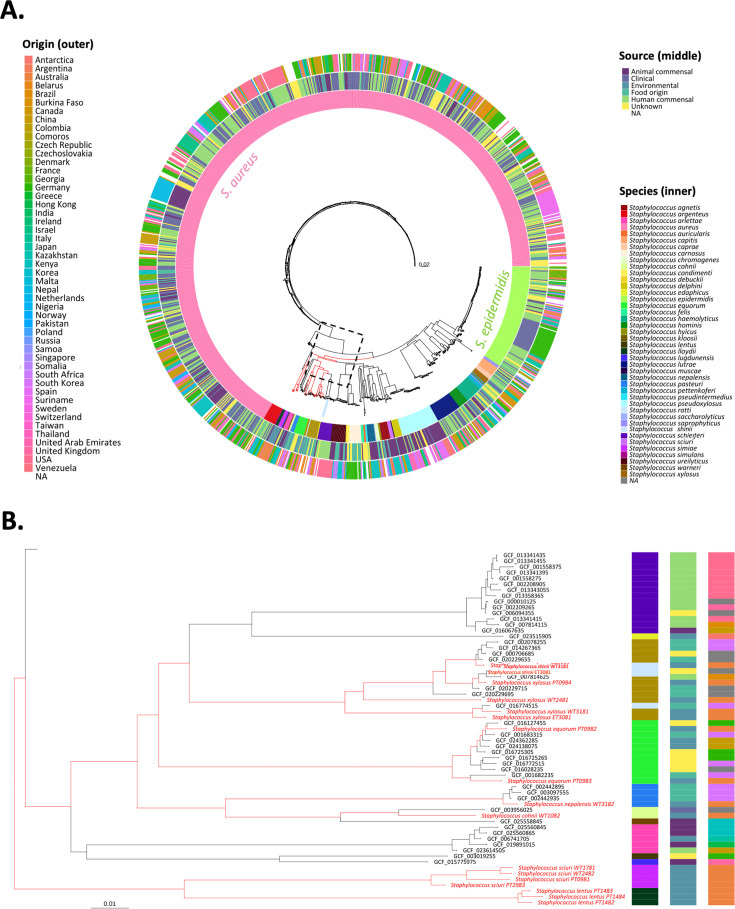 Figure 1
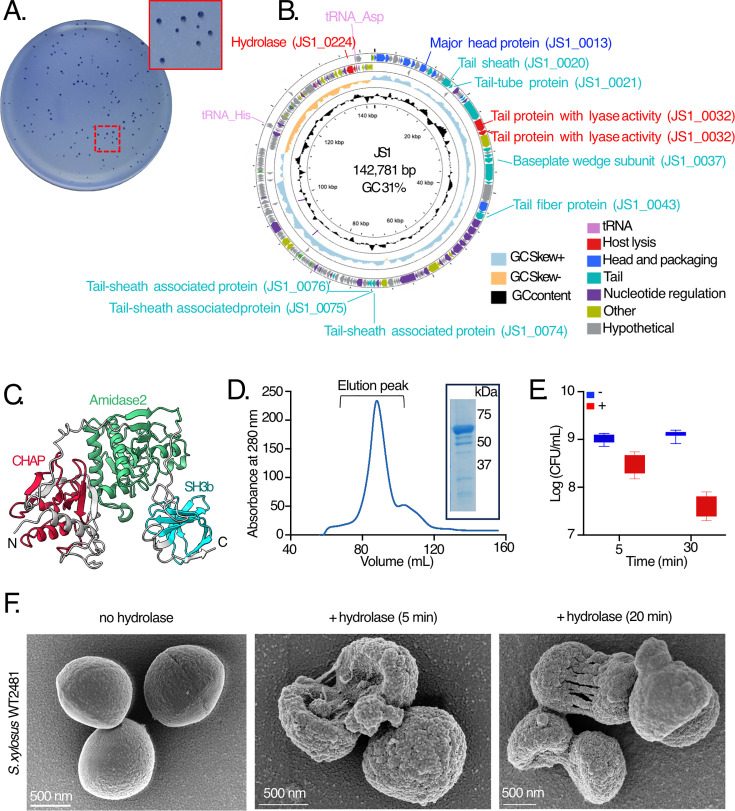 Figure 2
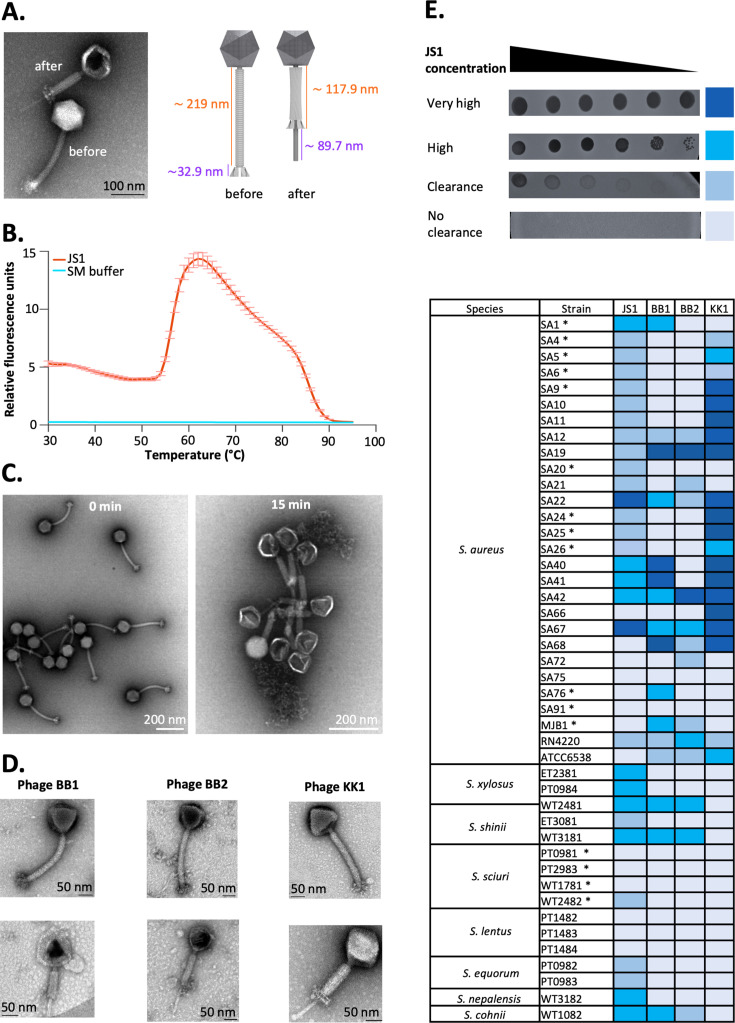 Figure 3
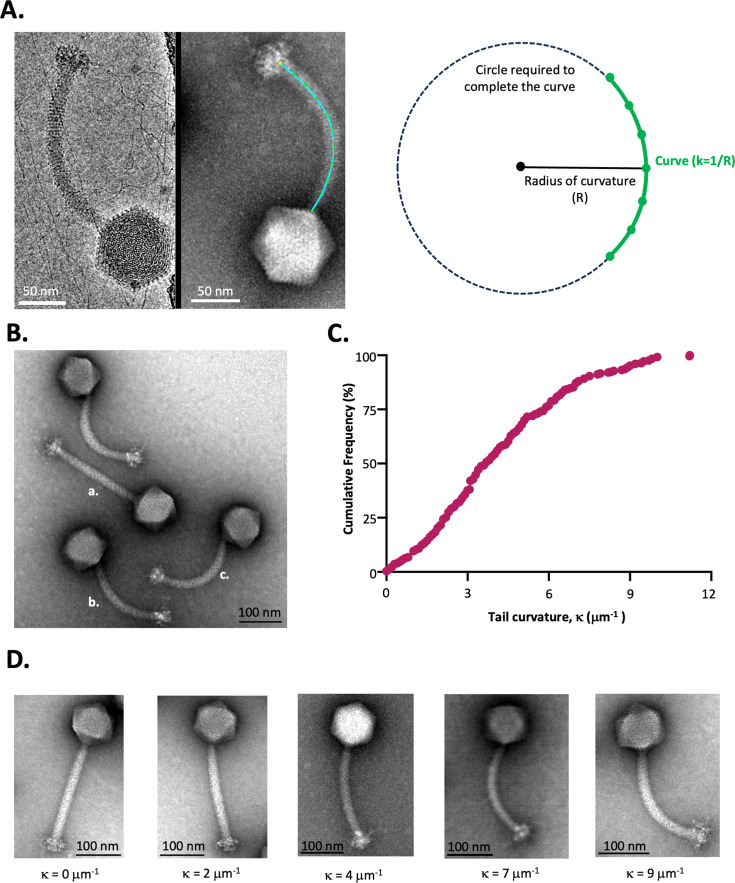 Figure 4
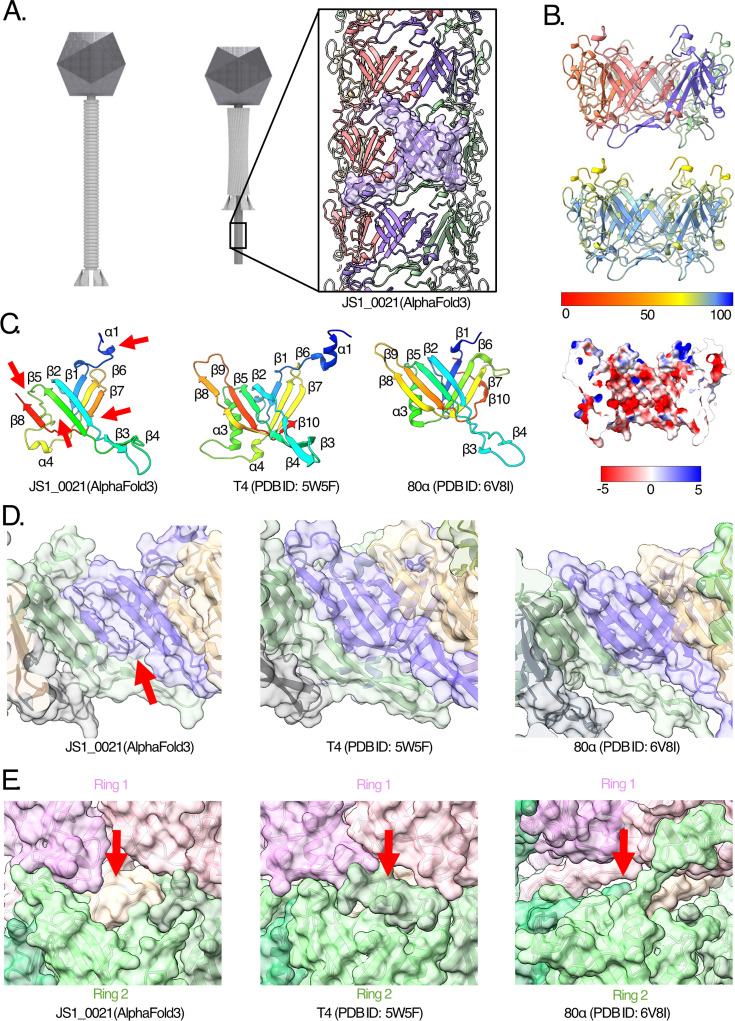 Figure 5
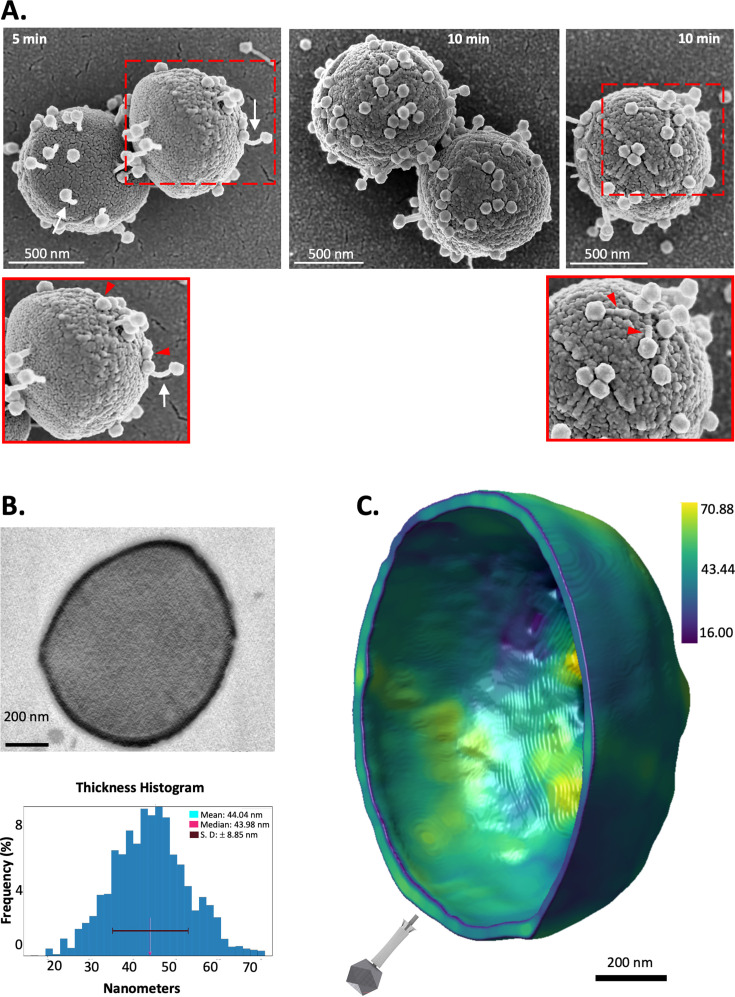 Figure 6
Peer Reviews
No public reviews on file for this paper yet. If you reviewed it on a platform where reviews are public (OpenReview, ICLR, NeurIPS, ICML), you can paste yours below so the community can read it here.
Videos
No videos yet. Explain this paper in a talk, walkthrough, or lecture? Add one.
Taxonomy
TopicsBacteriophages and microbial interactions · Escherichia coli research studies · Bacterial Genetics and Biotechnology