Antifungal susceptibility and molecular characterization of clinical and environmental isolates of Schizophyllum commune
Grégoire Pasquier, Pierre-Olivier Harmand, Laura Le Feur, Emilie Guemas, Anne Pauline Bellanger, Danièle Maubon, Anne Favel, Claire Cottrel, Lilia Hasseine, Marcela Sabou, Eric Dannaoui, Arnaud Fekkar, Anne-Cécile Normand, Jean-Pierre Gangneux, Laurence Delhaes, Milène Sasso

TL;DR
This study examines antifungal susceptibility and genetic traits of Schizophyllum commune, a fungus linked to respiratory infections, to guide treatment choices.
Contribution
The study introduces standardized testing methods for a non-sporulating mold and reports susceptibility data for 113 isolates.
Findings
Amphotericin B and voriconazole showed the lowest antifungal resistance in S. commune isolates.
Terbinafine was ineffective with high resistance levels across all isolates.
EUCAST and CLSI methods required adaptation for accurate susceptibility testing of S. commune.
Abstract
Schizophyllum commune is a cosmopolitan, saprophytic basidiomycete known to cause respiratory tract infections following spore inhalation. Management of such infections remained poorly defined, and antifungal susceptibility testing may provide valuable guidance for therapeutic decisions. However, existing data are limited, and protocols are not optimized for non-sporulating molds such as S. commune, requiring methodological adaptations. This study aimed to (i) perform molecular characterization of isolates and (ii) determine antifungal susceptibility profiles of a collection of S. commune isolates using both Clinical and Laboratory Standards Institute (CLSI) and European Committee on Antimicrobial Susceptibility Testing (EUCAST) reference methods. A total of 113 fungal isolates were included, comprising environmental (n = 31), clinical French isolates (n = 74), and strains from fungal…
Genes, proteins, chemicals, diseases, species, mutations and cell lines named across the full text — each resolved to its canonical identifier and authoritative record.
Click any figure to enlarge with its caption.
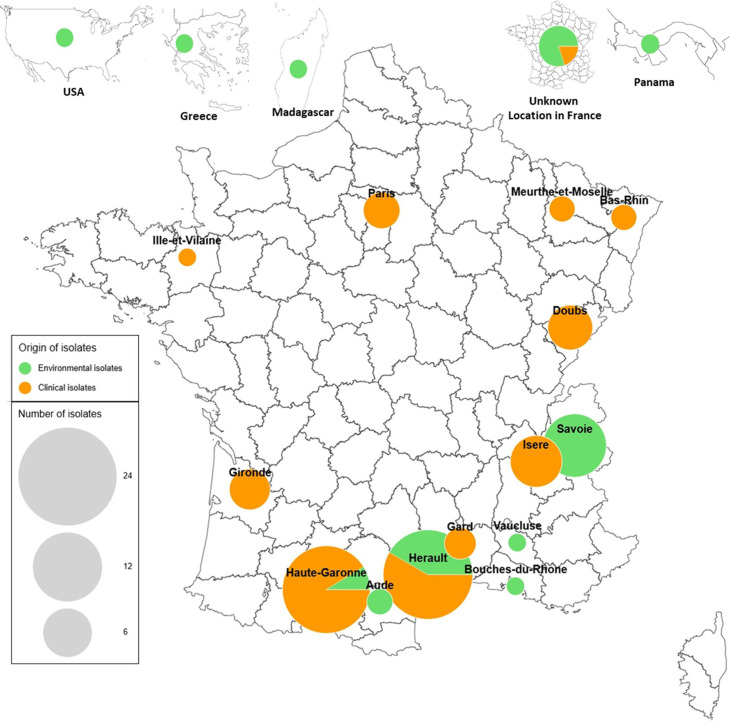 Figure 1
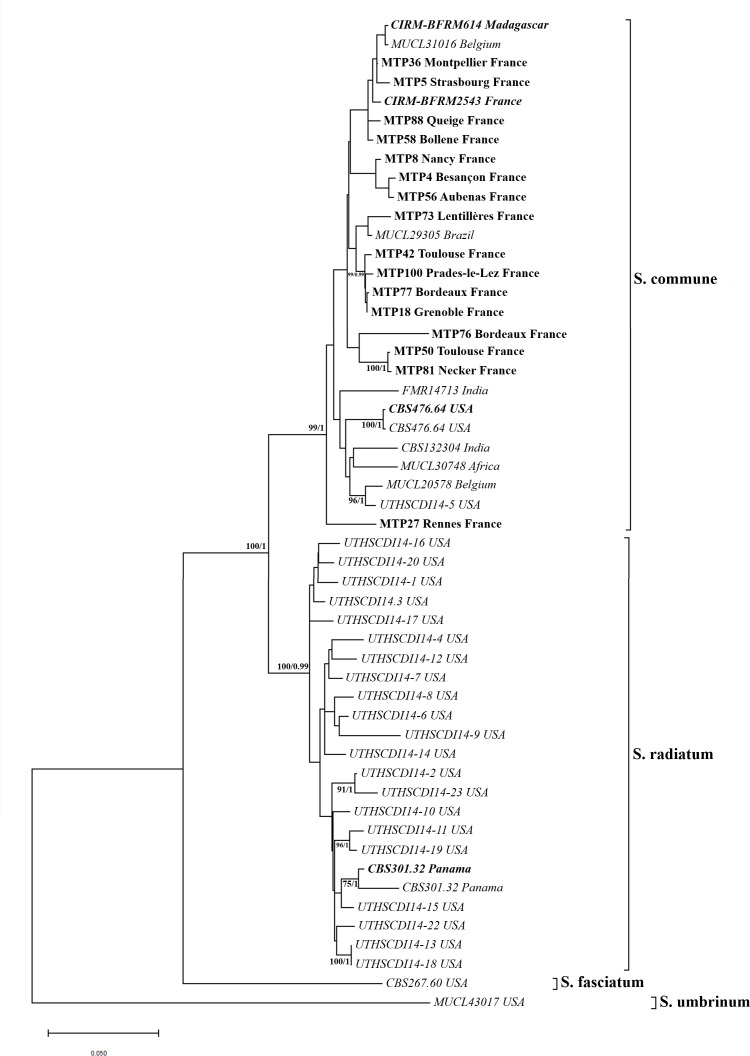 Figure 2
Peer Reviews
No public reviews on file for this paper yet. If you reviewed it on a platform where reviews are public (OpenReview, ICLR, NeurIPS, ICML), you can paste yours below so the community can read it here.
Videos
No videos yet. Explain this paper in a talk, walkthrough, or lecture? Add one.
Taxonomy
TopicsAntifungal resistance and susceptibility · Microbial Natural Products and Biosynthesis · Infectious Diseases and Mycology