Mechanistic insights into SteAB regulation of cell wall hydrolase RipA in Mycobacterium tuberculosis
Giacomo Carloni, Quentin Gaday, Daniela Megrian, Julienne Petit, Mariano Martinez, Adrià Sogues, Mathilde Ben Assaya, Marcell Kakonyi, Ahmed Haouz, Pedro M. Alzari, Anne Marie Wehenkel

TL;DR
This study reveals how the SteAB complex in Mycobacterium tuberculosis regulates the enzyme RipA to control cell wall breakdown during cell division.
Contribution
The paper provides structural and functional insights into the SteAB complex's role in regulating RipA, challenging previous assumptions about MctB's function.
Findings
The SteAB complex physically interacts with RipA to regulate cell wall hydrolase activity during cell division.
Structural analysis shows that SteAB positions RipA to activate peptidoglycan hydrolysis.
A knockout mutant analysis supports the model of SteAB as a regulator of cell separation in mycobacteria.
Abstract
D,L-endopeptidase RipA is the major peptidoglycan (PG) hydrolase required for cell separation in Mycobacterium tuberculosis (Mtb), as RipA defects severely hinder cell division and increase antibiotic vulnerability. Despite extensive studies, the mechanisms governing Mtb RipA regulation remain controversial and poorly understood. Here, we report an integrative structural and functional analysis of the Mtb SteAB system, a regulatory transmembrane septal complex encoded by adjacent genes Rv1697 (steA) and Rv1698/mctB (steB) that are conserved across Mycobacteriales. The separate crystal structures of the cytoplasmic core of MtSteA and the periplasmic core of MtSteB in complex with the RipA coiled-coil domain (RipACC), along with biochemical evidence that these proteins form a stable transmembrane physical complex, define the function of the SteAB complex as a regulator of RipA-mediated…
Genes, proteins, chemicals, diseases, species, mutations and cell lines named across the full text — each resolved to its canonical identifier and authoritative record.
Click any figure to enlarge with its caption.
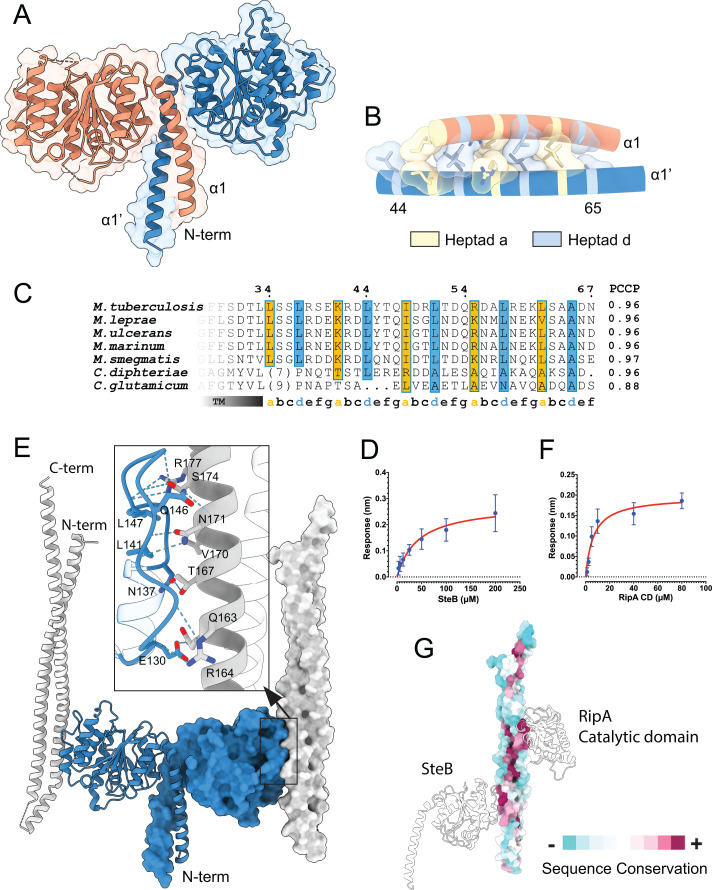 Figure 1
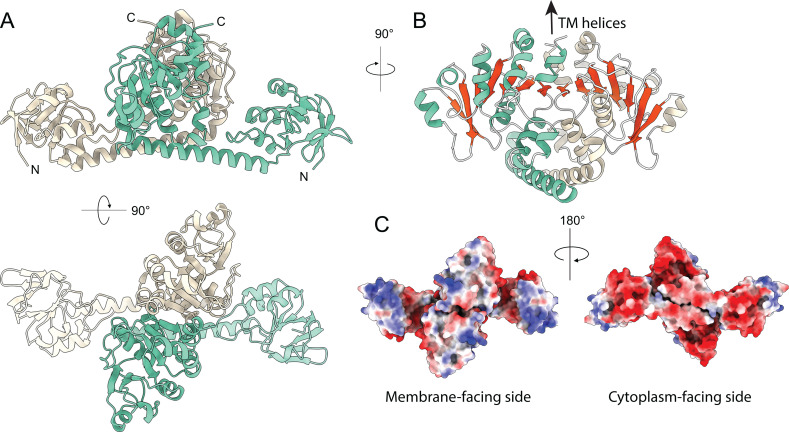 Figure 2
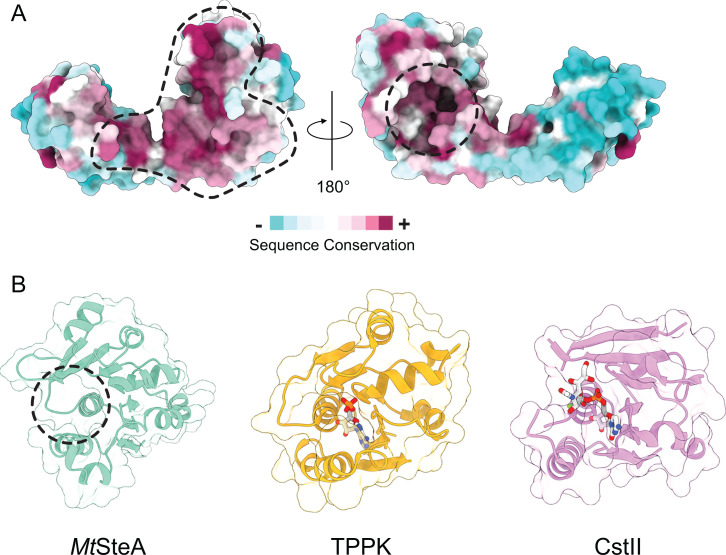 Figure 3
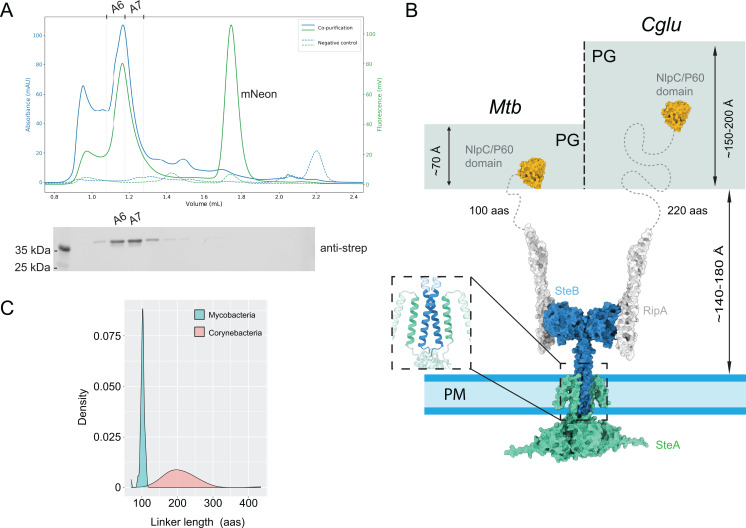 Figure 4
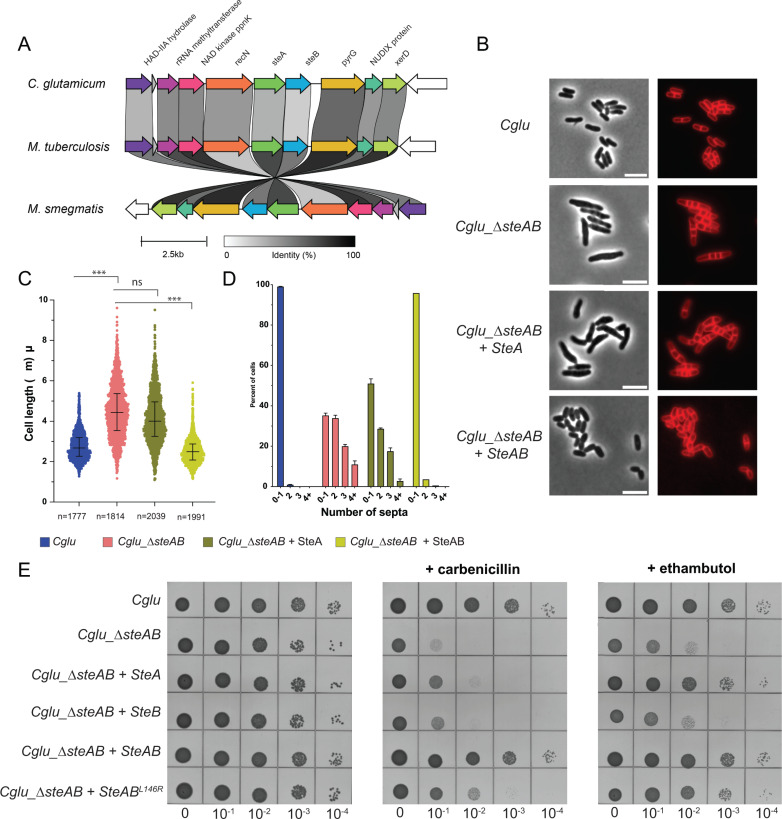 Figure 5
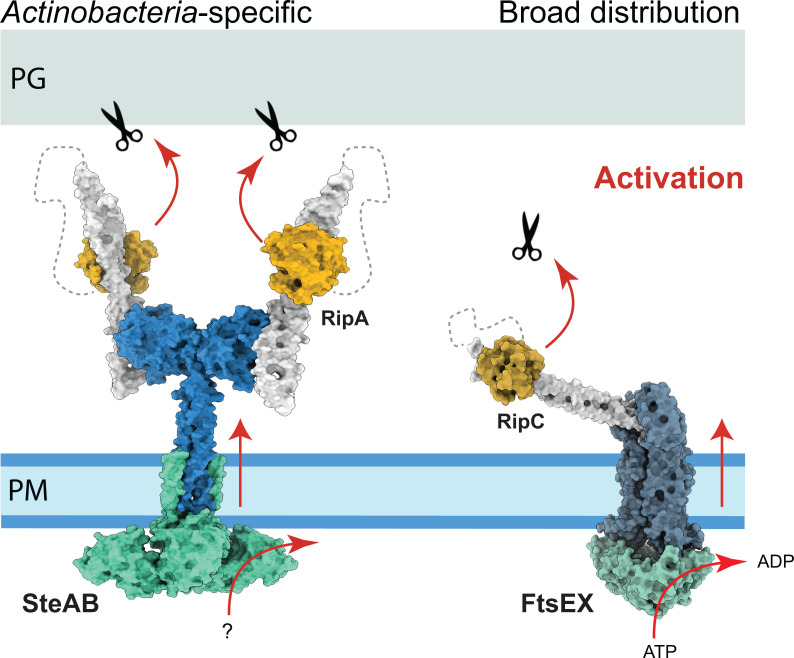 Figure 6
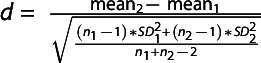 Figure 7
Peer Reviews
No public reviews on file for this paper yet. If you reviewed it on a platform where reviews are public (OpenReview, ICLR, NeurIPS, ICML), you can paste yours below so the community can read it here.
Videos
No videos yet. Explain this paper in a talk, walkthrough, or lecture? Add one.
Taxonomy
TopicsBacterial Genetics and Biotechnology · Tuberculosis Research and Epidemiology · Enzyme Structure and Function