Comparative study of plasma microbial cell-free DNA sequencing to culture and polymerase chain reaction in pediatric community-acquired pneumonia with parapneumonic effusion or empyema
Erin C. Ho, Yuanqing Liu, Kaitlin E. Olson, Edwin J. Asturias, Molly Butler, Dennis Simmons, Samuel R. Dominguez

TL;DR
Plasma microbial cell-free DNA sequencing shows higher diagnostic accuracy than traditional methods in detecting pathogens in children with complicated pneumonia.
Contribution
The study provides a rigorous real-world evaluation of mcfDNA sequencing against conventional diagnostic methods in pediatric complicated pneumonia.
Findings
mcfDNA sequencing detected pathogens in 86.7% of cases compared to 8.9% for blood culture and 20.0% for pleural fluid culture.
mcfDNA had a positive percent agreement of 91.9% against a composite reference standard of cultures and PCR.
Bacterial cfDNA was detected in 52% of non-bacterial control samples, suggesting potential for false positives.
Abstract
Plasma microbial cell-free DNA (mcfDNA) sequencing is a novel diagnostic tool for pediatric complicated community-acquired pneumonia (cCAP). However, rigorous evaluation of real-world mcfDNA performance is lacking. We compared mcfDNA sequencing to a composite reference standard consisting of blood cultures, pleural fluid (PF) cultures, and targeted PF PCRs in children with cCAP requiring pleural effusion or empyema drainage at Children’s Hospital Colorado from 2022 to 2024. We calculated positive/negative percent agreement (PPA/NPA), Jaccard similarity index, and theoretical time to pathogen detection. We investigated mcfDNA positivity in pediatric controls without bacterial infections. Receiver operating characteristic (ROC) analysis explored potential mcfDNA detection cutoff values to define “true clinical positivity.” Across 45 cCAP cases, mcfDNA sequencing detected a probable…
Genes, proteins, chemicals, diseases, species, mutations and cell lines named across the full text — each resolved to its canonical identifier and authoritative record.
Click any figure to enlarge with its caption.
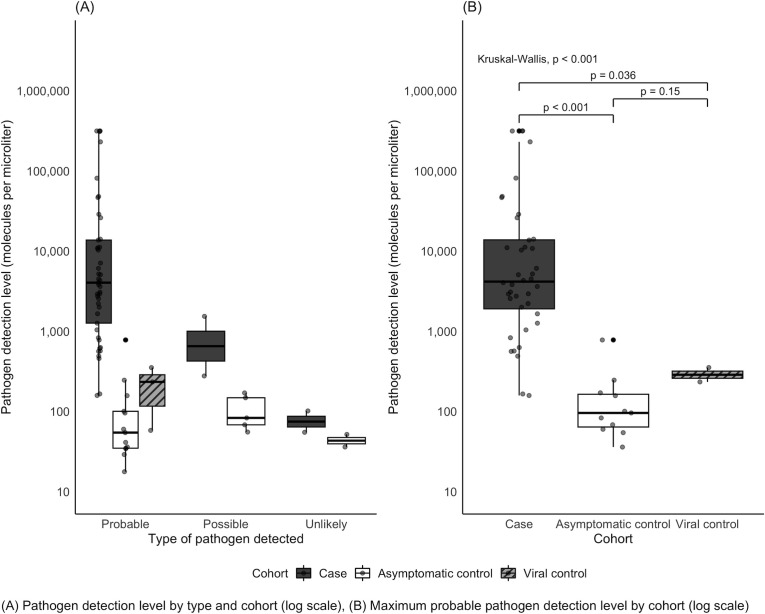 Figure 1
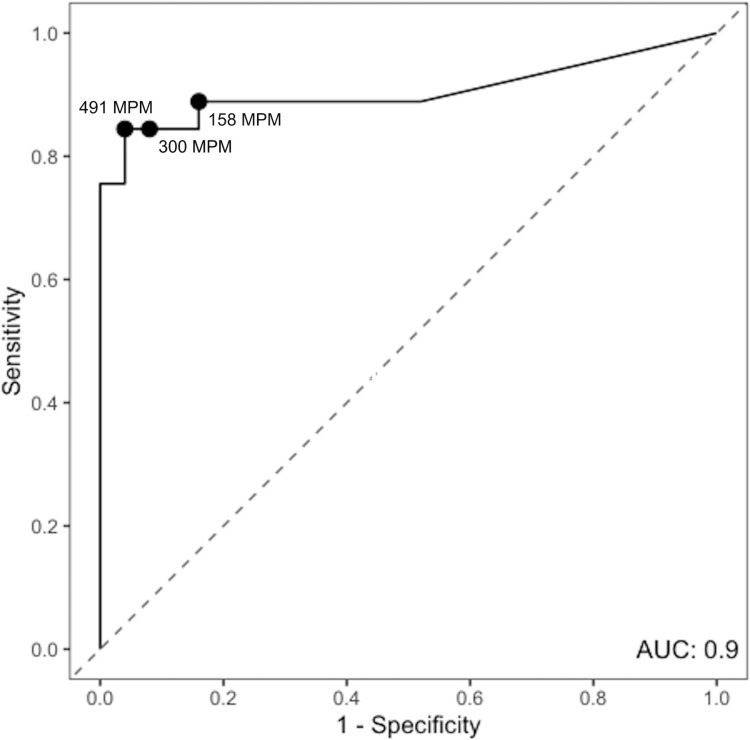 Figure 2
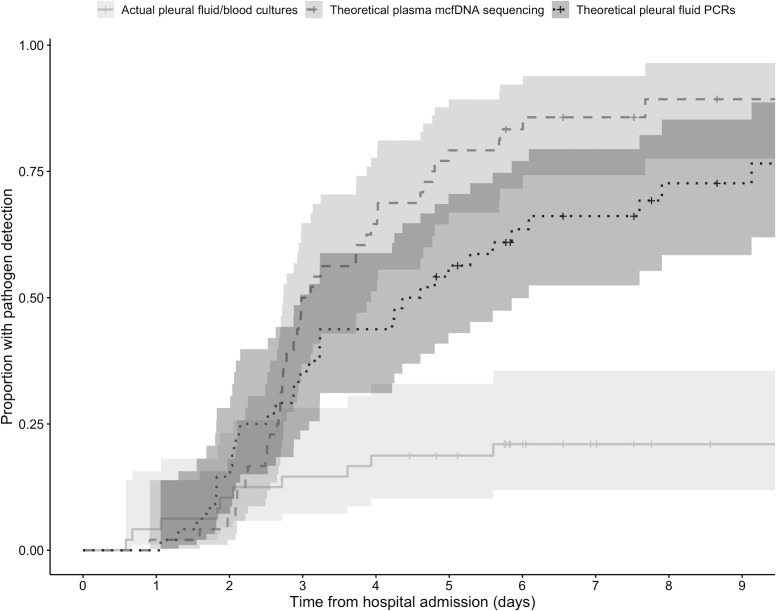 Figure 3
Peer Reviews
No public reviews on file for this paper yet. If you reviewed it on a platform where reviews are public (OpenReview, ICLR, NeurIPS, ICML), you can paste yours below so the community can read it here.
Videos
No videos yet. Explain this paper in a talk, walkthrough, or lecture? Add one.
Taxonomy
TopicsPneumonia and Respiratory Infections · Pleural and Pulmonary Diseases · Respiratory viral infections research