“Should I stay or should I go”—a kinase delays escape of Candida glabrata from macrophages
Theresa Lange, Colin Clairet, Luisa Fischer, Raghav Vij, Johannes Sonnberger, Julia Mantke, Nadja Jablonowski, Eric Seemann, Britta Qualmann, Christophe d’Enfert, Lydia Kasper, Bernhard Hube, Sascha Brunke

TL;DR
Candida glabrata delays its escape from immune cells using a kinase, which helps it survive and resist antifungal drugs.
Contribution
The study identifies Ksp1 kinase as a regulator of C. glabrata's delayed escape from macrophages and its role in antifungal resistance.
Findings
C. glabrata delays escape from macrophages, which is controlled by fungal protein kinases like Ksp1.
Deletion of Ksp1 increases mitophagy and respiration-deficient petite cells, enhancing antifungal resistance.
Prolonged intracellular survival and petite formation are key to C. glabrata's immune evasion and recurrence.
Abstract
Candida glabrata is an opportunistic fungal pathogen that causes both superficial and systemic infections in humans, accounting for 15%–25% of invasive candidiasis cases. Macrophages play a crucial role in antifungal immunity by internalizing C. glabrata; however, the fungus has evolved strategies to survive and even proliferate within phagosomes. It has been suggested that C. glabrata may utilize its life within macrophages to evade immune detection and disseminate throughout the body. We observed that, compared to fungi like C. albicans, C. glabrata only slowly escapes from macrophages, with host cells bursting after 2–3 days. This delay is fungal-driven rather than host-induced and is not solely due to replication in the yeast form per se. We identified protein kinases involved in exit timing, especially the Ksp1 kinase, the deletion of which accelerates macrophage cell lysis. Its…
Genes, proteins, chemicals, diseases, species, mutations and cell lines named across the full text — each resolved to its canonical identifier and authoritative record.
Click any figure to enlarge with its caption.
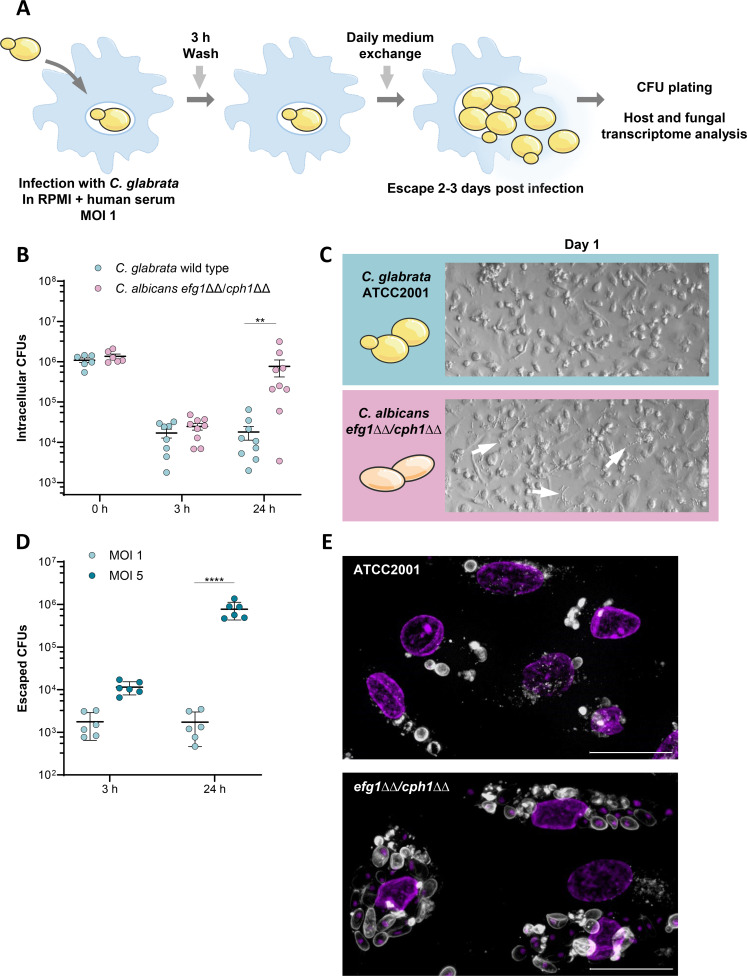 Figure 1
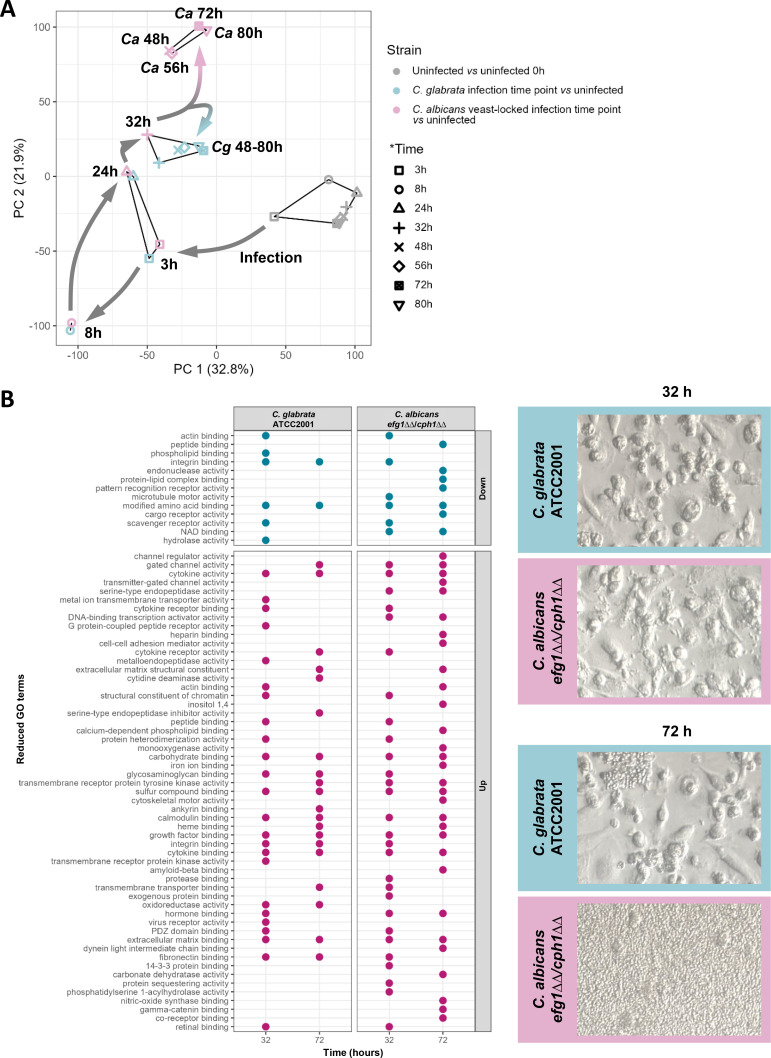 Figure 2
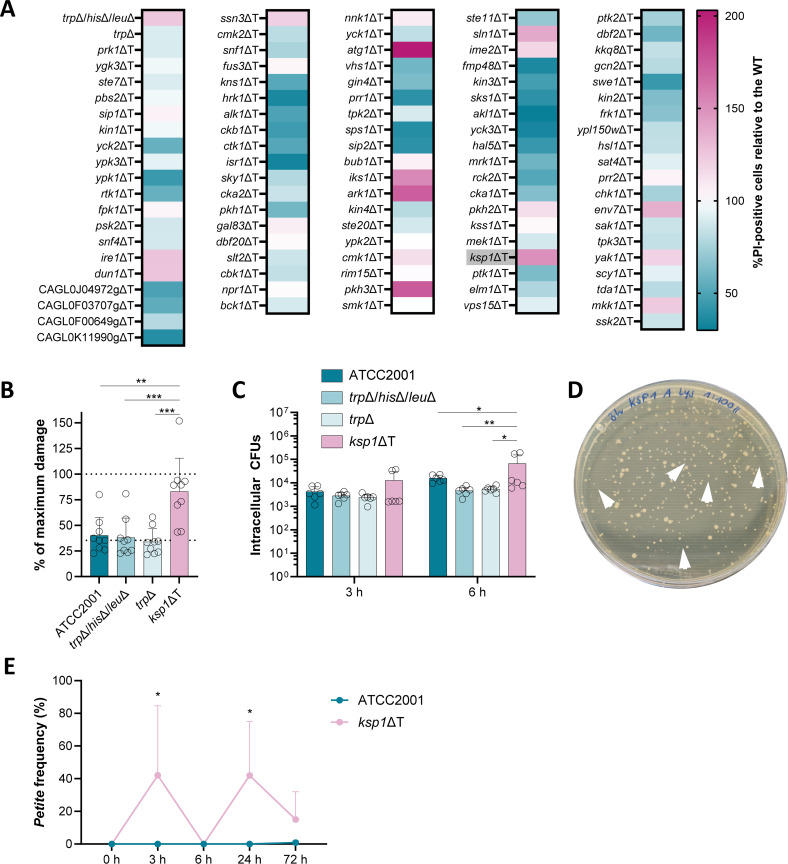 Figure 3
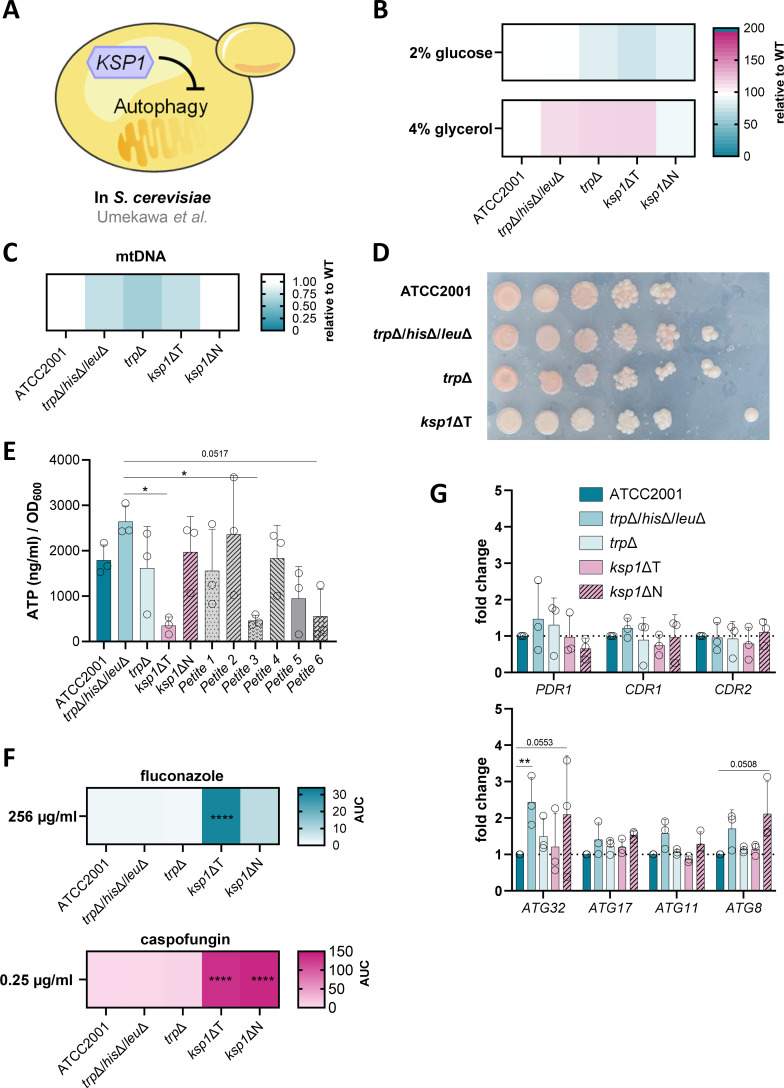 Figure 4
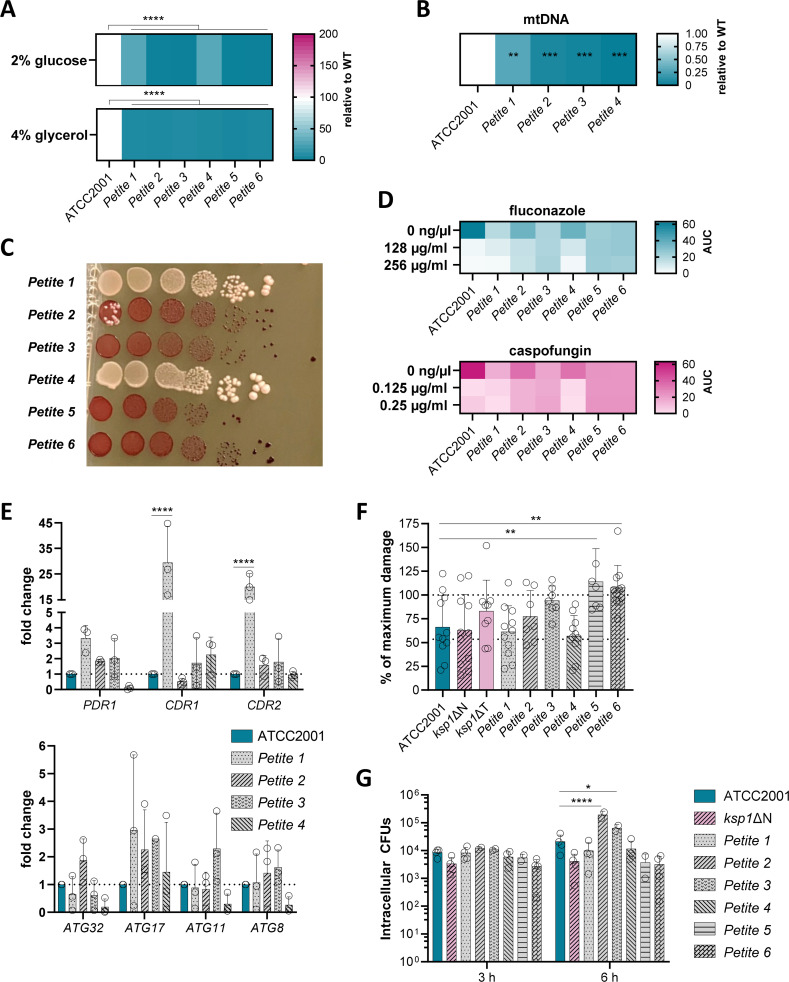 Figure 5
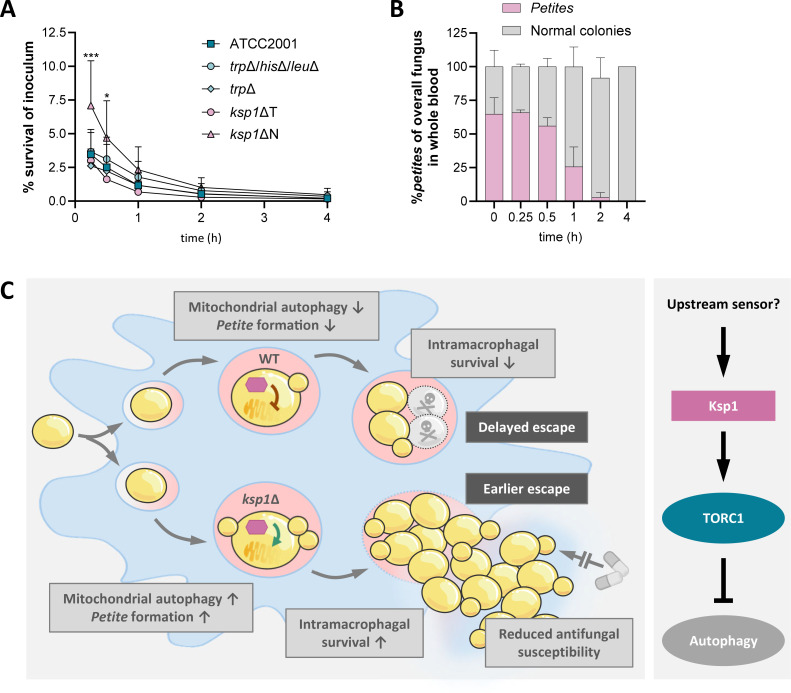 Figure 6
Peer Reviews
No public reviews on file for this paper yet. If you reviewed it on a platform where reviews are public (OpenReview, ICLR, NeurIPS, ICML), you can paste yours below so the community can read it here.
Videos
No videos yet. Explain this paper in a talk, walkthrough, or lecture? Add one.
Taxonomy
TopicsAntifungal resistance and susceptibility · Fungal Infections and Studies · Fungal and yeast genetics research