Ligand binding drives proteolysis of the SmcR master transcription factor and controls quorum sensing-state transitions in Vibrio species
Tanmaya A. Rasal, Caleb P. Mallery, Biqing Liang, Matthew W. Brockley, Chelsea A. Simpson, Abigail D. Padgett, Logan J. Geyman, Finley J. Andrew, Laura C. Brown, Jon E. Paczkowski, Julia C. van Kessel

TL;DR
A chemical inhibitor causes the degradation of a key protein in Vibrio bacteria, affecting how these bacteria respond to population density.
Contribution
This study shows for the first time that ligand binding controls the stability and function of SmcR proteins in Vibrio species.
Findings
Ligand binding to SmcR causes its degradation via the ClpAP protease.
Degradation-resistant SmcR variants prevent quorum-sensing state transitions.
The mechanism is conserved across three Vibrio species.
Abstract
In Vibrio species, quorum sensing signaling culminates in the production of the master transcription factor SmcR that regulates group behavior genes in a density-dependent manner. Previously, we identified a small-molecule thiophenesulfonamide inhibitor called PTSP [3-phenyl-1-(thiophen-2-ylsulfonyl)-1H-pyrazole] that targets the SmcR family of proteins in multiple Vibrio species and blocks activity in vivo. Here, we used structure-function analyses to identify eight PTSP-interacting residues in the ligand-binding pocket that are required for PTSP inhibition of Vibrio vulnificus SmcR. Binding of PTSP to SmcR drives allosteric unfolding of the N-terminal DNA-binding domain, and, in this state, SmcR is specifically degraded by the ClpAP protease. This mechanism of PTSP inhibition was observed for all thiophenesulfonamide compounds tested against V. vulnificus as well as Vibrio…
Genes, proteins, chemicals, diseases, species, mutations and cell lines named across the full text — each resolved to its canonical identifier and authoritative record.
Click any figure to enlarge with its caption.
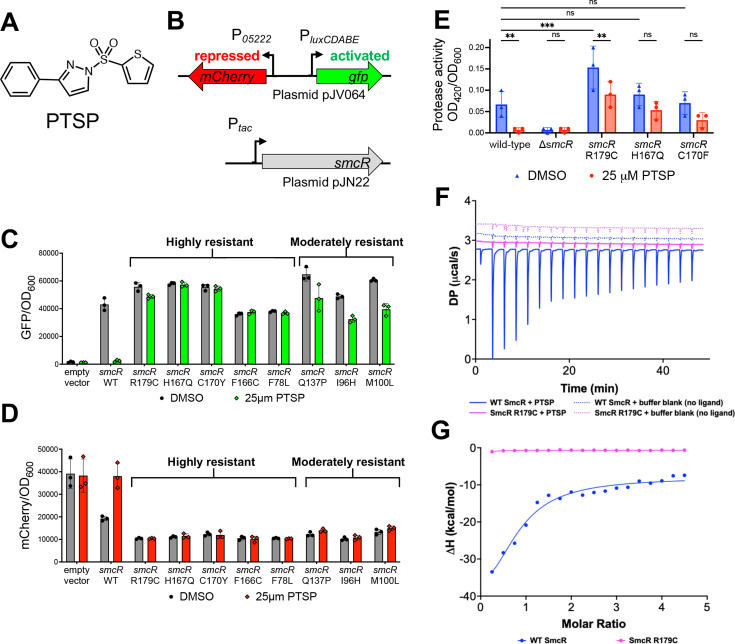 Figure 1
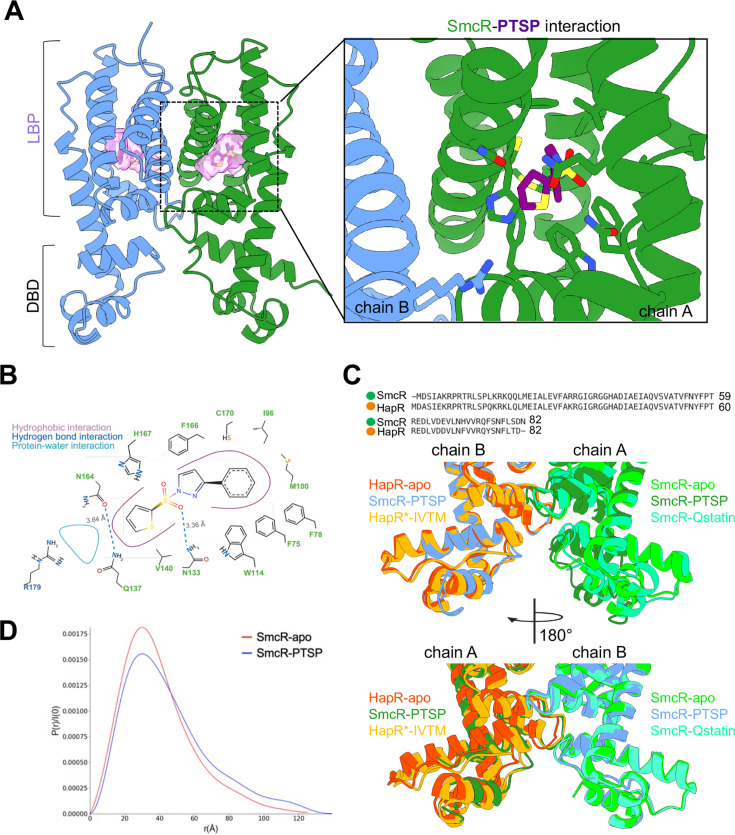 Figure 2
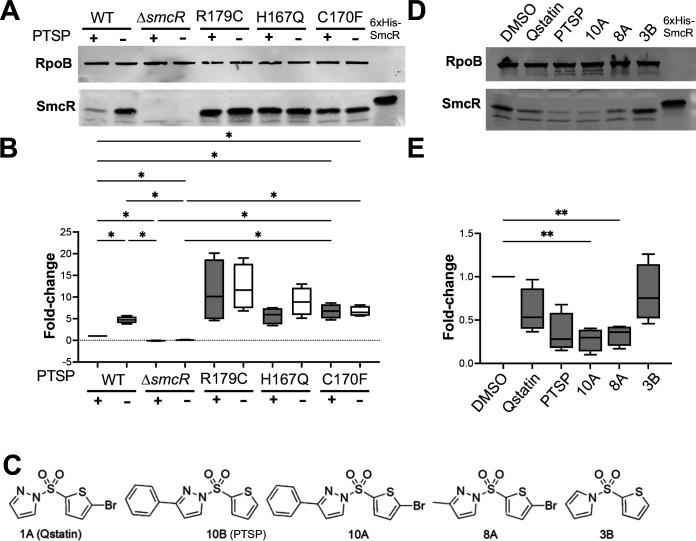 Figure 3
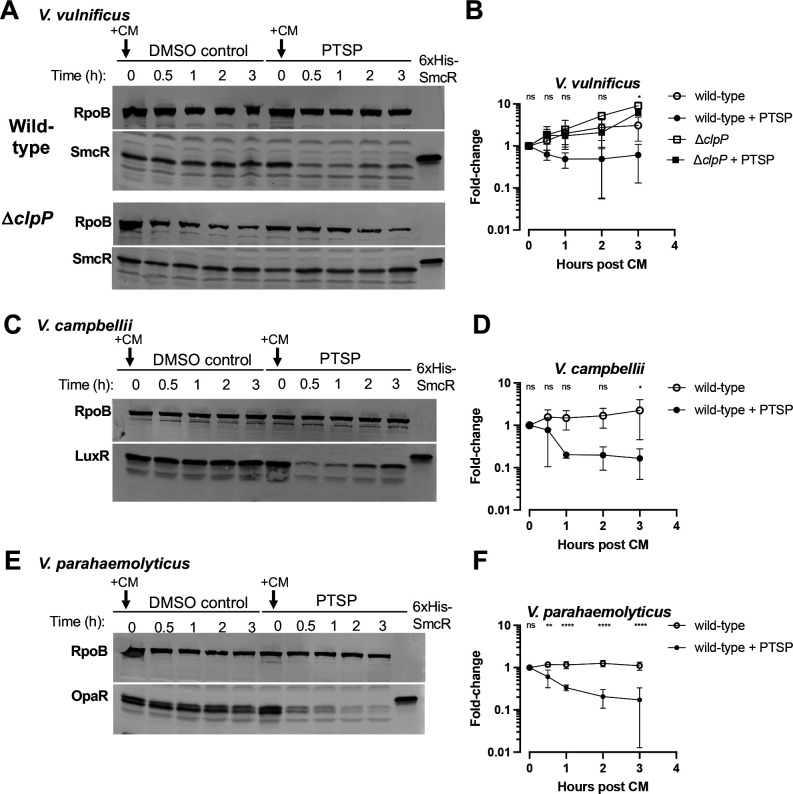 Figure 4
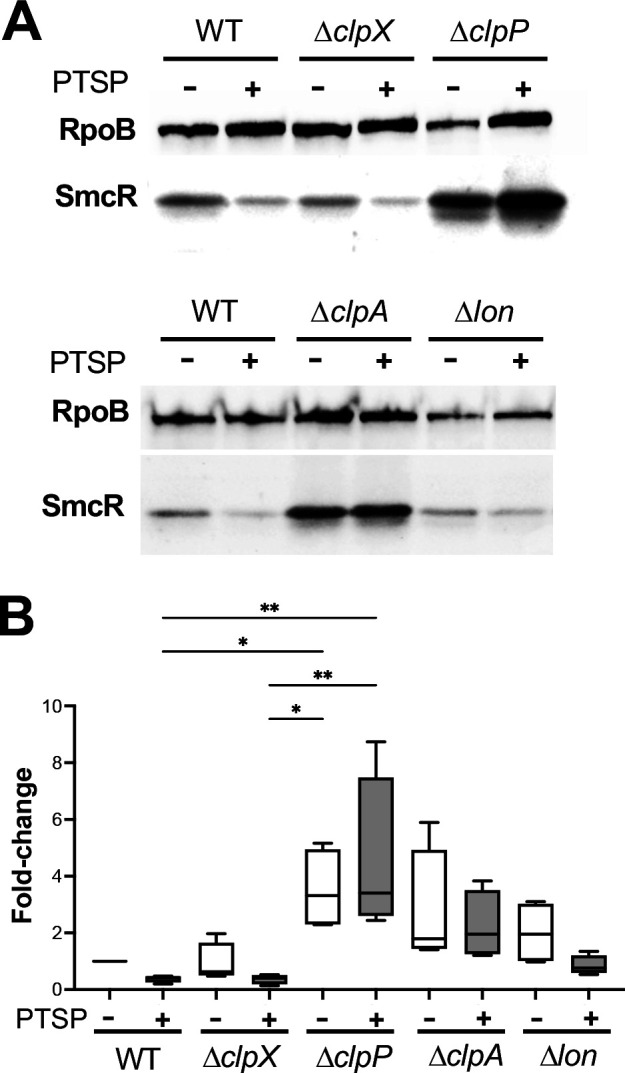 Figure 5
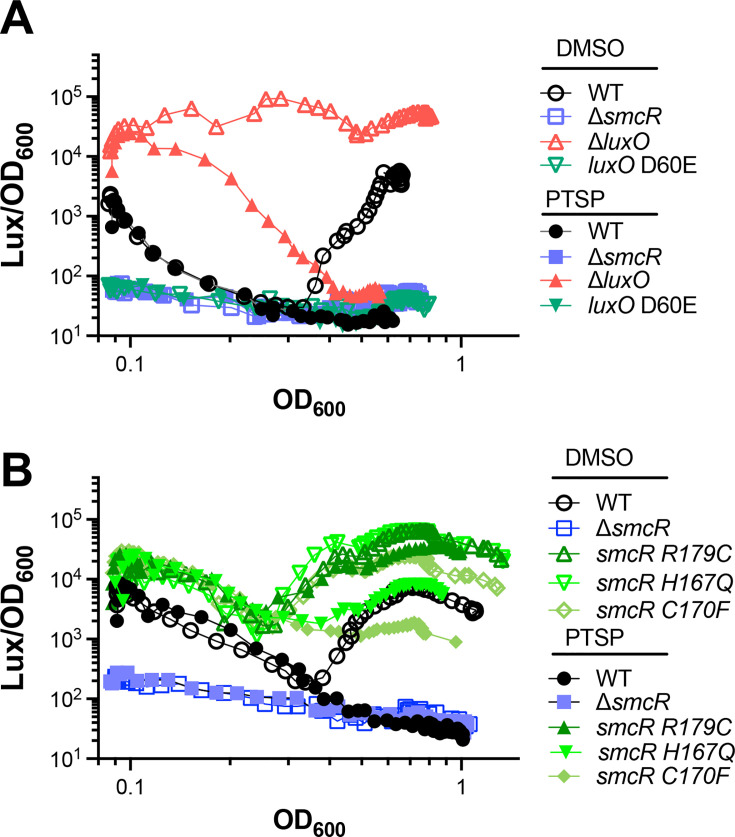 Figure 6
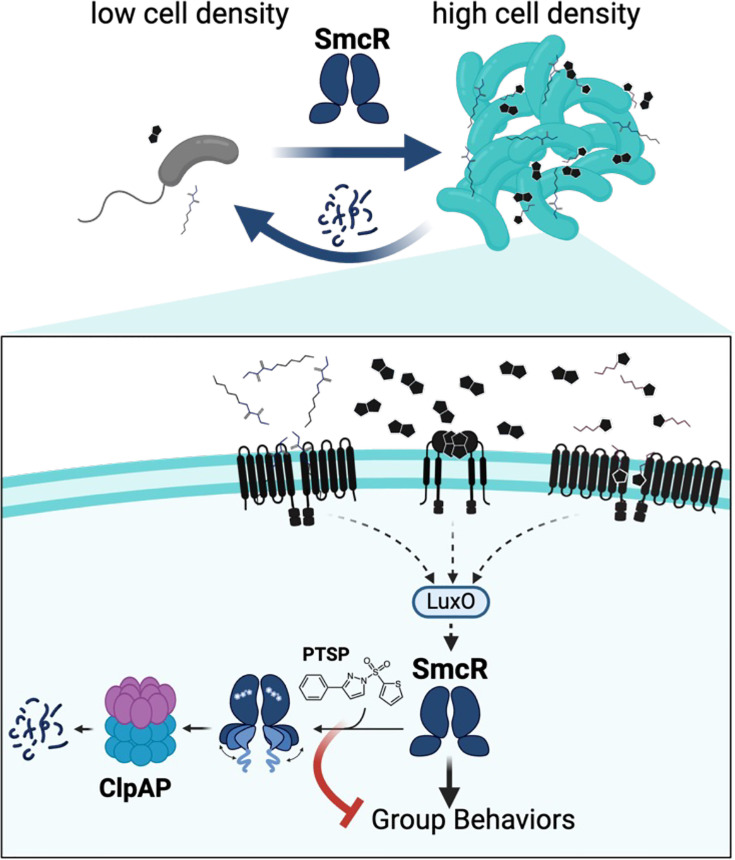 Figure 7
Peer Reviews
No public reviews on file for this paper yet. If you reviewed it on a platform where reviews are public (OpenReview, ICLR, NeurIPS, ICML), you can paste yours below so the community can read it here.
Videos
No videos yet. Explain this paper in a talk, walkthrough, or lecture? Add one.
Taxonomy
TopicsBacterial biofilms and quorum sensing · Vibrio bacteria research studies · Bacterial Genetics and Biotechnology