Leveraging patient data to detect systematic shifts in daptomycin susceptibility testing associated with reduced prescribing
Mark A. Zaydman, Laurel Glaser, Daniel S. Herman, Mason Kressloff, Vahid Azimi, Christine R. Lockowitz, Rebekah E. Dumm

TL;DR
The study found that subtle changes in daptomycin susceptibility testing led to reduced prescribing, highlighting the need to use patient data for better quality control in testing.
Contribution
The study introduces the use of patient data analysis to detect subtle shifts in antimicrobial susceptibility testing that traditional quality control methods miss.
Findings
A 5%–22% decrease in daptomycin susceptibility rates was observed for certain organisms like Enterococcus faecium.
The shift in susceptibility testing results was not detected by routine quality control processes.
Reduced susceptibility rates correlated with decreased daptomycin prescribing for relevant infections.
Abstract
Systemic shifts in antimicrobial resistance rates can be due to epidemiologic shifts in microbial susceptibility patterns or artifactual shifts introduced by technical biases in antimicrobial susceptibility testing (AST)—both ultimately leading to changes in antimicrobial prescribing. To reduce technical variability, quality control (QC) criteria for AST are published by manufacturers and standards organizations. However, traditional QC metrics, in isolation, are fallible. In this study, we describe a systematic shift in daptomycin AST results between 2022 and 2025 in isolates tested in two independent health systems. Comprehensive analysis of clinical isolate AST results and retrospective mining of QC data from this period revealed a subtle shift that led to a 5%–22% decrease in overall susceptibility rates for certain organisms, most notably Enterococcus faecium. As daptomycin is a…
Genes, proteins, chemicals, diseases, species, mutations and cell lines named across the full text — each resolved to its canonical identifier and authoritative record.
Click any figure to enlarge with its caption.
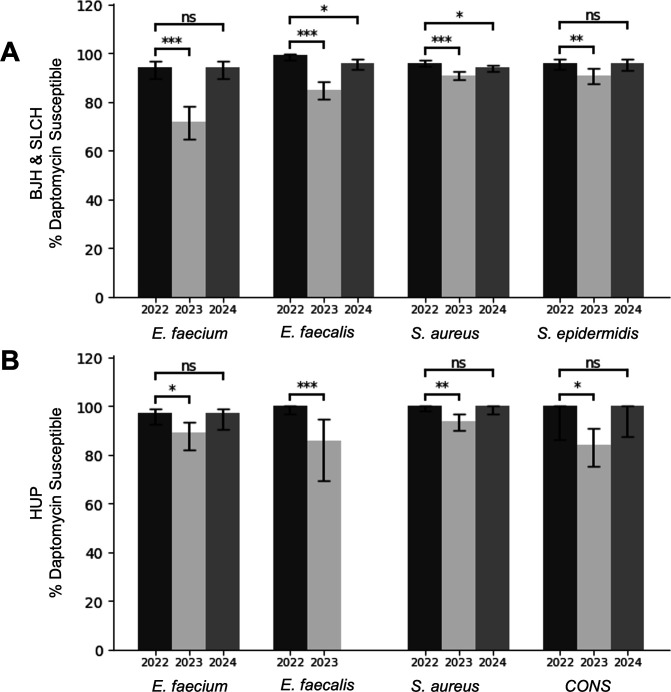 Figure 1
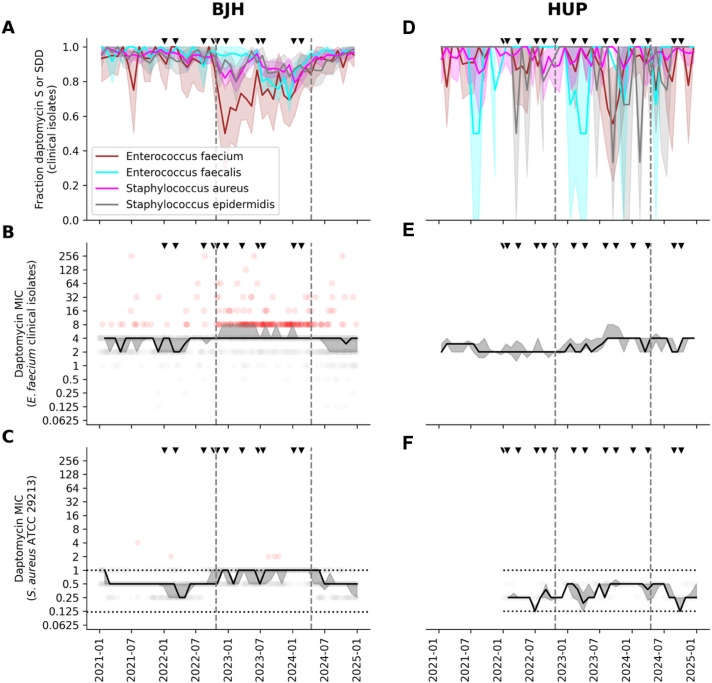 Figure 2
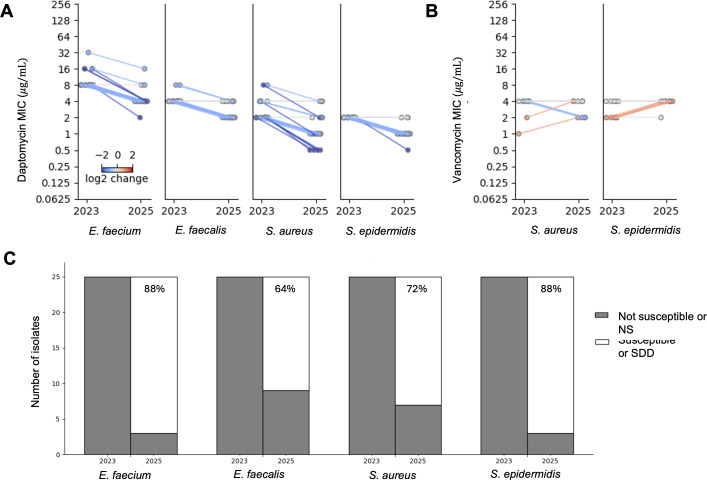 Figure 3
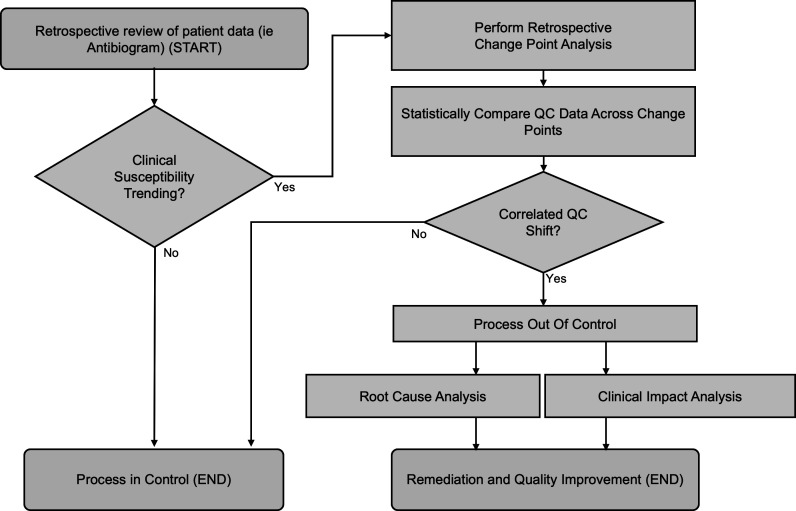 Figure 4
Peer Reviews
No public reviews on file for this paper yet. If you reviewed it on a platform where reviews are public (OpenReview, ICLR, NeurIPS, ICML), you can paste yours below so the community can read it here.
Videos
No videos yet. Explain this paper in a talk, walkthrough, or lecture? Add one.
Taxonomy
TopicsBacterial Identification and Susceptibility Testing · Antimicrobial Resistance in Staphylococcus · Antibiotic Use and Resistance