An mRNA-encoded scFv antibody targeting the helix-α3 of HPV18 E7 oncoprotein as a novel antiviral strategy
Feng Han, Xin-ying Guo, Ling-yan Cui, Meng-xuan Zhang, Ya-rong Zeng, Gui-qiang Wang, Jin-jin Li, Xin Chi, Ming-xia Jiang, Yue-ting Xiong, Li-zhi Zhou, Qing-bing Zheng, Hai Yu, Jun Zhang, Ting-ting Li, Ying Gu, Ning-shao Xia, Shaowei Li

TL;DR
Researchers developed a new antiviral strategy using an mRNA-encoded antibody that targets a specific part of the HPV18 E7 protein to inhibit cancer growth.
Contribution
The study introduces a novel antiviral epitope on HPV18 E7 and demonstrates an mRNA-based delivery system for intracellular antibody therapy.
Findings
The α3 helix of HPV18 E7 and its adjacent groove were identified as a novel antiviral epitope.
The antibody 17F2 inhibited cell proliferation and tumor formation in HPV18-positive HeLa cells.
mRNA-encoded scFv antibodies significantly inhibited tumor growth in immunodeficient mouse models.
Abstract
Despite the availability of prophylactic vaccines, human papillomavirus (HPV) infection remains the leading viral cause of cancer worldwide. The HPV E7 oncoprotein is a key factor in cancer progression by degrading host tumor suppressor proteins, thus offering a promising target for antiviral therapy. In this study, we screened a panel of high-affinity antibodies against HPV18 E7. Through evaluation of their cytotoxic effects in HPV18-positive HeLa cells, incorporating the structure of antibodies and the structural simulation of complexes, we identified the α3 helix of the HPV18 E7 protein and its adjacent groove as a novel and effective antiviral epitope. The candidate antibody 17F2 showed efficacy in inhibiting cell proliferation and tumor formation when transfected into HeLa cells as a single-chain variable fragment (scFv). To directly assess the efficacy of the antibody and enhance…
Genes, proteins, chemicals, diseases, species, mutations and cell lines named across the full text — each resolved to its canonical identifier and authoritative record.
Click any figure to enlarge with its caption.
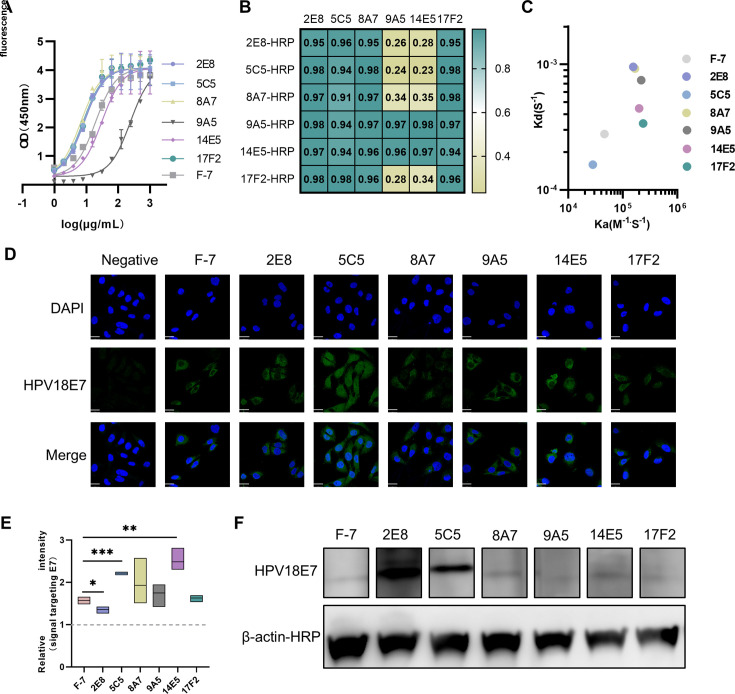 Figure 1
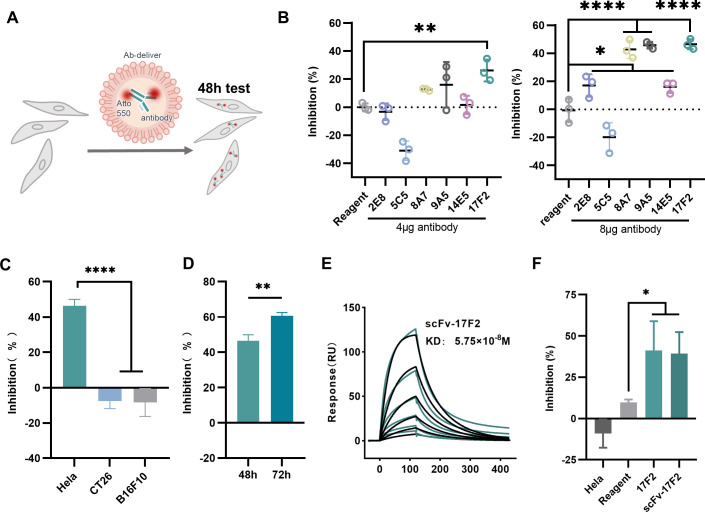 Figure 2
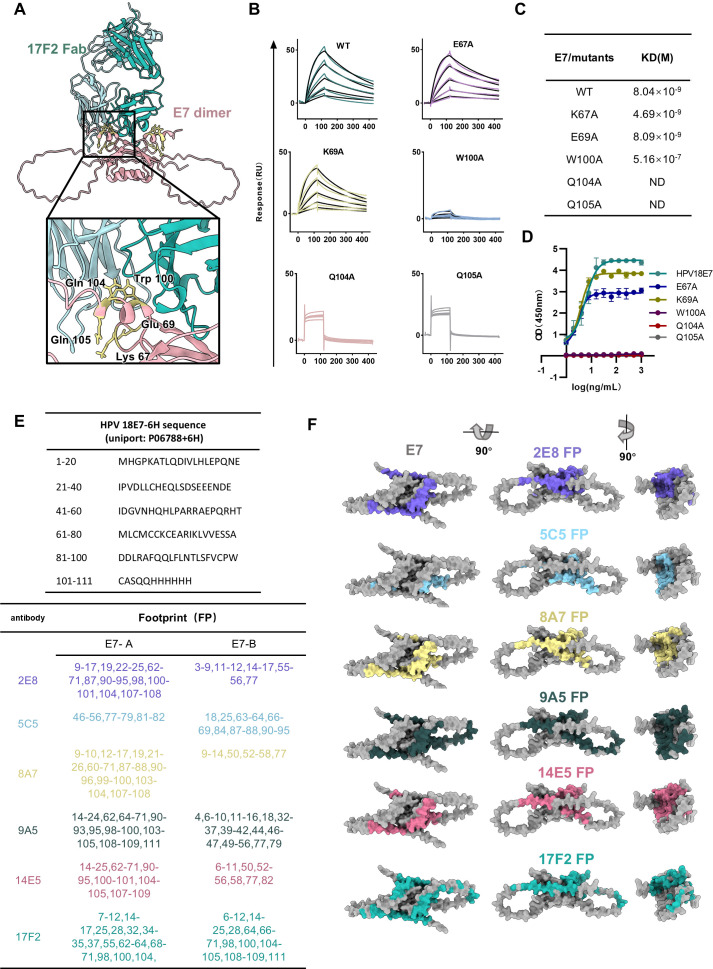 Figure 3
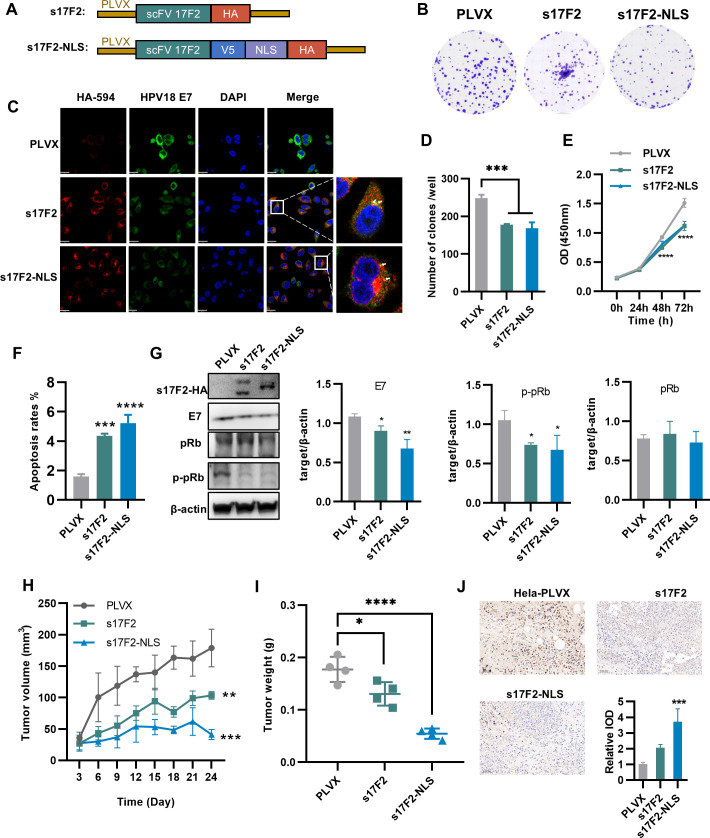 Figure 4
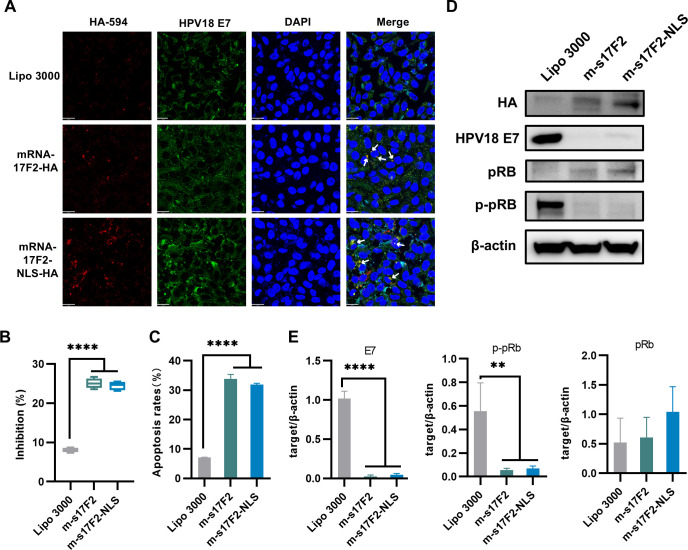 Figure 5
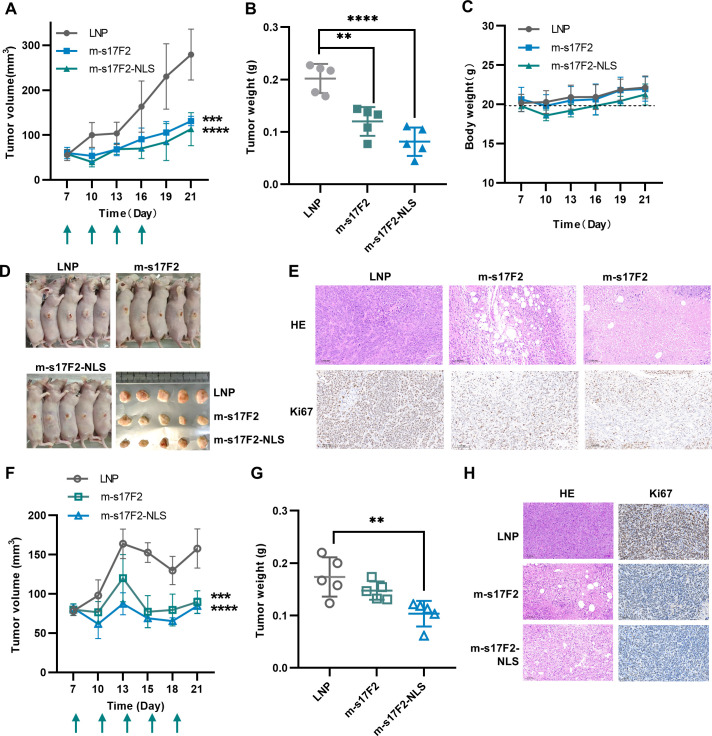 Figure 6
Peer Reviews
No public reviews on file for this paper yet. If you reviewed it on a platform where reviews are public (OpenReview, ICLR, NeurIPS, ICML), you can paste yours below so the community can read it here.
Videos
No videos yet. Explain this paper in a talk, walkthrough, or lecture? Add one.
Taxonomy
TopicsCervical Cancer and HPV Research · Virus-based gene therapy research · Reproductive tract infections research