Evaluation of KU-F40 automated microscope for parasitology: when artificial intelligence meets old school microscopy
Antoine Aupaix, Lorenzo Filippin, Justine Jaumot, Stéphanie Cannoot, Monia Chemais, Delphine Martiny, Véronique Yvette Miendje Deyi, Marine Deffontaine, Corentin Deckers, Valérie Verbelen, Idzi Potters, Charlotte Drieghe, Samy Mzougui, Reza Soleimani, Patrick Philippart

TL;DR
This paper evaluates an automated microscope that uses AI to detect intestinal parasites in stool samples, finding it promising but not yet ready for full automation.
Contribution
The study is the first to evaluate the KU-F40 automated feces analyzer's performance on a wide range of parasites from multiple clinical centers.
Findings
The KU-F40 achieved 86% sensitivity and 45% specificity for parasite detection using standard settings.
Sensitivity improved to 95% for clinically relevant parasites.
Increasing the number of images improved detection rates but did not reach 90% for all targets.
Abstract
Intestinal parasitic infections (IPIs) have a worldwide distribution and have a major impact on health, work capacity, and economy in many countries. Light microscopy is still considered the reference method for IPI diagnosis but is labor-intensive. KU-F40, an automated feces analyzer, combines automated microscopic examination of stool samples and deep learning artificial intelligence. The aim of this study is to evaluate the performance of KU-F40 for the diagnosis of IPI. A random collection of stool samples prescribed for IPI investigation was retrospectively collected from six clinical laboratories in Belgium along with external quality controls. All samples were analyzed in our laboratory by wet mount preparation using classic light microscopy as reference. We assessed the sensitivity and specificity for parasite detection/identification. Finally, we studied the improvement in…
Genes, proteins, chemicals, diseases, species, mutations and cell lines named across the full text — each resolved to its canonical identifier and authoritative record.
Click any figure to enlarge with its caption.
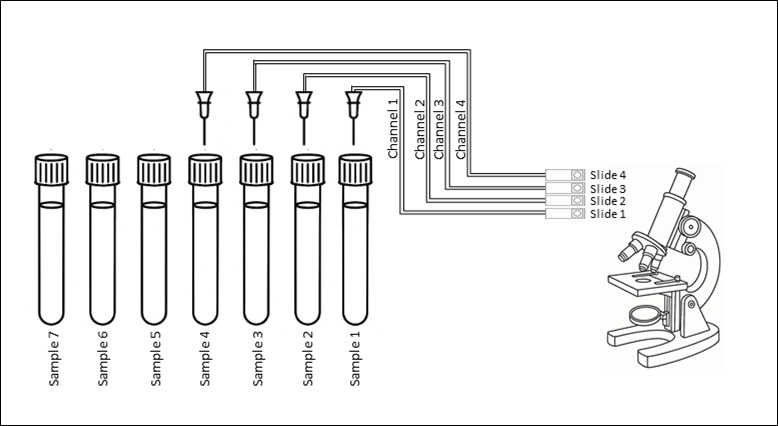 Figure 1
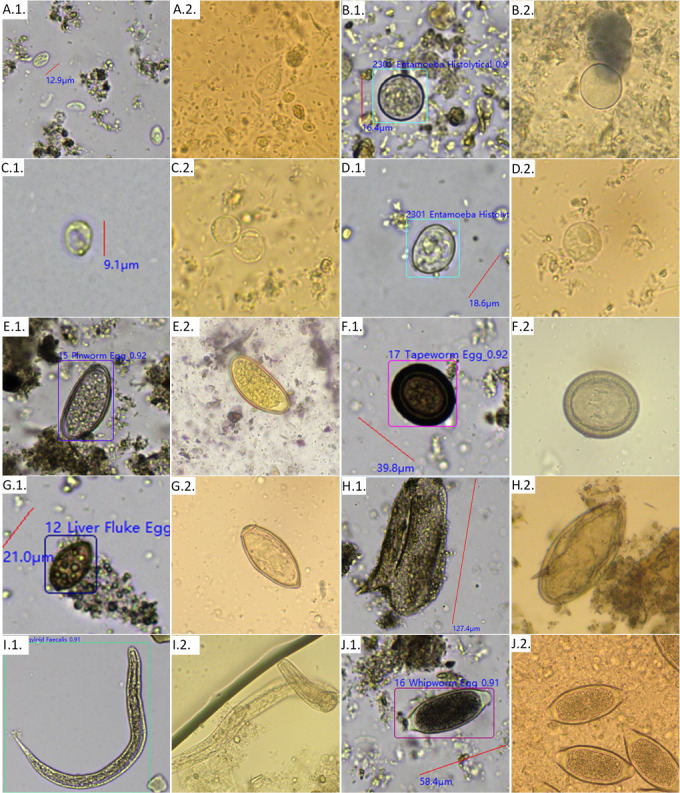 Figure 2
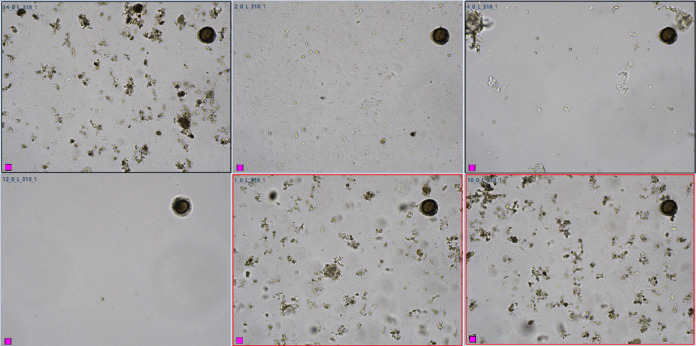 Figure 3
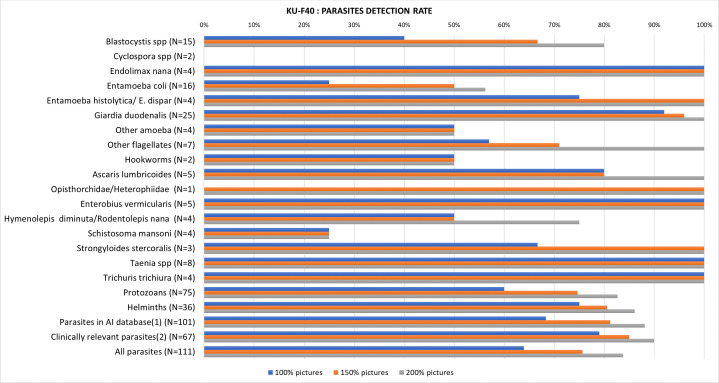 Figure 4
Peer Reviews
No public reviews on file for this paper yet. If you reviewed it on a platform where reviews are public (OpenReview, ICLR, NeurIPS, ICML), you can paste yours below so the community can read it here.
Videos
No videos yet. Explain this paper in a talk, walkthrough, or lecture? Add one.
Taxonomy
TopicsParasites and Host Interactions · Parasitic Diseases Research and Treatment · Helminth infection and control