Modified coracoid tunnel-free suspended bridge for coracoclavicular ligament injuries leads to improved clinical and radiological outcomes: a cohort study with a minimum 2-year follow-up
Gang Liu, Lin Li, Shitian T. Tang

TL;DR
A new surgical technique for treating shoulder ligament injuries shows better results and fewer complications than older methods.
Contribution
A modified tunnel-free surgical technique for coracoclavicular ligament injuries is introduced and shown to be effective.
Findings
34 patients had good to excellent shoulder function scores after the procedure.
No tunnel-related complications were observed, and no revisions were needed.
AC joint displacement occurred early but did not cause pain or instability.
Abstract
Coracoclavicular ligament injuries are common in the sports population. Coracoid tunnel techniques showed a negative influence on outcomes with some literature reporting tunnel-related fractures occurring early or late after surgery. The aim of this study is to analyze the clinical and radiological outcomes of modified coracoid tunnel-free suspended bridge in coracoclavicular ligament injury patients with a minimum follow-up of 2 years. This retrospective study reviewed patients with coracoclavicular ligament injuries who were treated with modified coracoid tunnel-free suspended bridge between January 2019 and February 2023 at the authors’ institution. Clinical outcomes were patient-reported subjective and objective functional scores, including Visual Analogue Score (VAS), Oxford Shoulder Score (OSS) and Constant-Murley Score (CMS). Radiological assessments were performed immediately…
Genes, proteins, chemicals, diseases, species, mutations and cell lines named across the full text — each resolved to its canonical identifier and authoritative record.
Click any figure to enlarge with its caption.
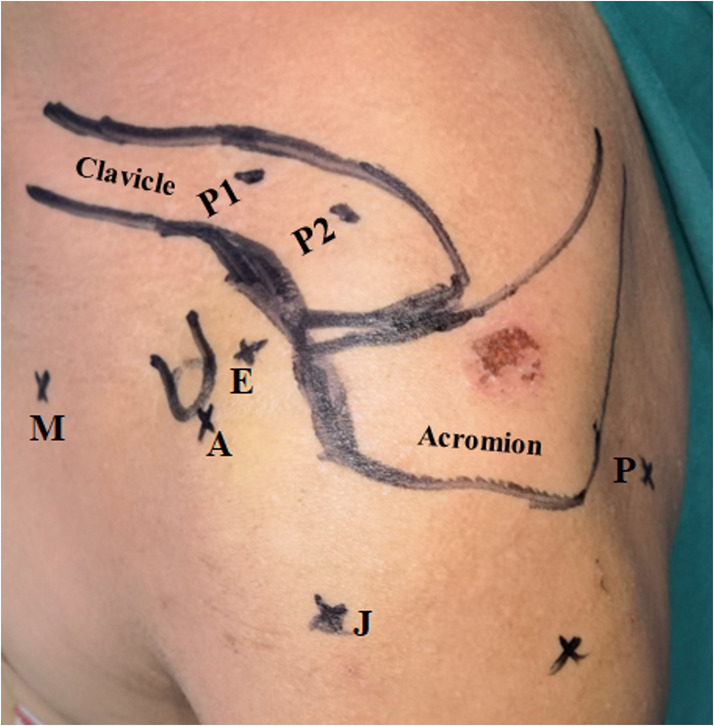 Figure 1
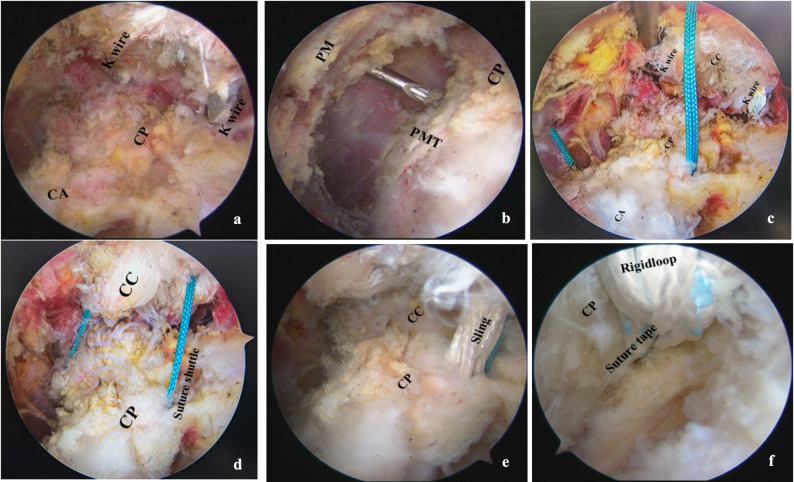 Figure 2
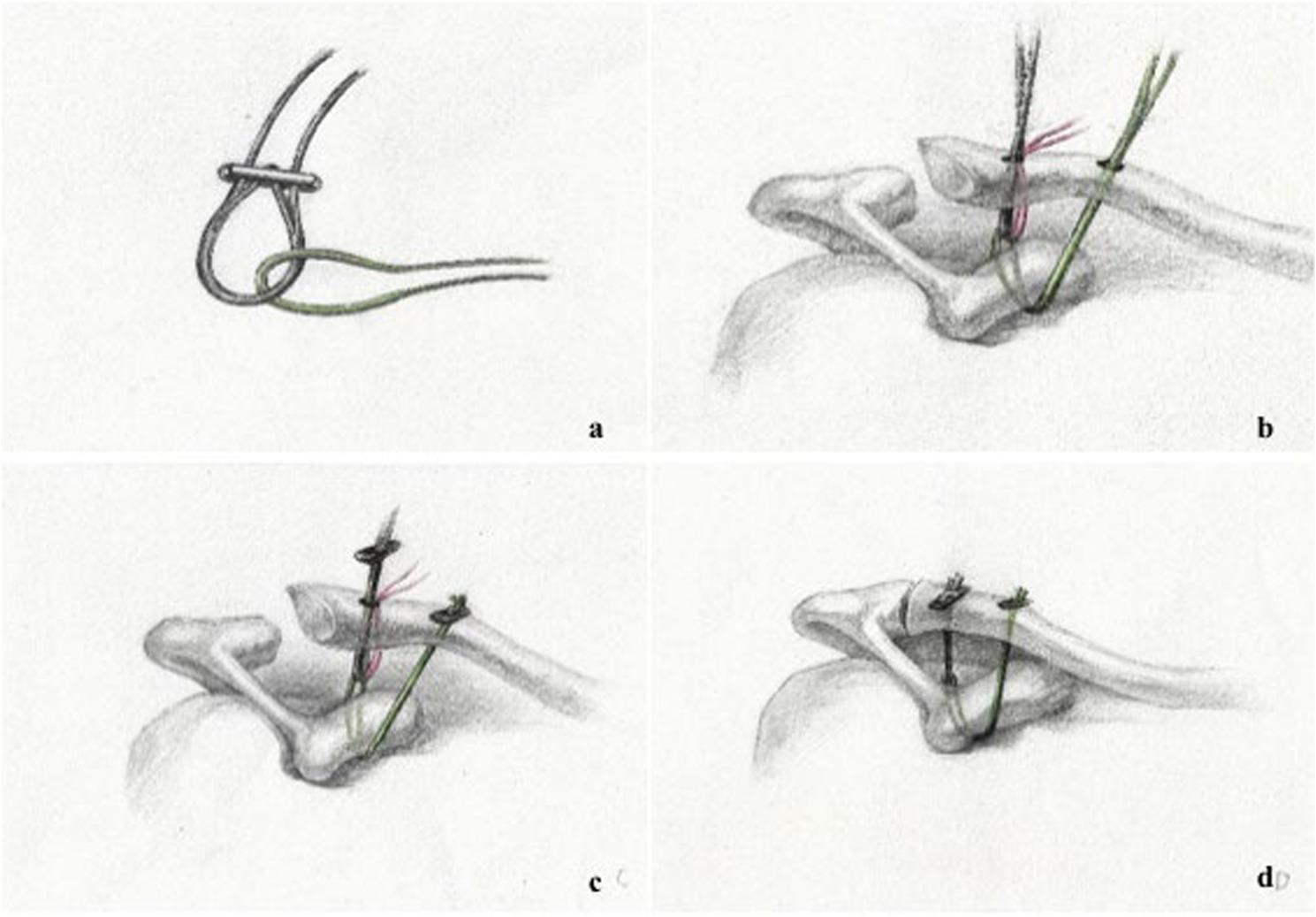 Figure 3
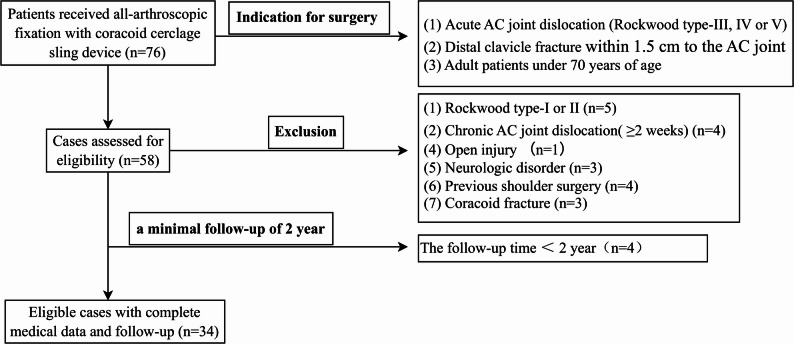 Figure 4
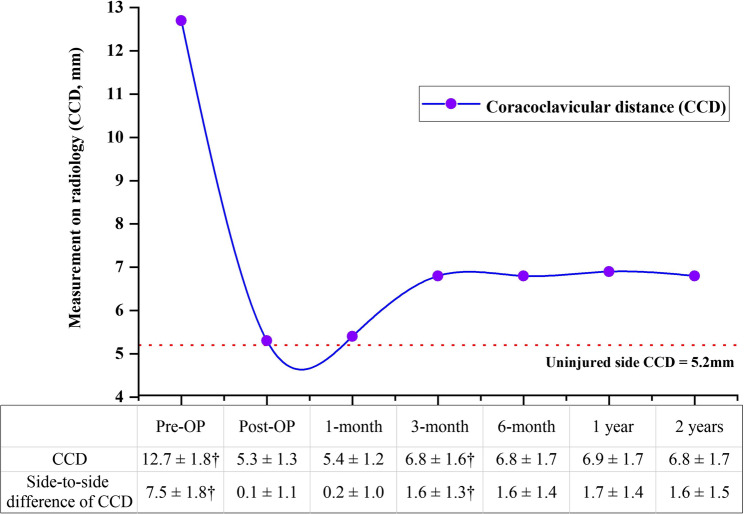 Figure 5
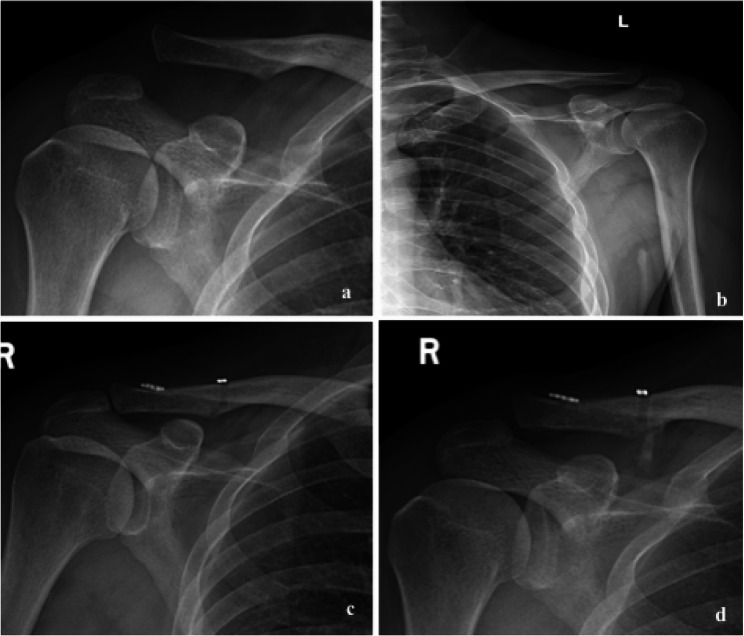 Figure 6
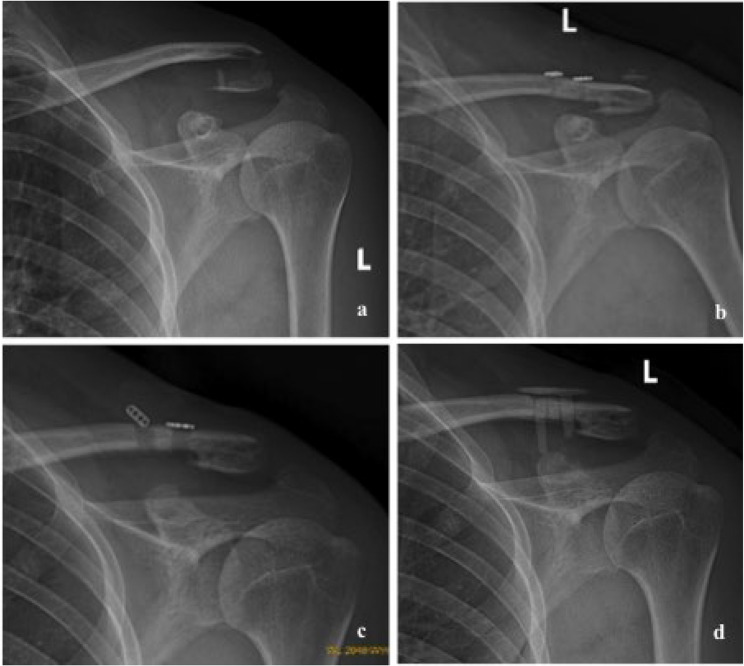 Figure 7
Peer Reviews
No public reviews on file for this paper yet. If you reviewed it on a platform where reviews are public (OpenReview, ICLR, NeurIPS, ICML), you can paste yours below so the community can read it here.
Videos
No videos yet. Explain this paper in a talk, walkthrough, or lecture? Add one.
Taxonomy
TopicsShoulder and Clavicle Injuries · Shoulder Injury and Treatment · Trauma Management and Diagnosis