Is there a difference in sample adequacy when vaginal HPV DNA samples are self-collected at home, a health post, or a primary care health center in rural Ethiopia? Implications for community cervical cancer screening
Alexandra Hernandez, Sahai Burrowes, Baye Gelaw, Tamrat Abede, Hanamariam Seyoum Alemu, Ayenew Molla Lakew, Yohannes Ayanaw Habitu, Brhanu Teka, Ida Ramezani, Madison Sisk, Buu Dao, Mulat Adefris, Dawit Kassahun, Tiruzer Bekele, Setegn Eshetie, Asmamaw Atnafu, Eiman Mahmoud

TL;DR
The study found that self-collected HPV DNA samples at home had more issues than those collected at health centers in rural Ethiopia, suggesting health posts may be a good middle ground for cervical cancer screening.
Contribution
This study compares sample adequacy of self-collected HPV DNA samples in home, health post, and health center settings in rural Ethiopia for the first time.
Findings
Home self-collection had the highest sample inadequacy rate (15%) compared to health post (7%) and health center (5%).
HPV prevalence was lowest in home-collected samples (6%) compared to health post (20.4%) and health center (15.9%).
Self-sampling at health posts was associated with more positive views and less embarrassment than home sampling.
Abstract
Self-collection of HPV DNA samples is recommended as a cervical cancer screening method in areas with high barriers to clinical examination, such as Ethiopia. Self-collected sample adequacy in clinical settings is high compared to clinician collection, but less is known about self-collected sample adequacy in community settings. We evaluated sample adequacy differences when samples were taken at women’s homes, a local health post, or a primary care health center in rural Ethiopia. Women either self-collected vaginal samples for HPV DNA at home (Arm 1, n = 100), at a health post (Arm 2, n = 100), or at a health center (Arm 3, n = 200). Women received identical sample collection kits and illustrated instruction pamphlets; all samples were treated the same way once collected. HPV DNA testing was performed using Ampfire Multiplex High-Risk HPV (Atila, Mountain View, California).…
Genes, proteins, chemicals, diseases, species, mutations and cell lines named across the full text — each resolved to its canonical identifier and authoritative record.
Click any figure to enlarge with its caption.
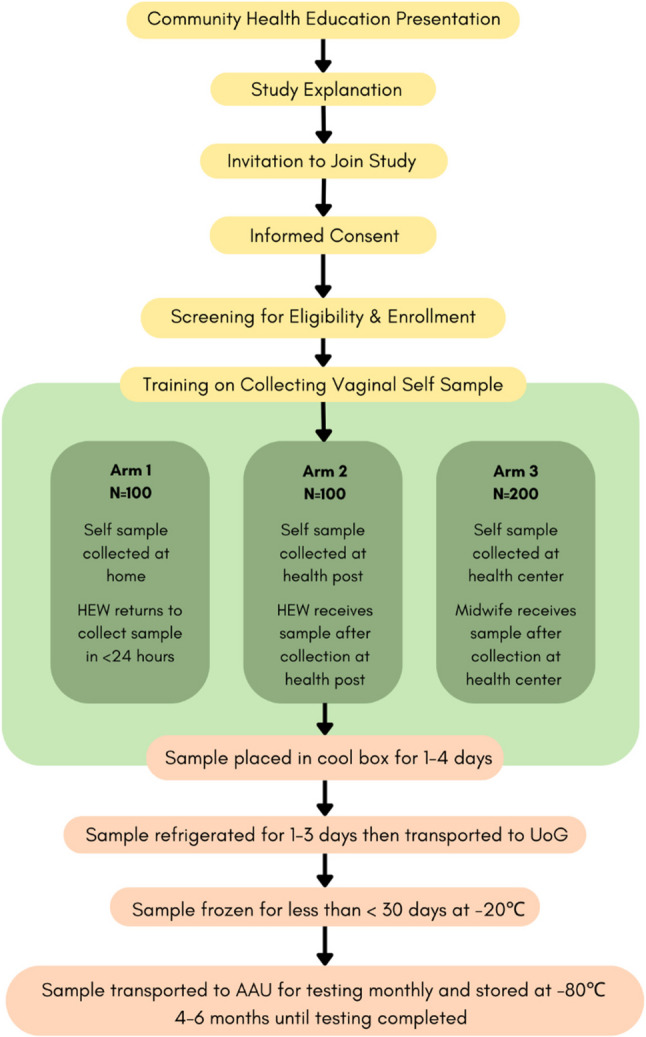 Figure 1
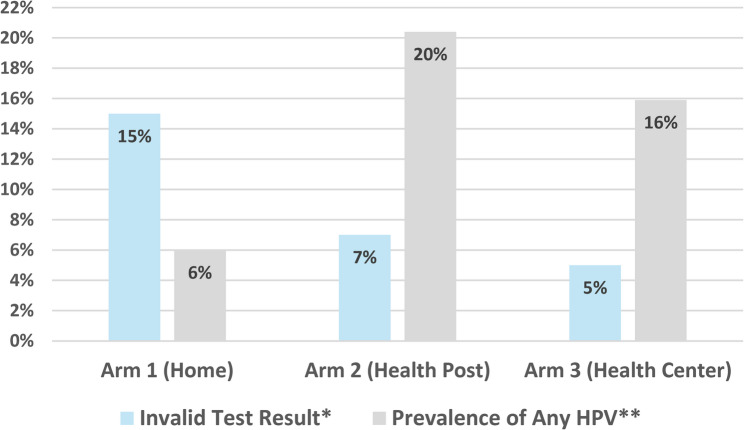 Figure 2
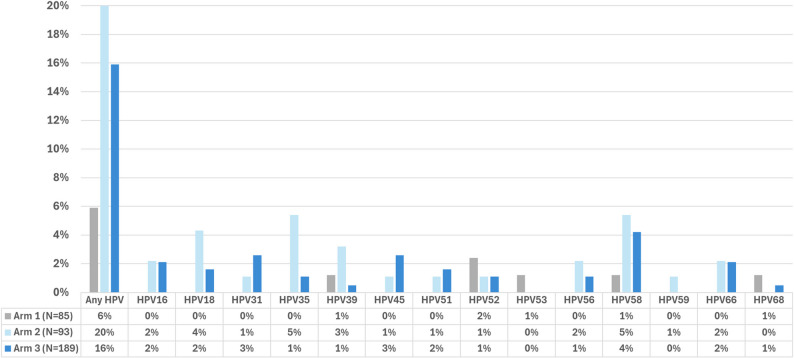 Figure 3
Peer Reviews
No public reviews on file for this paper yet. If you reviewed it on a platform where reviews are public (OpenReview, ICLR, NeurIPS, ICML), you can paste yours below so the community can read it here.
Videos
No videos yet. Explain this paper in a talk, walkthrough, or lecture? Add one.
Taxonomy
TopicsCervical Cancer and HPV Research · Global Cancer Incidence and Screening · Head and Neck Cancer Studies