Investigating interbrain synchrony under teamwork disruption: an fNIRS hyperscanning study
Coralie Réveillé, Grégoire Vergotte, Gérard Dray, Pierre-Antoine Jean, Pierre Jean, Simon Pla, Stephane Perrey, Grégoire Bosselut

TL;DR
This study explores whether brain activity synchronization between team members changes when teamwork is disrupted, finding that it remains stable despite changes in task difficulty.
Contribution
The study challenges the idea that interbrain synchrony is a reactive marker of teamwork by showing it remains unchanged during disruptions.
Findings
Interbrain synchrony did not change when teamwork was disrupted by increased task difficulty.
Teamwork adaptation was observed in communication but not in interbrain synchrony.
Findings suggest interbrain synchrony may reflect a stable rather than reactive team state.
Abstract
Teams are inherently adaptive entities that continuously adapt to changes or disruptions in their tasks or environments. During collaboration, interbrain synchrony (IBS) emerges, reflecting the temporal alignment of neural activity between team members. Building on this, IBS has been proposed as a potential marker of teamwork, suggesting that IBS should be sensitive to changes in teamwork. The present study investigated whether IBS is sensitive to changes in teamwork. We hypothesized that disruptions in teamwork would be accompanied by alterations in IBS dynamics. Ninety-eight healthy adults (mean age = 22.5 ± 3.22 years; 69 females, 65.1%) were assigned to forty-nine dyads. Each pair completed a 20-minute computer-based navigation task while their brain activity was simultaneously recorded using fNIRS hyperscanning. Dyads in the experimental group encountered an unexpected increase…
Genes, proteins, chemicals, diseases, species, mutations and cell lines named across the full text — each resolved to its canonical identifier and authoritative record.
Click any figure to enlarge with its caption.
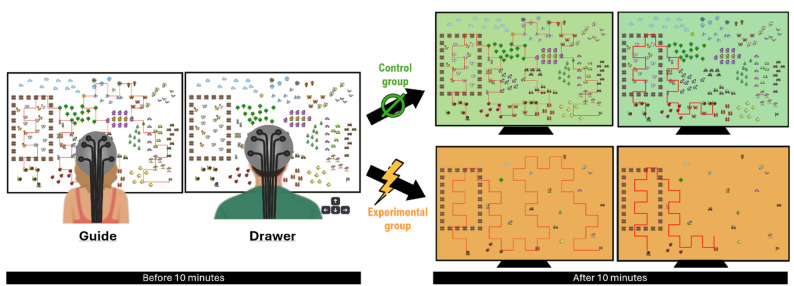 Figure 1
 Figure 2
 Figure 3
 Figure 4
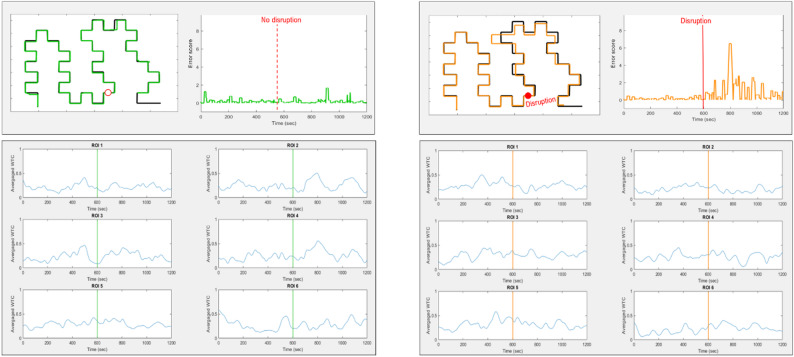 Figure 5
Peer Reviews
No public reviews on file for this paper yet. If you reviewed it on a platform where reviews are public (OpenReview, ICLR, NeurIPS, ICML), you can paste yours below so the community can read it here.
Videos
No videos yet. Explain this paper in a talk, walkthrough, or lecture? Add one.
Taxonomy
TopicsAction Observation and Synchronization · Transcranial Magnetic Stimulation Studies · Neurobiology of Language and Bilingualism