Diagnostic challenges in biliary cytology of biliary inflammatory pseudotumor of the liver: A case report and a review of the literature
Yumiko Higuchi, Toshihiko Kato, Eishin Kurihara, Tomonari Toyama, Takuya Fusegawa, Mami Ubukata, Tomiko Yoshizawa, Tomohiro Imaizumi, Akiko Suzuki, Mei Oshima, Fuki Endo, Shun Matsumoto, Katsuhiro Hagiwara, Yosuke Otake, Shiro Sugihara, Noriyuki Tani, Yasuo Imai

TL;DR
This paper discusses the difficulty in diagnosing biliary inflammatory pseudotumor of the liver, which can look like cancer on imaging and cytology.
Contribution
The study highlights the diagnostic limitations of ENBD cytology in distinguishing biliary IPT from cholangiocarcinoma.
Findings
ENBD cytology had limited success in differentiating between benign and malignant bile strictures.
Percutaneous core needle biopsy may be necessary when tumor markers are normal.
Multi-reviewer evaluation showed difficulty in distinguishing IPT from well-differentiated cholangiocarcinoma.
Abstract
Biliary inflammatory pseudotumor (IPT) of the liver is a rare benign tumor of which radiographic images, such as biliary stricture and dilatation, resemble those of cholangiocarcinoma (CC). Although repeated biliary cytology via endoscopic nasobiliary drainage (ENBD) is performed for differential diagnosis, a correct diagnosis remains difficult. The present study describes the case of a 76-year-old female patient with chronic liver disease. During surveillance, intrahepatic CC was suspected by imaging analyses; however, the carcinoembryonic antigen and CA19-9 levels were within normal ranges. Percutaneous core needle biopsy was not performed due to technical reasons; however, a left lobectomy was performed based on the diagnosis of malignancy by ENBD bile cytology. A pathological examination of the resected liver demonstrated biliary IPT. Reflecting on the cytological diagnosis of this…
Genes, proteins, chemicals, diseases, species, mutations and cell lines named across the full text — each resolved to its canonical identifier and authoritative record.
Click any figure to enlarge with its caption.
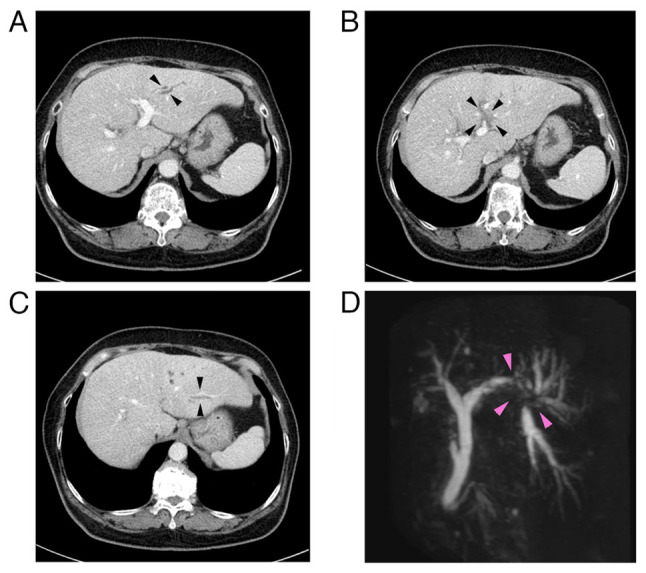 Figure 1
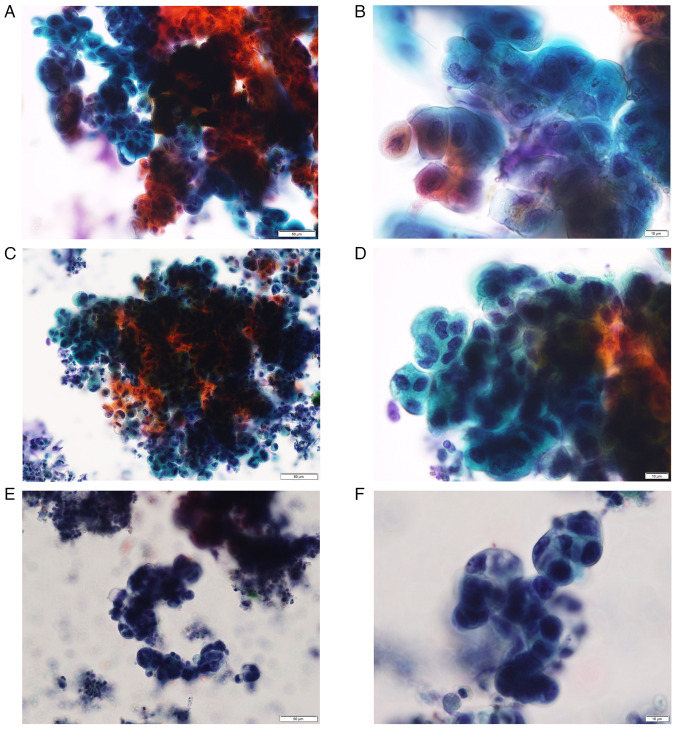 Figure 2
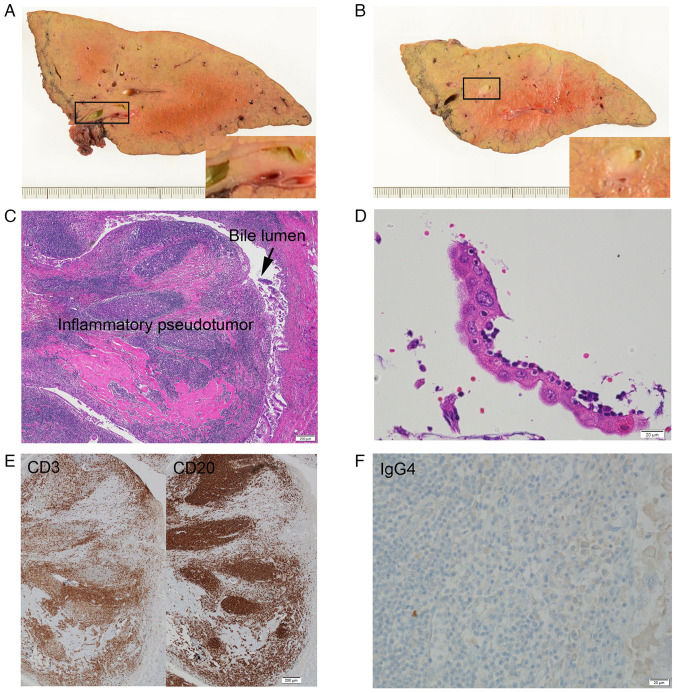 Figure 3
Peer Reviews
No public reviews on file for this paper yet. If you reviewed it on a platform where reviews are public (OpenReview, ICLR, NeurIPS, ICML), you can paste yours below so the community can read it here.
Videos
No videos yet. Explain this paper in a talk, walkthrough, or lecture? Add one.
Taxonomy
TopicsIgG4-Related and Inflammatory Diseases · Liver Diseases and Immunity · Osteomyelitis and Bone Disorders Research