Sustainable, Safe, and Effective (Super)Hydrophobic Coatings for Cellulosic Fiber Material via Alkyl Ketene Dimer and Polysaccharide Integration
Petra Jerič, Barbara Golja, Gregor Lavrič, Janvit Teržan, Anja Verbič, Blaž Likozar, Uroš Novak

TL;DR
This paper introduces a new eco-friendly hydrophobic coating for cellulosic fibers using AKD and natural polysaccharides, offering a sustainable alternative to harmful chemicals.
Contribution
The novel biodegradable hydrophobic coating combines AKD with natural polysaccharides, achieving superhydrophobic properties and durability.
Findings
Coatings achieved water contact angles of 126° to 153°, showing strong hydrophobicity.
Coatings resisted water absorption for up to 5 hours and survived 30 laundry cycles.
SEM–EDX and FTIR confirmed uniform coverage and covalent bonding of AKD to cellulose.
Abstract
In light of increasing environmental and regulatory restrictions on per- and polyfluoroalkyl substances (PFAS), silicones, and other persistent synthetic hydrophobic agents, we report the development of novel biodegradable, water-based hydrophobic coatings for cellulosic fiber materials based on alkyl ketene dimer (AKD) and naturally derived polysaccharides alginate, cellulose nanofibers, starch, and agar as matrices. Coatings on the cellulosic fiber material were applied through screen printing and cured at low temperatures. The prepared coatings transformed the initially (super)hydrophilic cellulosic fibers into a hydrophobic material, with static water contact angles ranging from 126° to 153°. Application of the coatings extended water drop absorption times from immediate uptake to as long as up to 5 h, exhibiting rolling-off behavior consistent with lotus-leaf-like hydrophobicity.…
Genes, proteins, chemicals, diseases, species, mutations and cell lines named across the full text — each resolved to its canonical identifier and authoritative record.
Click any figure to enlarge with its caption.
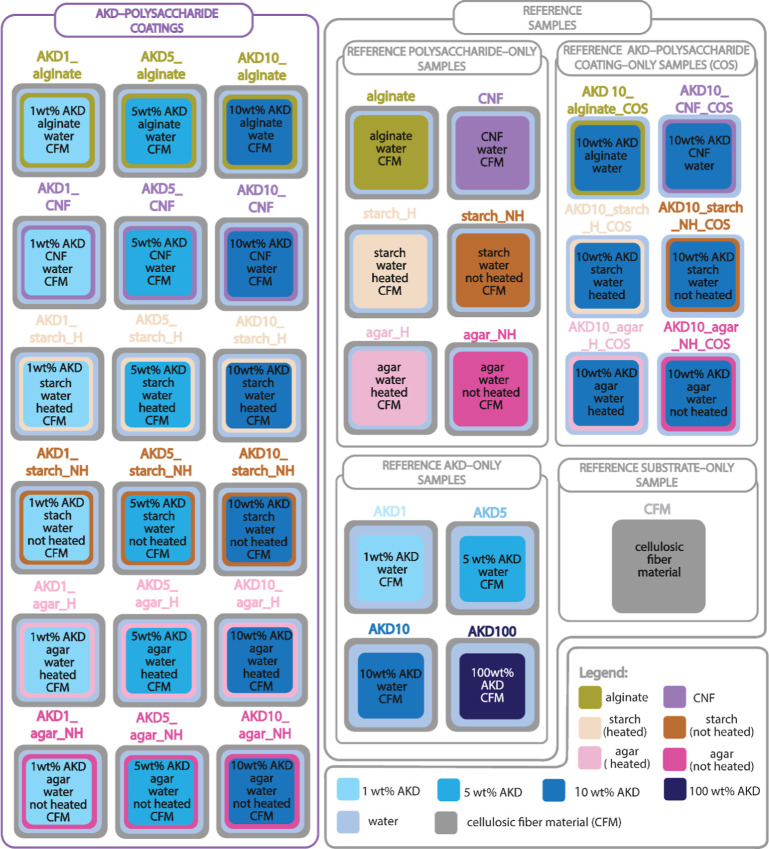 Figure 1
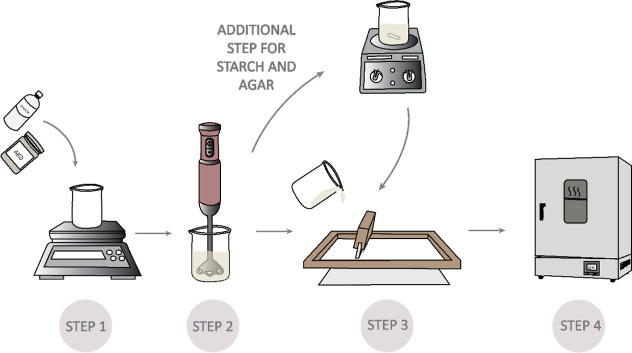 Figure 2
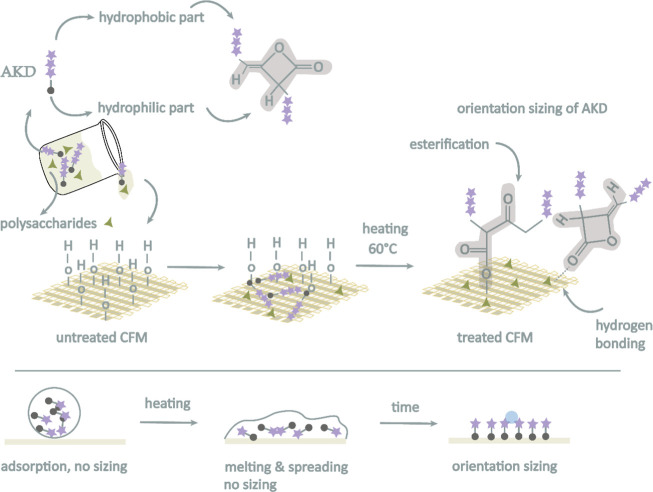 Figure 3
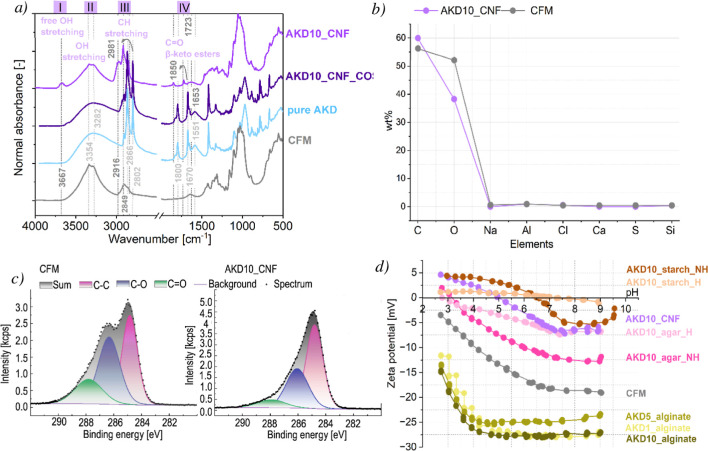 Figure 4
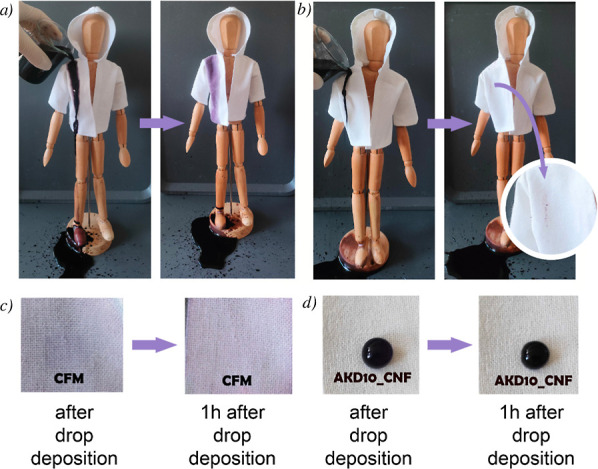 Figure 5
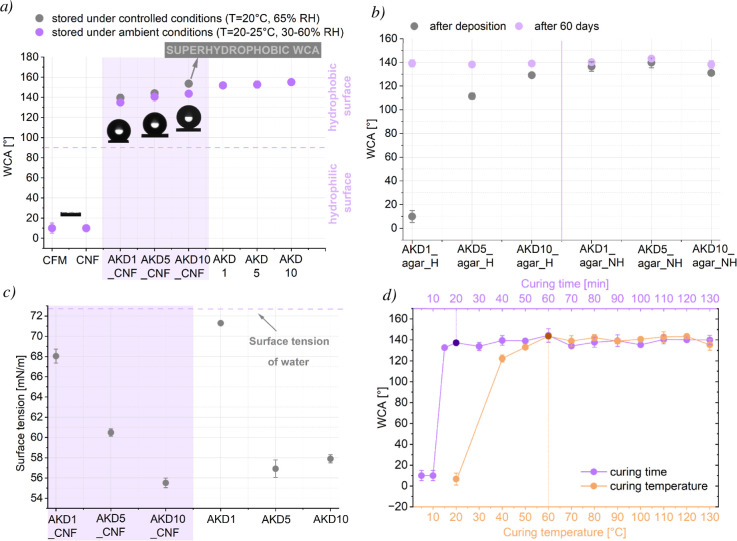 Figure 6
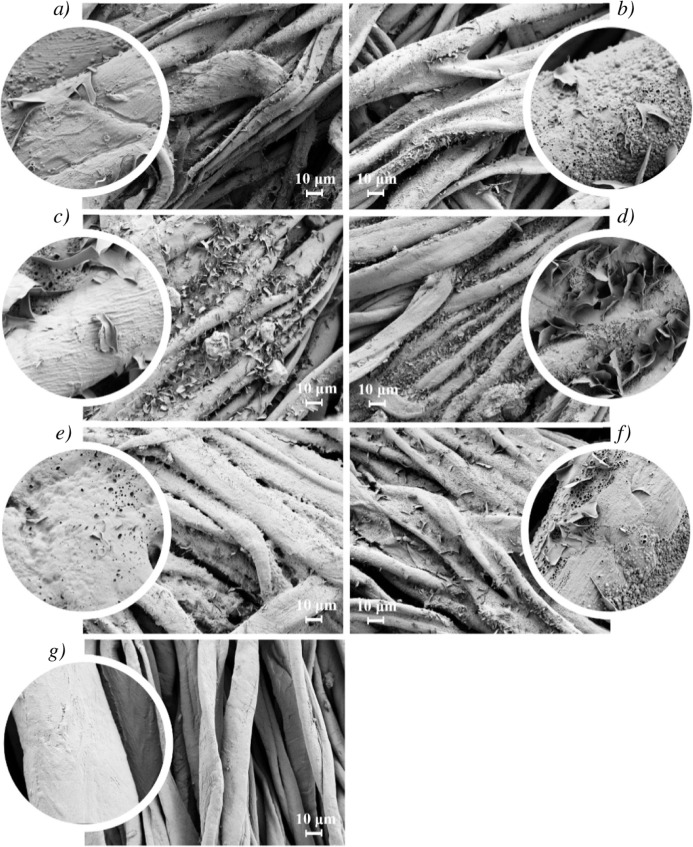 Figure 7
 Figure 8
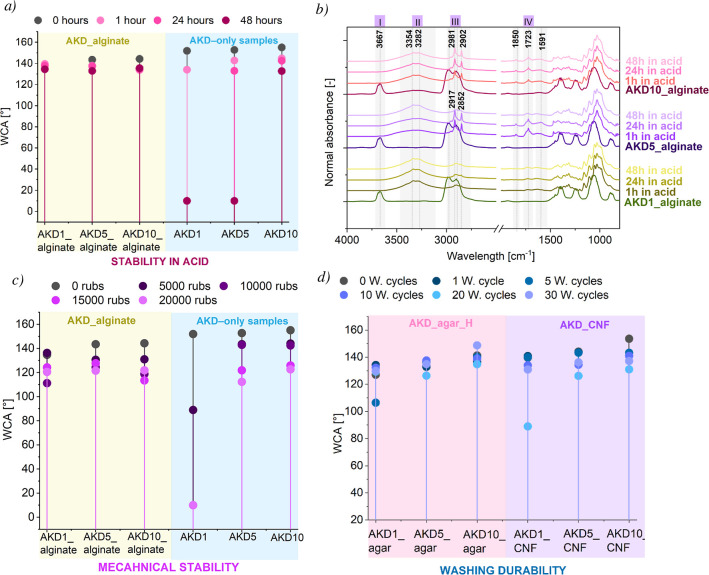 Figure 9
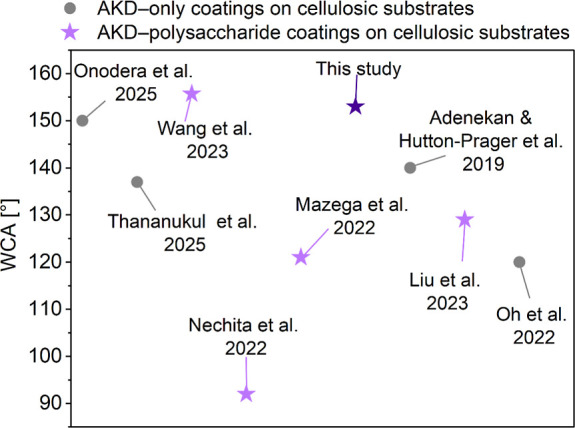 Figure 10
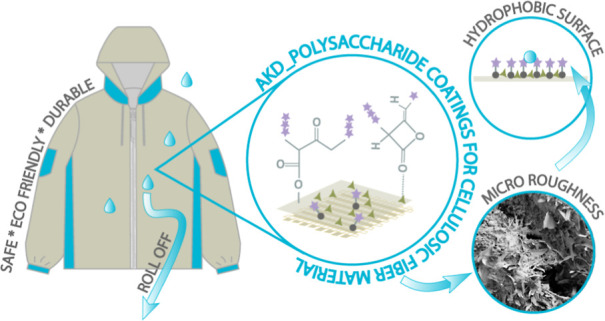 Figure 11
 Figure 12
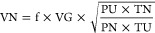 Figure 13
Peer Reviews
No public reviews on file for this paper yet. If you reviewed it on a platform where reviews are public (OpenReview, ICLR, NeurIPS, ICML), you can paste yours below so the community can read it here.
Videos
No videos yet. Explain this paper in a talk, walkthrough, or lecture? Add one.
Taxonomy
TopicsSurface Modification and Superhydrophobicity · Polymer composites and self-healing · Advanced Cellulose Research Studies