Improved Perovskite Solar Cells with an Environmentally Friendly Phthalocyanine Hole Extracting Interlayer
Suresh K. Podapangi, Laura Mancini, Daimiota Takhellambam, Jie Xu, Luigi Angelo Castriotta, Giuseppe Mattioli, Venanzio Raglione, Federica Palmeri, Daniela Caschera, Anatoly P. Sobolev, Antonio Cricenti, David Becerril Rodriguez, Marco Luce, Aldo Di Carlo, Gloria Zanotti

TL;DR
Researchers improved perovskite solar cells by using a phthalocyanine interlayer, boosting efficiency and stability in a more eco-friendly way.
Contribution
A new phthalocyanine interlayer is introduced to enhance perovskite solar cell performance and stability with an environmentally friendly synthesis method.
Findings
Efficiency increased from 18.4% to 20.2% under standard conditions.
Indoor efficiency improved from 27.3% to 30.1%.
Device stability increased, with T80 rising from 1134 h to 1347 h under ISOS-D1 tests.
Abstract
We investigate the use of phthalocyanine, from the family of multipurpose functional organic complexes, as an interlayer between the hole-selective contact and the perovskite in self-assembled monolayer-based p-i-n perovskite solar cells. This phthalocyanine interlayer effectively mitigated recombination losses that were occurring between the self-assembled hole-extraction monolayer based on the carbazole functional group and the perovskite film. Furthermore, the crystallinity of the perovskite semiconductor was enhanced, which reduced nonradiative recombination and resulted in an increase in shunt resistance and a higher open-circuit voltage. The efficiency improved from 18.4% to 20.2%. A similar boost in efficiency was found under indoor lighting conditions (from 27.3% to 30.1%). The tetra-3,5-dimethylphenoxy-zinc phthalocyanine (DMPO4) molecule synthesized for this work also enhanced…
Genes, proteins, chemicals, diseases, species, mutations and cell lines named across the full text — each resolved to its canonical identifier and authoritative record.
Click any figure to enlarge with its caption.
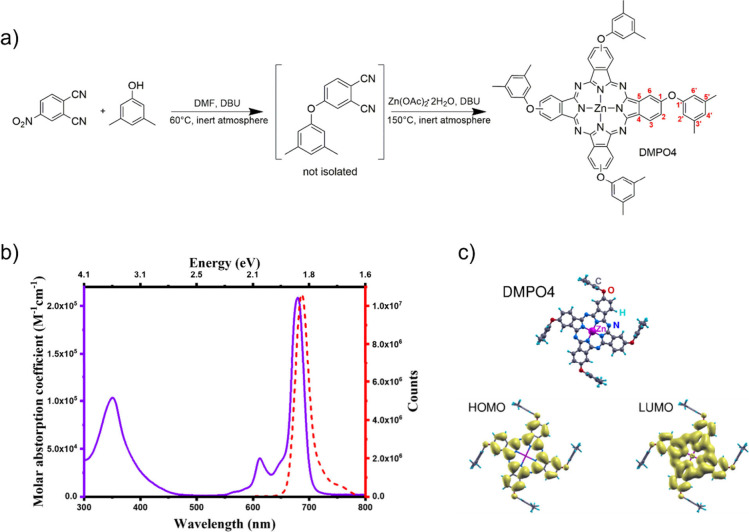 Figure 1
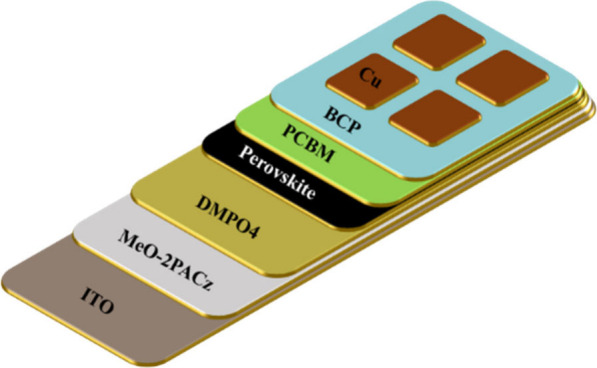 Figure 2
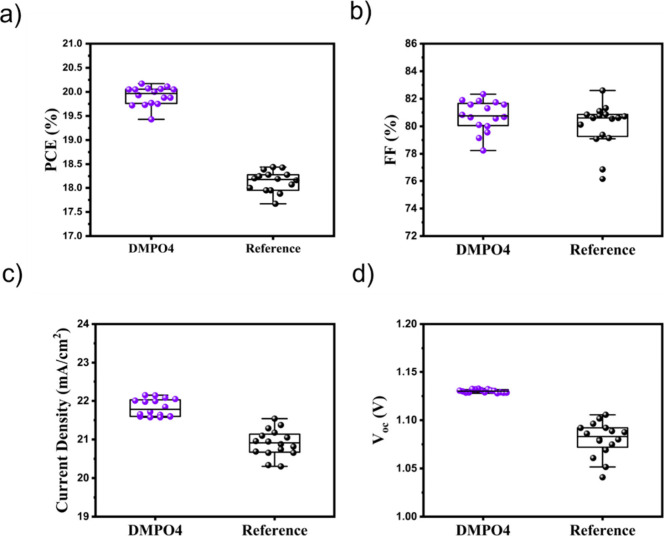 Figure 3
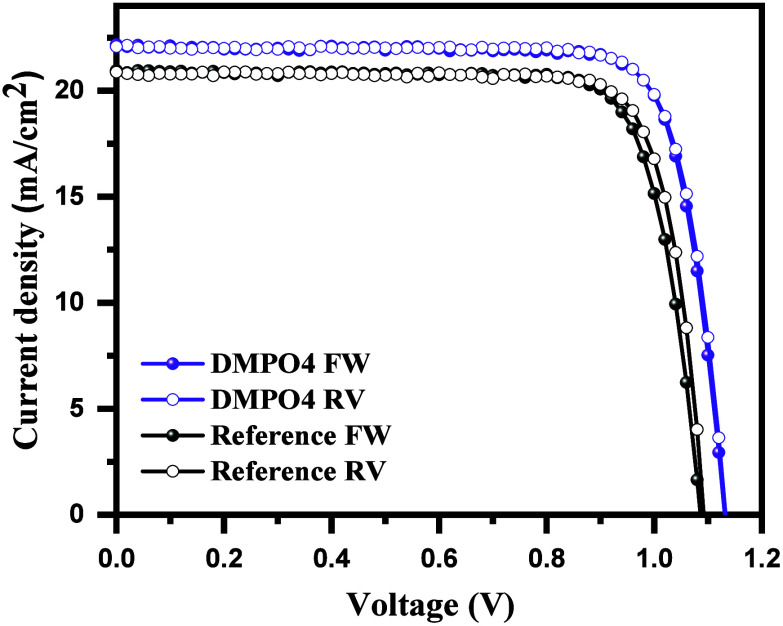 Figure 4
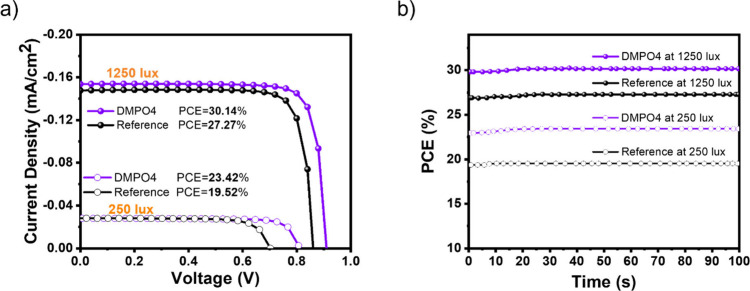 Figure 5
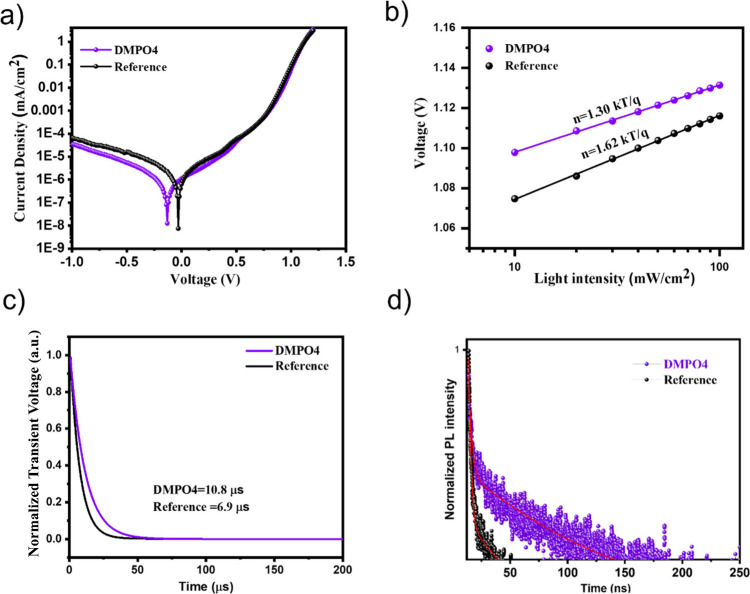 Figure 6
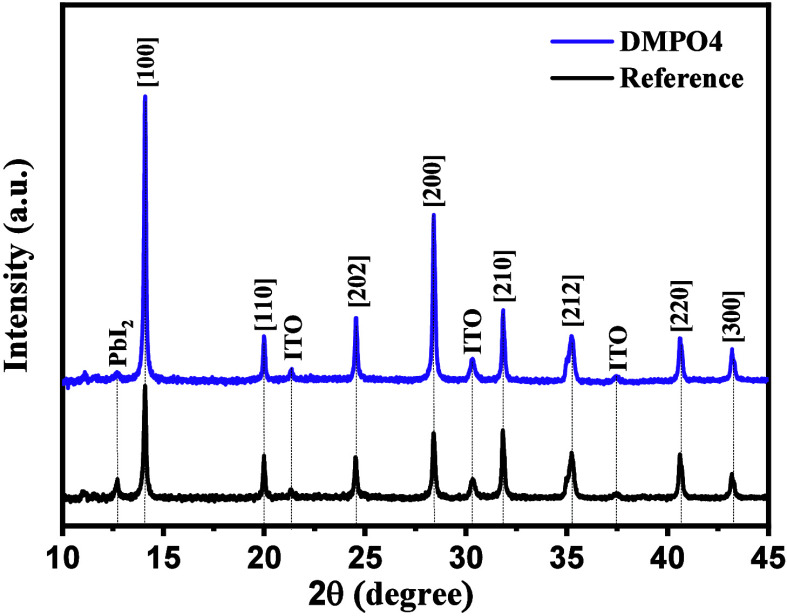 Figure 7
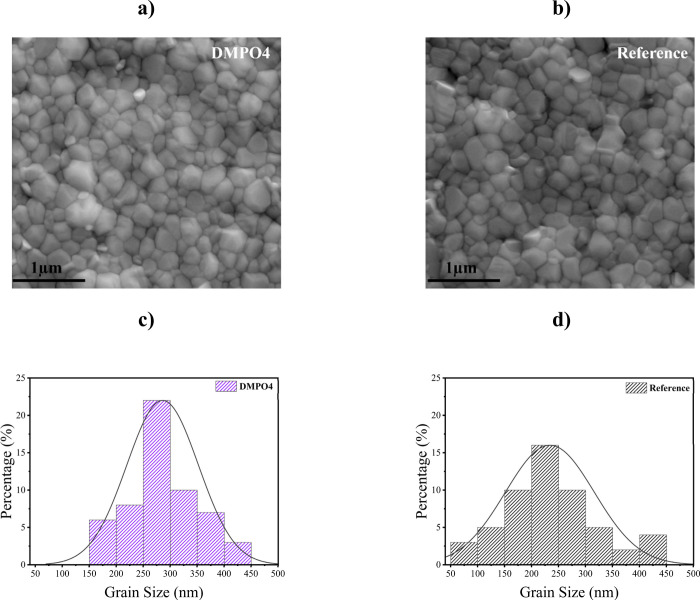 Figure 8
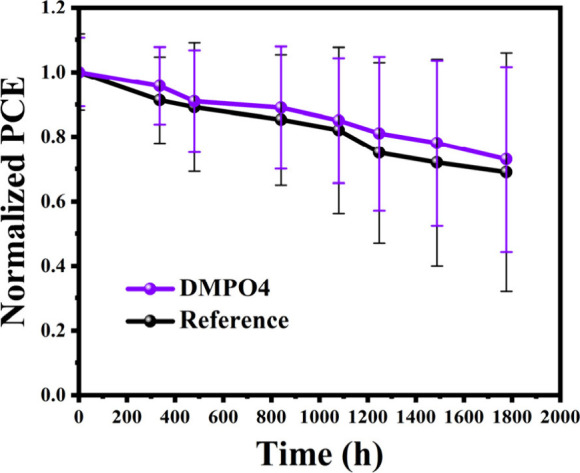 Figure 9
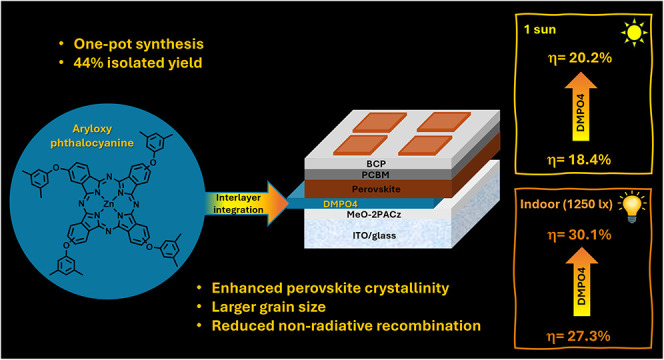 Figure 10
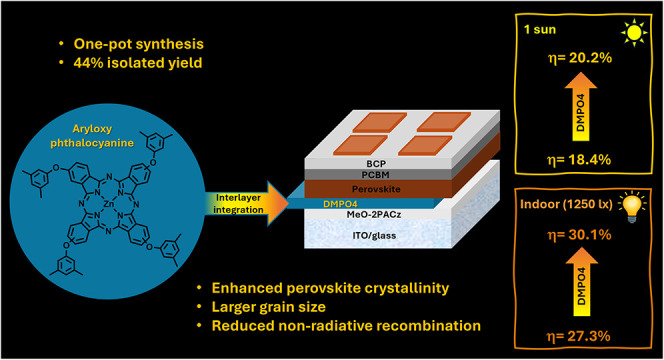 Figure 11
 Figure 12
 Figure 13
 Figure 14
Peer Reviews
No public reviews on file for this paper yet. If you reviewed it on a platform where reviews are public (OpenReview, ICLR, NeurIPS, ICML), you can paste yours below so the community can read it here.
Videos
No videos yet. Explain this paper in a talk, walkthrough, or lecture? Add one.
Taxonomy
TopicsPerovskite Materials and Applications · Organic Electronics and Photovoltaics · Organic Light-Emitting Diodes Research