Haplotype bias detection using pedigree-based transmission simulation: traces of selection that occurred in apple breeding
Hideto Mochizuki, Mai F Minamikawa, Kosuke Hamazaki, Miyuki Kunihisa, Shigeki Moriya, Koji Noshita, Takeshi Hayashi, Yuichi Katayose, Toshiya Yamamoto, Hiroyoshi Iwata

TL;DR
This study uses pedigree-based simulations to detect selection in apple breeding, revealing genomic regions shaped by historical breeding practices.
Contribution
A novel method for detecting selection in apple breeding without requiring phenotypic data, using haplotype bias from pedigree simulations.
Findings
Biased haplotype regions overlapped with loci linked to fruit traits like fructose content.
Gene Ontology analysis showed enrichment for stress-related and developmental genes in selected regions.
The method can uncover cryptic selection signals and identify underutilized founder alleles for breeding improvement.
Abstract
Breeding perennial fruit trees like apple is constrained by long generation times and limited population sizes, which often lead to repeated use of a few elite cultivars and consequently narrow genetic diversity. To better understand how such selection processes have shaped the current genetic structure, we applied gene-drop simulations—a pedigree-based method using known parentage and genetic maps—to a curated set of 185 apple cultivars used in Japanese breeding programs, genotyped with 11 786 genome-wide single nucleotide polymorphism markers. This approach enabled us to quantify the expected distribution of founder haplotypes and identify genomic regions where observed founder haplotype frequencies significantly deviated from expectation, suggesting potential selection. Notably, biased regions overlapped with loci associated with key fruit traits, such as fructose content,…
Genes, proteins, chemicals, diseases, species, mutations and cell lines named across the full text — each resolved to its canonical identifier and authoritative record.
Click any figure to enlarge with its caption.
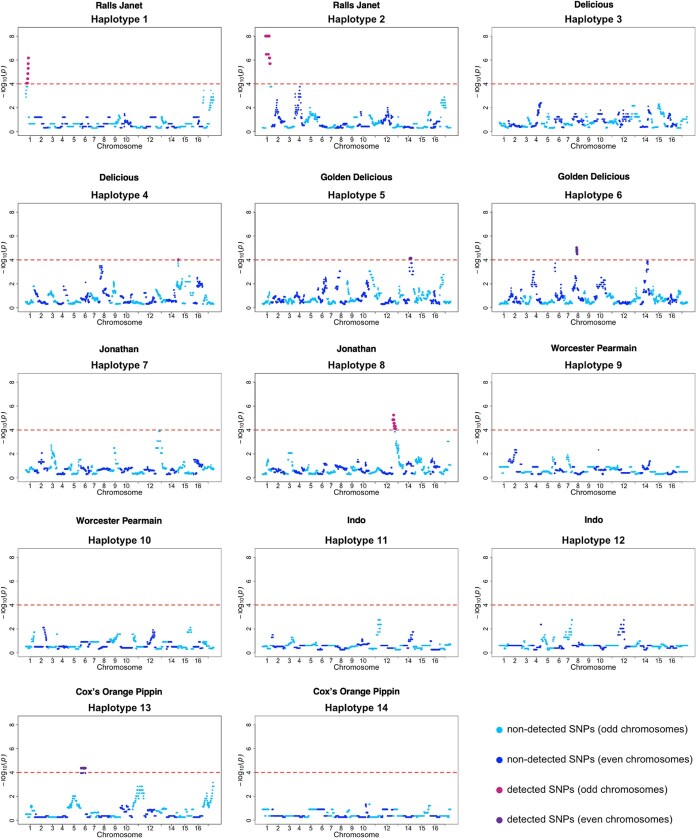 Figure 1
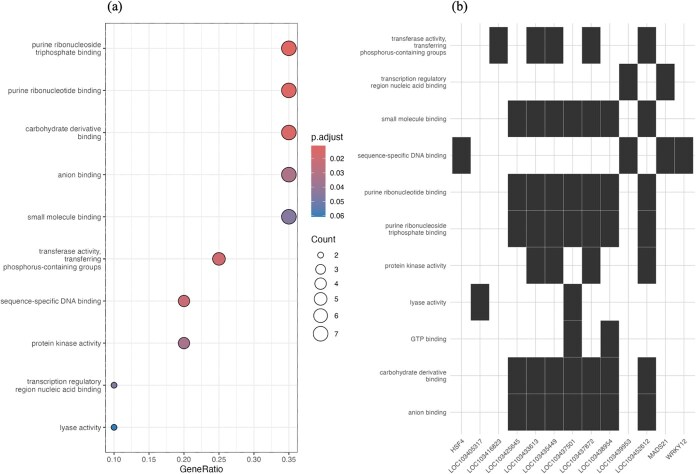 Figure 2
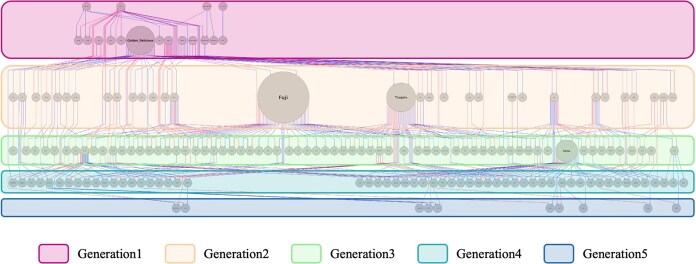 Figure 3
Peer Reviews
No public reviews on file for this paper yet. If you reviewed it on a platform where reviews are public (OpenReview, ICLR, NeurIPS, ICML), you can paste yours below so the community can read it here.
Videos
No videos yet. Explain this paper in a talk, walkthrough, or lecture? Add one.
Taxonomy
TopicsPlant Physiology and Cultivation Studies · Fungal Plant Pathogen Control · Postharvest Quality and Shelf Life Management