Comparative analysis of alkyne- and desthiobiotinylated photoaffinity probes for chemotranscriptomic profiling
Daphne A. L. van den Homberg, Georgia Poulladofonou, Aurelia Dekens, Willem A. Velema

TL;DR
This paper compares two types of photoaffinity probes for studying small molecule-RNA interactions and finds that one causes too many false positives.
Contribution
The study evaluates desthiobiotinylated probes as an alternative to alkyne-modified probes for chemotranscriptomic profiling.
Findings
Both alkyne and desthiobiotin probes bind to the FMN riboswitch target.
Desthiobiotin shows high non-specific RNA interactions in dot blots and RT-qPCR.
Transcriptome-wide sequencing confirms the lack of selectivity in desthiobiotin.
Abstract
Understanding small molecule–RNA interactions is a crucial part in drug development and fundamental biology. Chemotranscriptomic profiling is emerging as a powerful platform to interrogate interactions of small molecules with entire transcriptomes. This technique relies on photoaffinity probes that covalently capture small molecule RNA interactions. Most photoaffinity probes bear an alkyne handle that requires additional inefficient functionalization and purification steps after RNA capture. We sought to improve the workflow by directly desthiobiotinylating a photoaffinity probe, omitting these additional alkyne functionalization steps. Here, we compare the suitability of desthiobiotin and alkyne modified Ribocil-derived photoaffinity probes for chemotranscriptomic profiling. Our results demonstrate binding of both photoaffinity probes to their specific target, the FMN riboswitch, using…
Genes, proteins, chemicals, diseases, species, mutations and cell lines named across the full text — each resolved to its canonical identifier and authoritative record.
Click any figure to enlarge with its caption.
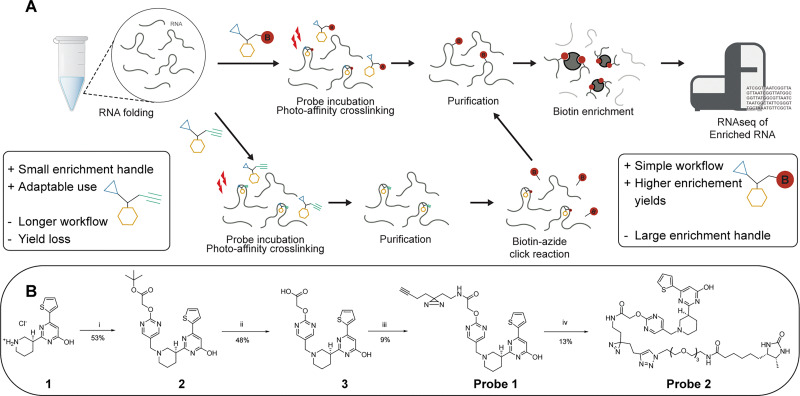 Figure 1
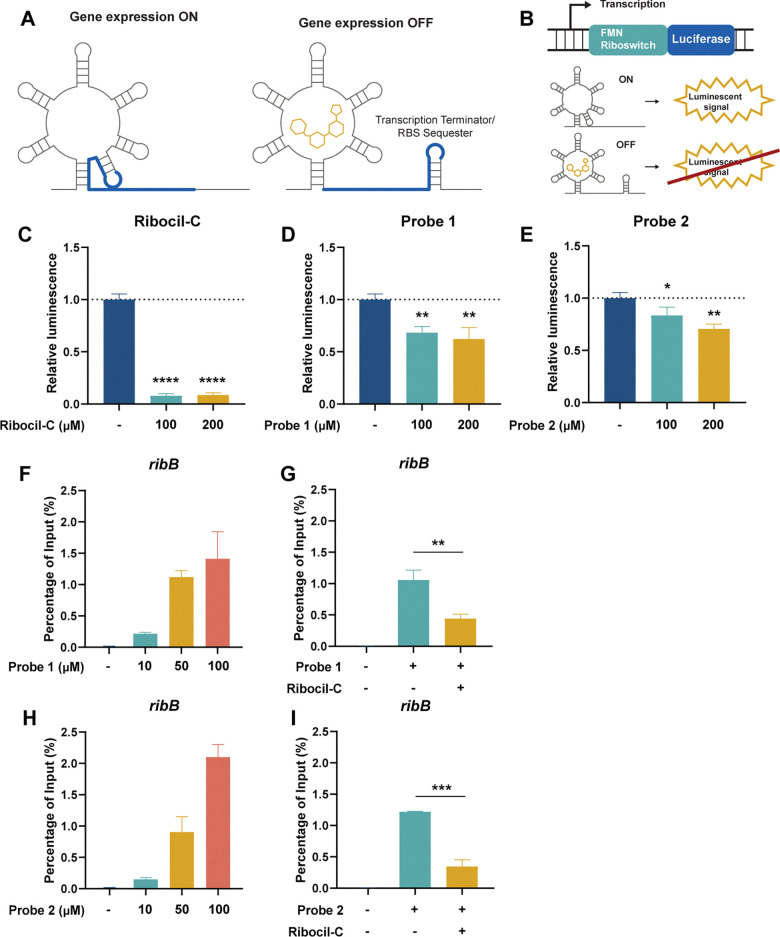 Figure 2
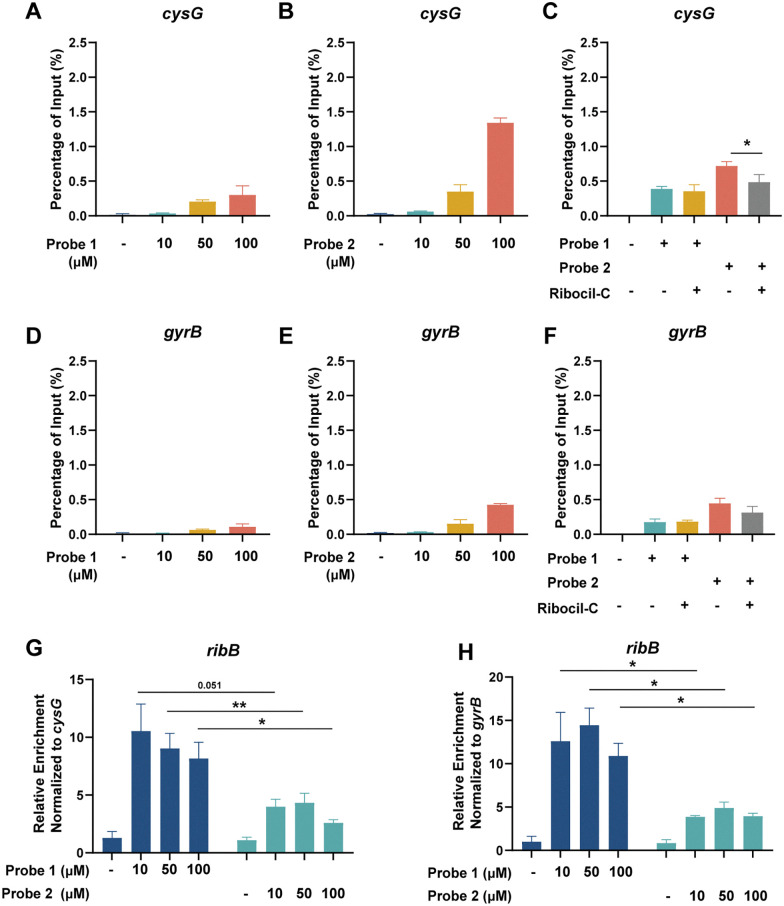 Figure 3
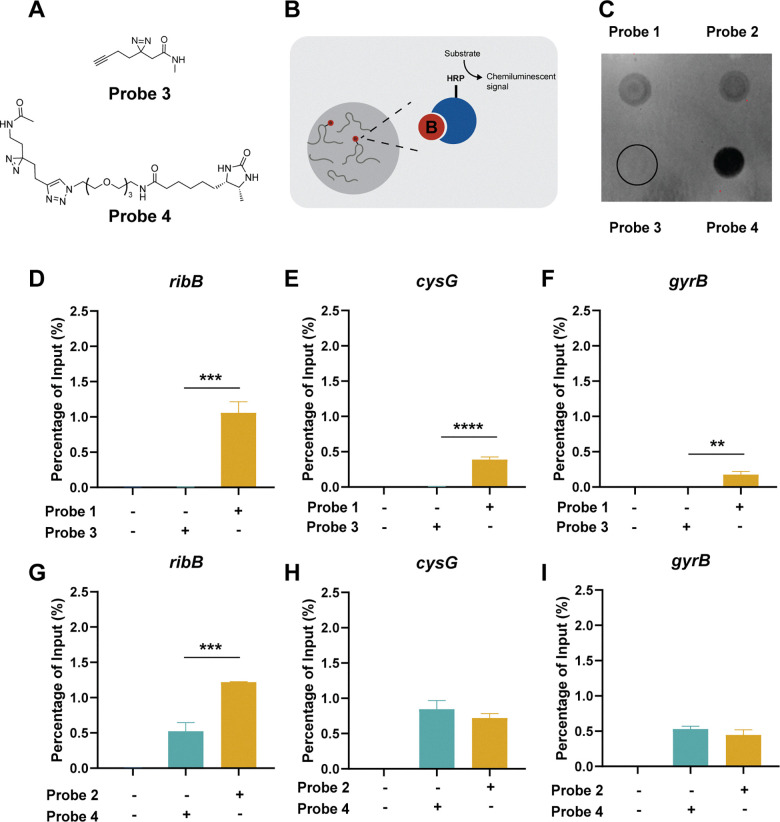 Figure 4
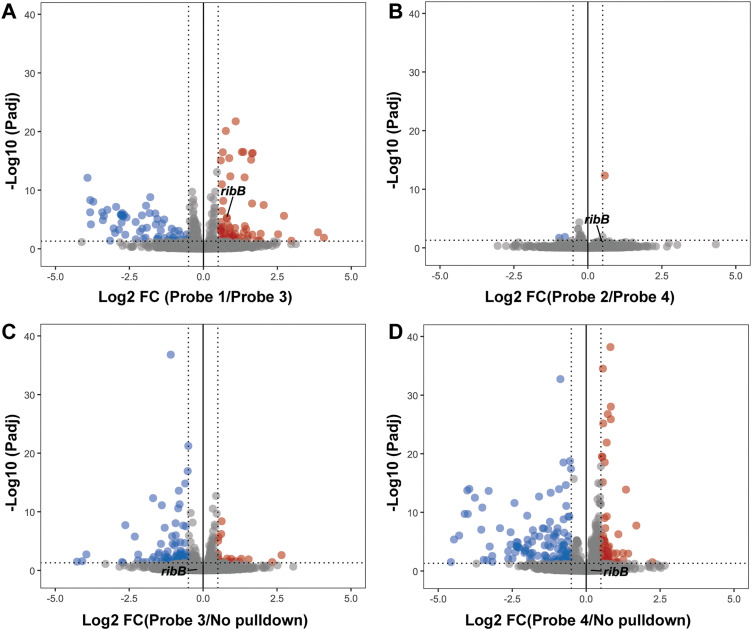 Figure 5
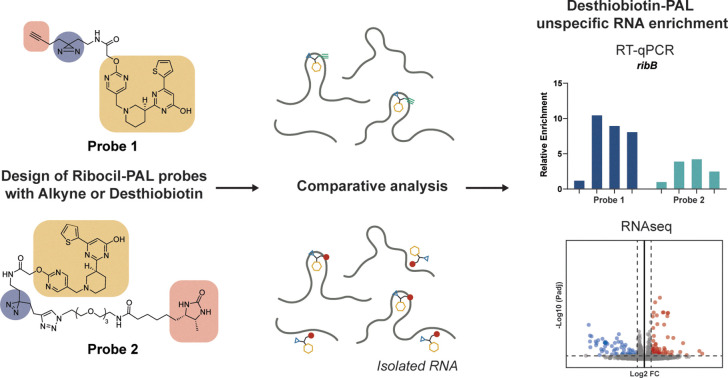 Figure 6
Peer Reviews
No public reviews on file for this paper yet. If you reviewed it on a platform where reviews are public (OpenReview, ICLR, NeurIPS, ICML), you can paste yours below so the community can read it here.
Videos
No videos yet. Explain this paper in a talk, walkthrough, or lecture? Add one.
Taxonomy
TopicsClick Chemistry and Applications · Photochromic and Fluorescence Chemistry · Protein Tyrosine Phosphatases