Inverse hysteresis effects in a real and virtual environment
Christoph Schütz

TL;DR
The study shows that people adjust their body movements when passing through apertures, with similar patterns in real and virtual environments, revealing an inverse hysteresis effect in motor planning.
Contribution
The paper introduces the first evidence of inverse hysteresis in full-body motor tasks and validates its observation in virtual reality.
Findings
Participants exhibited inverse hysteresis by rotating their bodies at narrower apertures, with a shift in critical width based on sequence order.
VR participants showed similar behavioral patterns but rotated at wider apertures, suggesting more cautious behavior in virtual settings.
The inverse hysteresis effect was previously only observed in perception research, indicating potential overlap with repetition suppression in motor planning.
Abstract
In sequential, repetitive motor tasks such as opening a stack of drawers, we tend to reuse prior motor plans to reduce cognitive load. This persistence, termed motor hysteresis, has been demonstrated in discrete reaching movements but not in discrete full-body movements. If hysteresis reflects a general principle of cost reduction, it should also manifest in full-body movements. To test this, we asked participants to perform a discrete full-body posture selection task: passing through apertures of varying widths. Width was varied in ordered sequences to induce hysteresis and body rotation was measured. To test whether full-body tasks, which require considerable space, scientific equipment, and personnel, could be conducted more efficiently in a virtual reality (VR) setup, we faithfully reproduced the task in VR with a second group of participants. Results showed that participants walked…
Genes, proteins, chemicals, diseases, species, mutations and cell lines named across the full text — each resolved to its canonical identifier and authoritative record.
Click any figure to enlarge with its caption.
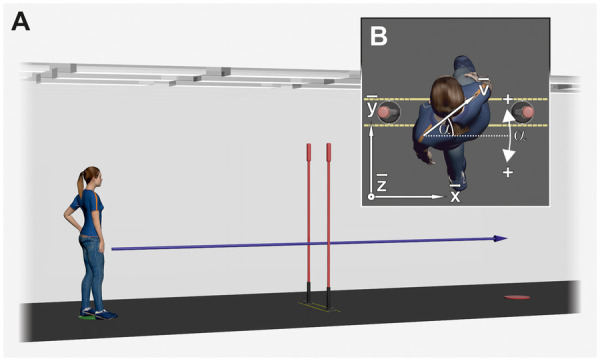 Figure 1
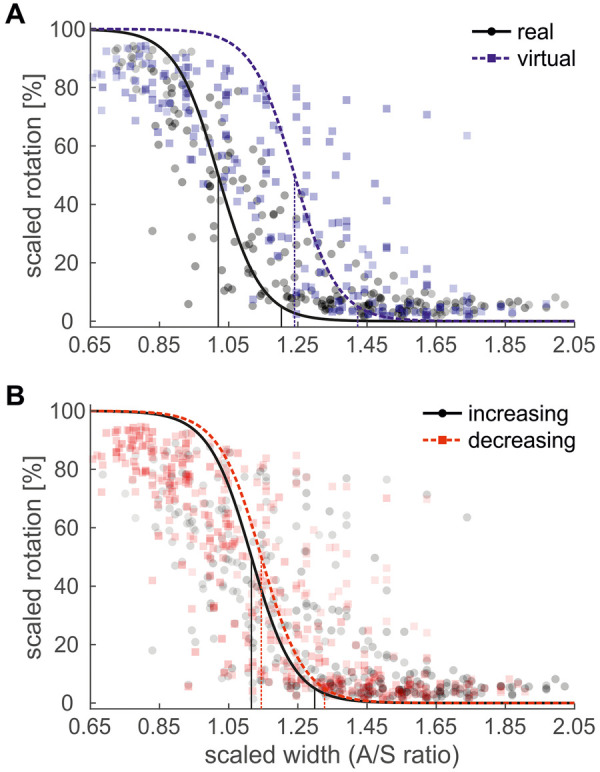 Figure 2
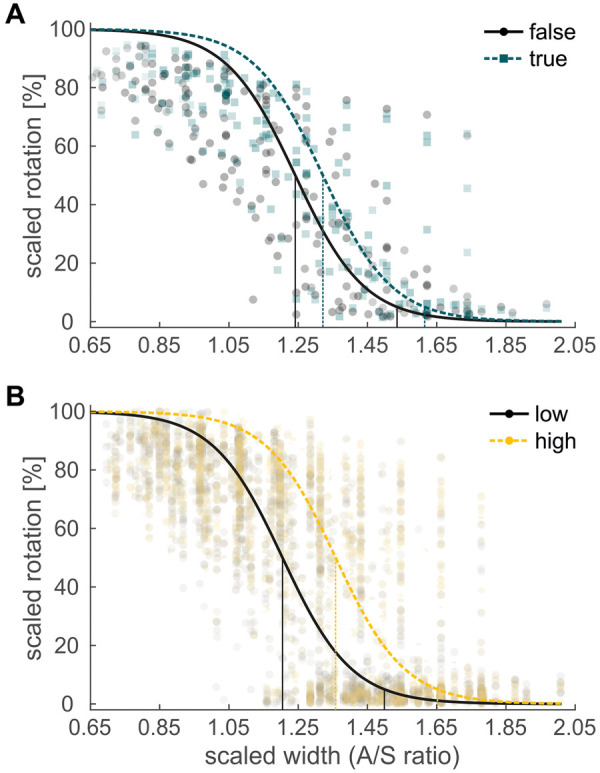 Figure 3
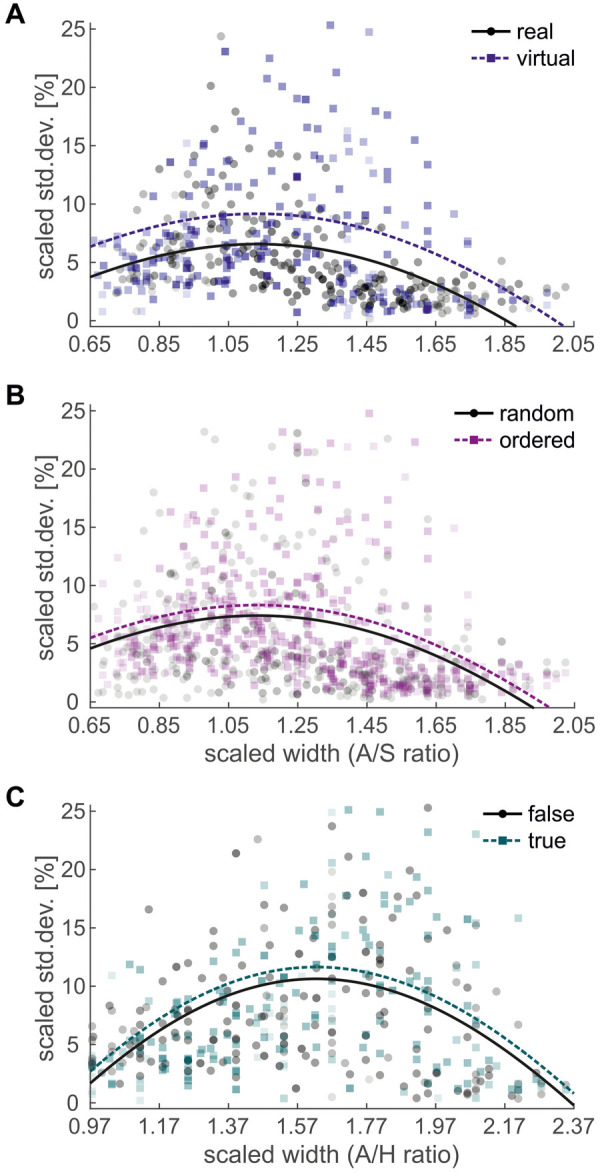 Figure 4
Peer Reviews
No public reviews on file for this paper yet. If you reviewed it on a platform where reviews are public (OpenReview, ICLR, NeurIPS, ICML), you can paste yours below so the community can read it here.
Videos
No videos yet. Explain this paper in a talk, walkthrough, or lecture? Add one.
Taxonomy
TopicsMotor Control and Adaptation · Action Observation and Synchronization · Sport Psychology and Performance