Motivational dynamics in technology-enhanced learning: a parsimonious model of self-efficacy, ICT use, and mathematics achievement
Qiangfeng Zhang, Quanchen Zhou, Mingyang Song

TL;DR
This study shows that self-efficacy in math is more important than technology use for student achievement in mathematics.
Contribution
The study clarifies the role of self-efficacy in technology-mediated learning and resolves part of the ICT-achievement paradox.
Findings
Mathematics self-efficacy was the strongest predictor of achievement (β = 0.46).
General ICT use had negative associations with math performance.
Pedagogically aligned ICT use showed a small positive effect.
Abstract
Despite widespread integration of information and communication technology (ICT) in education, the relationship between technology use and academic achievement remains paradoxical. Educational psychology theories emphasize self-efficacy as a critical mediator of learning outcomes, yet its role in technology-mediated learning environments requires empirical clarification. This study examined the psychological mechanisms underlying the ICT-achievement relationship, testing whether self-efficacy beliefs mediate technology's impact on mathematics performance among adolescents. Using PISA 2022 data from 5,237 Japanese 15 years old, we employed multiple regression with backward elimination to identify parsimonious predictors of mathematics achievement. Variables included five ICT measures (school use, home use, subject-specific use, weekday use, self-efficacy), three psychological…
Click any figure to enlarge with its caption.
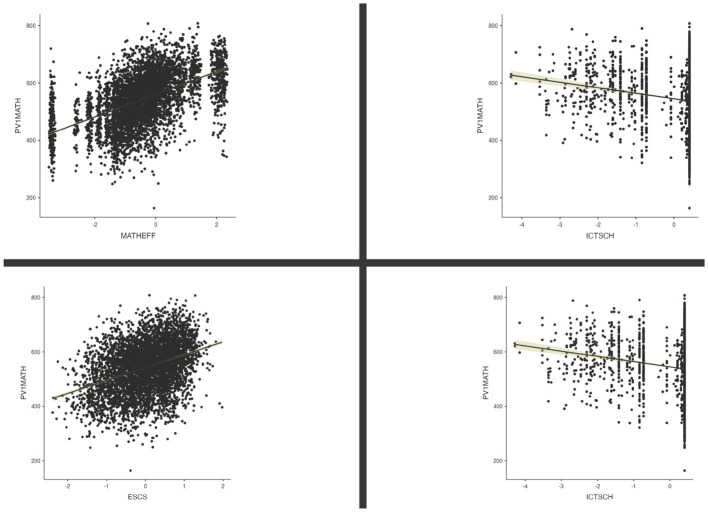 Figure 1
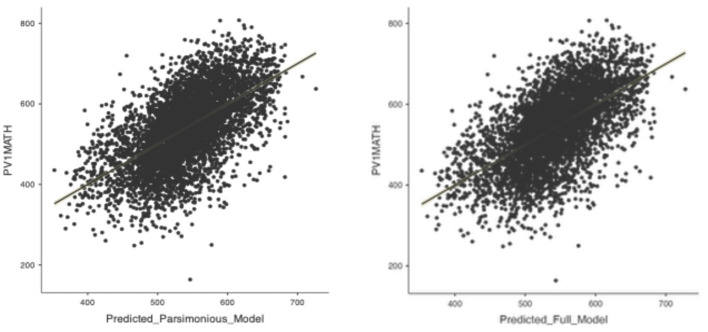 Figure 2
Peer Reviews
No public reviews on file for this paper yet. If you reviewed it on a platform where reviews are public (OpenReview, ICLR, NeurIPS, ICML), you can paste yours below so the community can read it here.
Videos
No videos yet. Explain this paper in a talk, walkthrough, or lecture? Add one.
Taxonomy
TopicsGender and Technology in Education · Education, Achievement, and Giftedness · Digital literacy in education