Mapping Allosteric Communication in the Nucleosome with Conditional Activity
Augustine C. Onyema, Chukwuebuka Dikeocha, Rutika Patel, Jonathan Moussa, Sharon M. Loverde

TL;DR
This paper uses simulations to map how parts of the nucleosome communicate dynamically, revealing how changes in one area can affect distant regions.
Contribution
The study introduces CONDACT, a new open-source tool for analyzing allosteric communication in nucleosomes using conditional activity.
Findings
The nucleosome shows long-range dynamic coupling between histone residues and DNA over distances up to 7.5 nm.
Key residues involved in allostery include those with post-translational modifications and oncogenic mutations.
The method identifies dynamically connected domains that may serve as therapeutic targets.
Abstract
The nucleosome core particle (NCP) regulates genome accessibility through dynamic allosteric communication between histone proteins and DNA. Building on the concept of conditional activity introduced by Lin (2016), we use molecular dynamics simulations and develop an open-source Python library, CONDACT (CONDitional ACTivity), to quantify time-resolved kinetic correlations in nucleosome systems. We analyze long-time simulations of the nucleosome core particle, including two different DNA sequences, the Widom-601 (PDB ID: 3LZ0) and ASP (alpha-satellite palindromic) sequences (PDB ID: 1KX5). By tracking dihedral angle transitions, we identify residues with high dynamical memory and map inter-residue communication pathways across histone subunits and DNA. Our analysis reveals kinetically connected domains involving post-translational modification sites, oncogenic mutation sites, and DNA…
Genes, proteins, chemicals, diseases, species, mutations and cell lines named across the full text — each resolved to its canonical identifier and authoritative record.
Click any figure to enlarge with its caption.
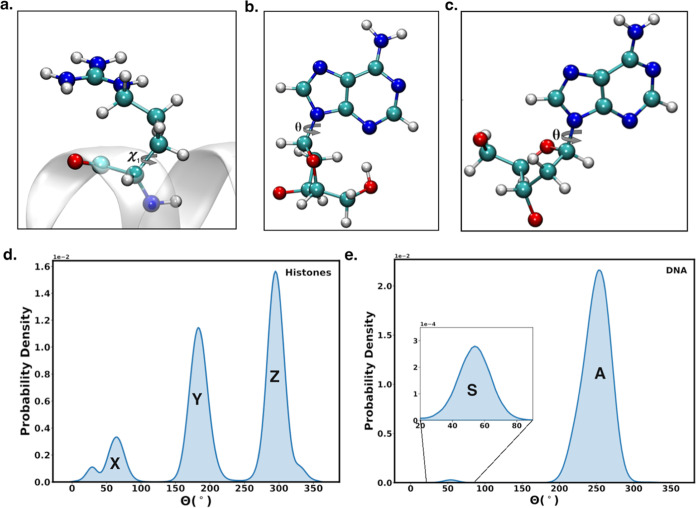 Figure 1
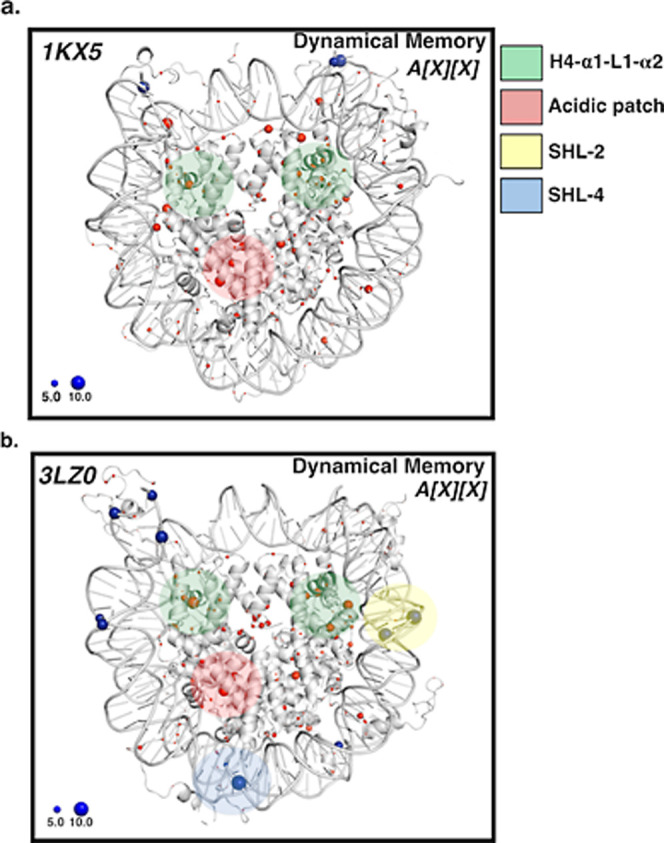 Figure 2
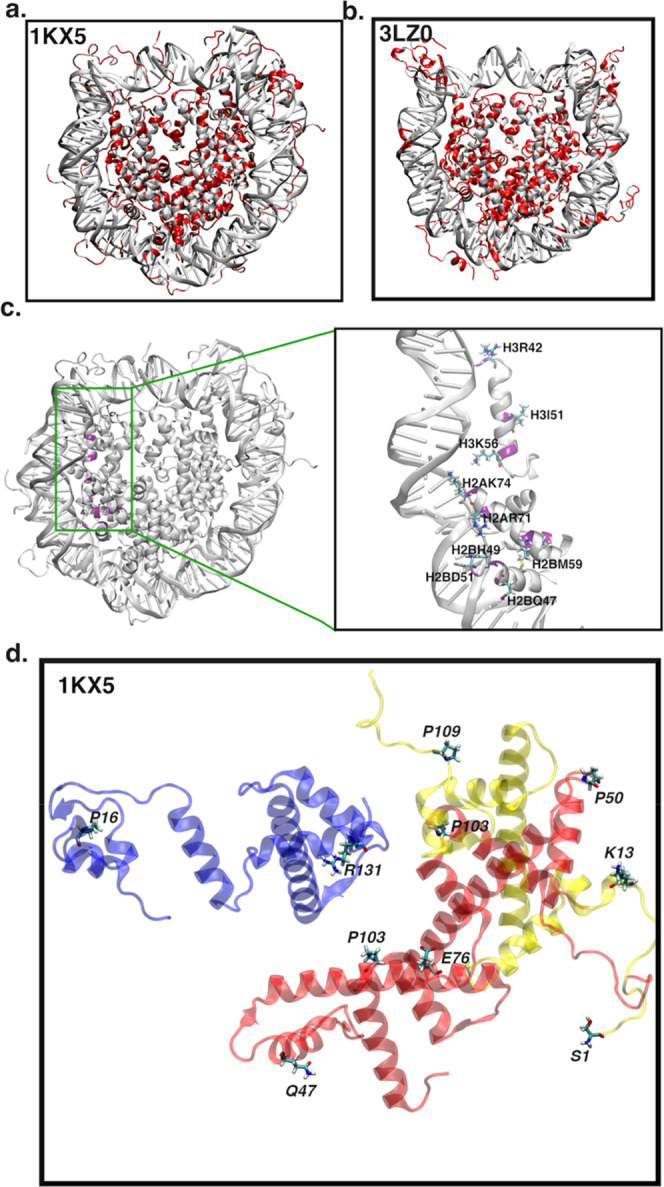 Figure 3
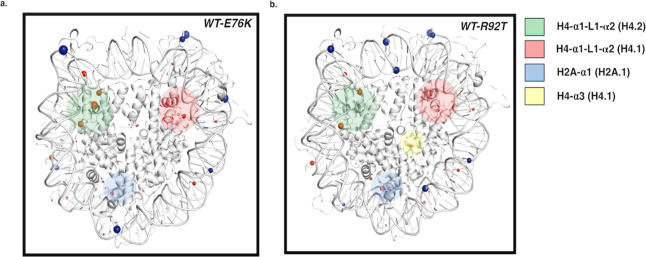 Figure 4
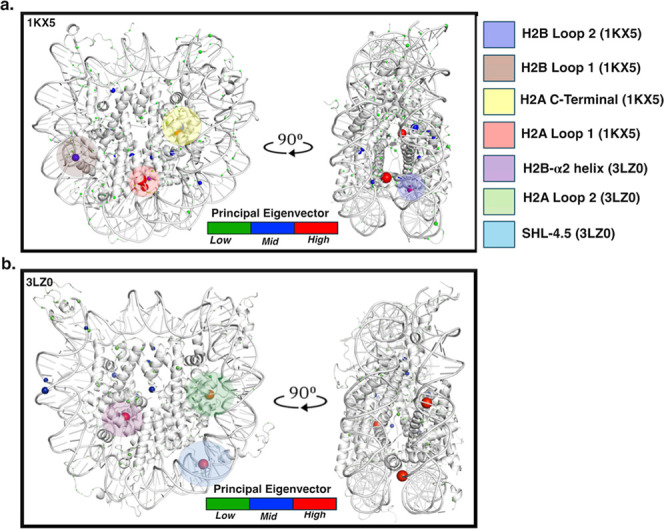 Figure 5
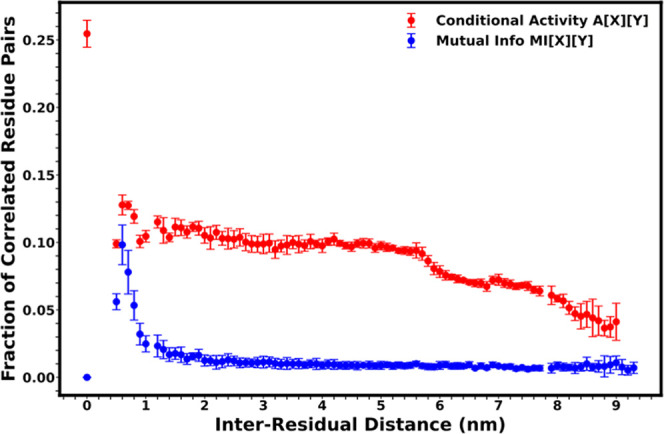 Figure 6
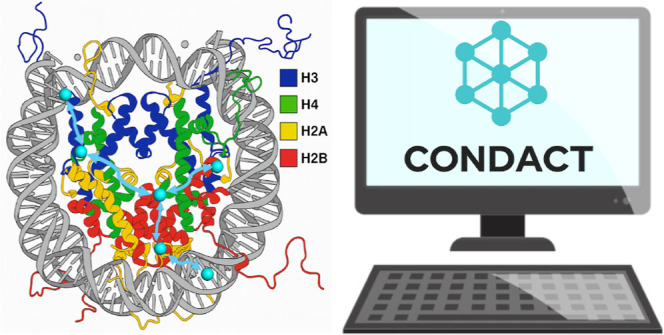 Figure 7
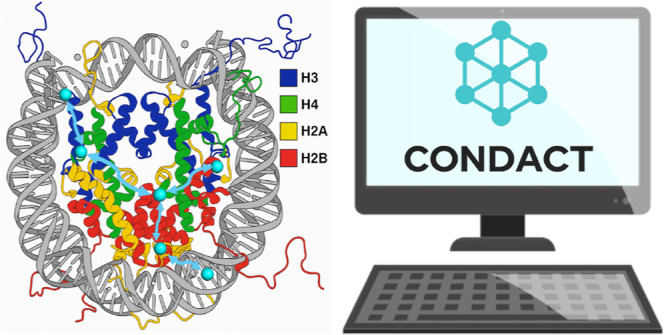 Figure 8
 Figure 9
 Figure 10
 Figure 11
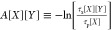 Figure 12
Peer Reviews
No public reviews on file for this paper yet. If you reviewed it on a platform where reviews are public (OpenReview, ICLR, NeurIPS, ICML), you can paste yours below so the community can read it here.
Videos
No videos yet. Explain this paper in a talk, walkthrough, or lecture? Add one.
Taxonomy
TopicsRNA and protein synthesis mechanisms · Receptor Mechanisms and Signaling · Cellular transport and secretion