Insertion of CO2, Isocyanates, and Acetonitrile into the P–Si Bond of a Silyl-Substituted N‑Heterocyclic Carbene Phosphinidene
Andreas Hochholzer, Martin E. Doleschal, Priyanka Chakraborty, Shigeyoshi Inoue

TL;DR
This paper explores how a specific chemical compound reacts with CO2, isocyanates, and acetonitrile, revealing different reaction pathways and products.
Contribution
The study identifies new reactivity patterns and product formation mechanisms involving a silyl-substituted phosphinidene.
Findings
CO2 and phenyl isocyanate insert into the P–Si bond readily.
Acetonitrile activation requires a frustrated Lewis pair pathway with group 13 halides.
Aluminum halides produce different products depending on the Lewis acid used.
Abstract
This work investigates the reactivity of IDippP-SiMe3 (IDipp = 1,3-bis(2,6-diisopropylphenyl)-imidazolin-2-ylidene) toward CO2, Ph-NCO, and Me-CN. Whereas carbon dioxide and phenyl isocyanate readily insert into the polarized P–Si bond, the activation of acetonitrile only proceeds via a frustrated Lewis pair (FLP) pathway in the presence of group 13 halides. Nitrile insertion in the presence of aluminum halides affords both an N-heterocyclic carbene phosphinidene (NHCP)-substituted imine and a phosphaalkene, with the product ratio depending on the choice of Lewis acid. In contrast, the addition of BCl2 m Ter ( m Ter = 2,6-(2,4,6-methyl-C6H2)-C6H3) selectively affords an NHCP-substituted imine via dehalosilylation.
Genes, proteins, chemicals, diseases, species, mutations and cell lines named across the full text — each resolved to its canonical identifier and authoritative record.
Click any figure to enlarge with its caption.
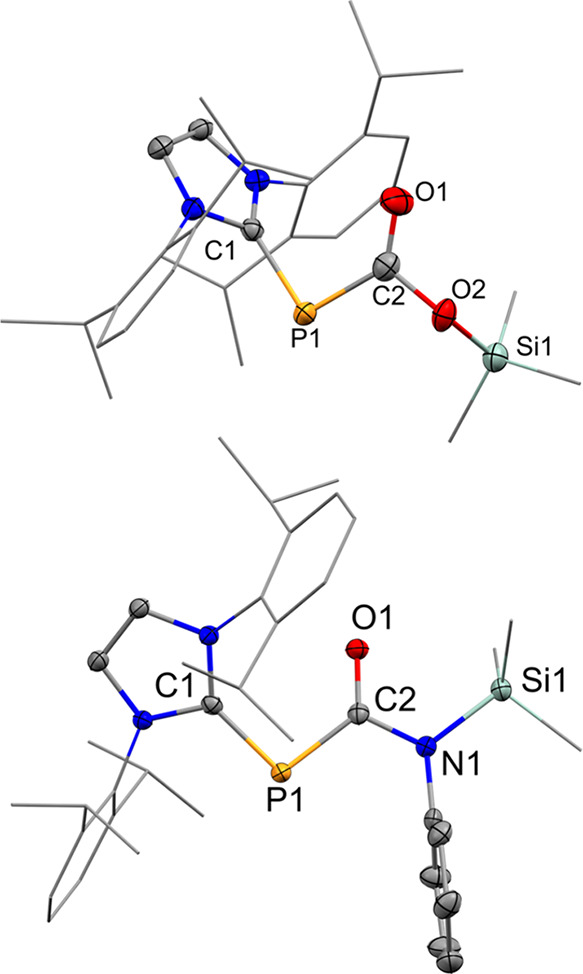 Figure 1
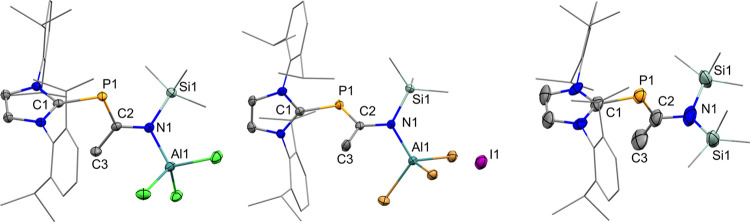 Figure 2
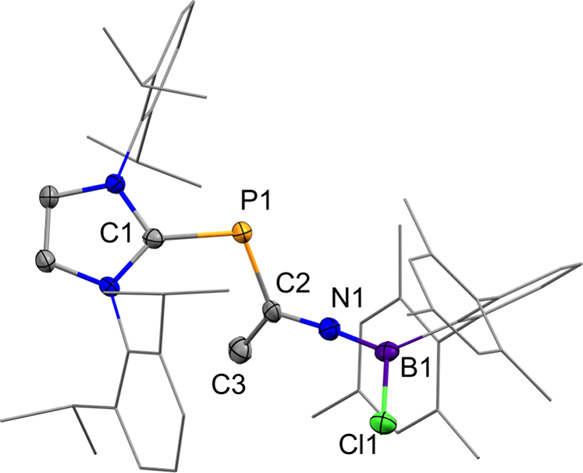 Figure 3
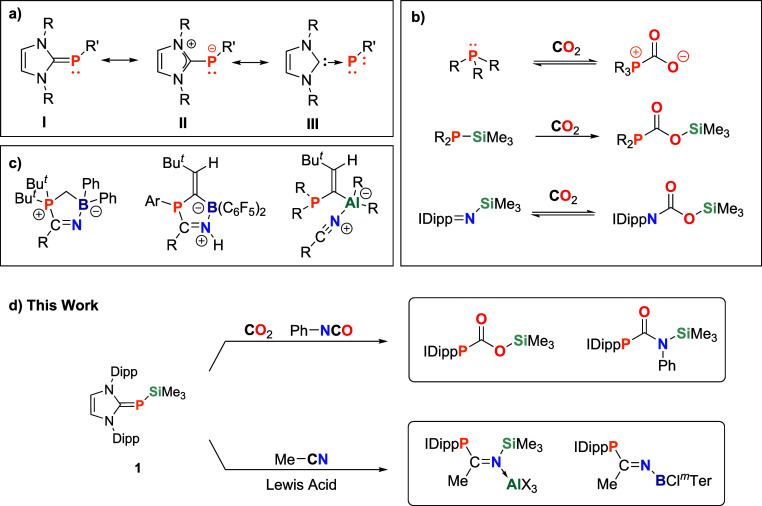 Figure 4
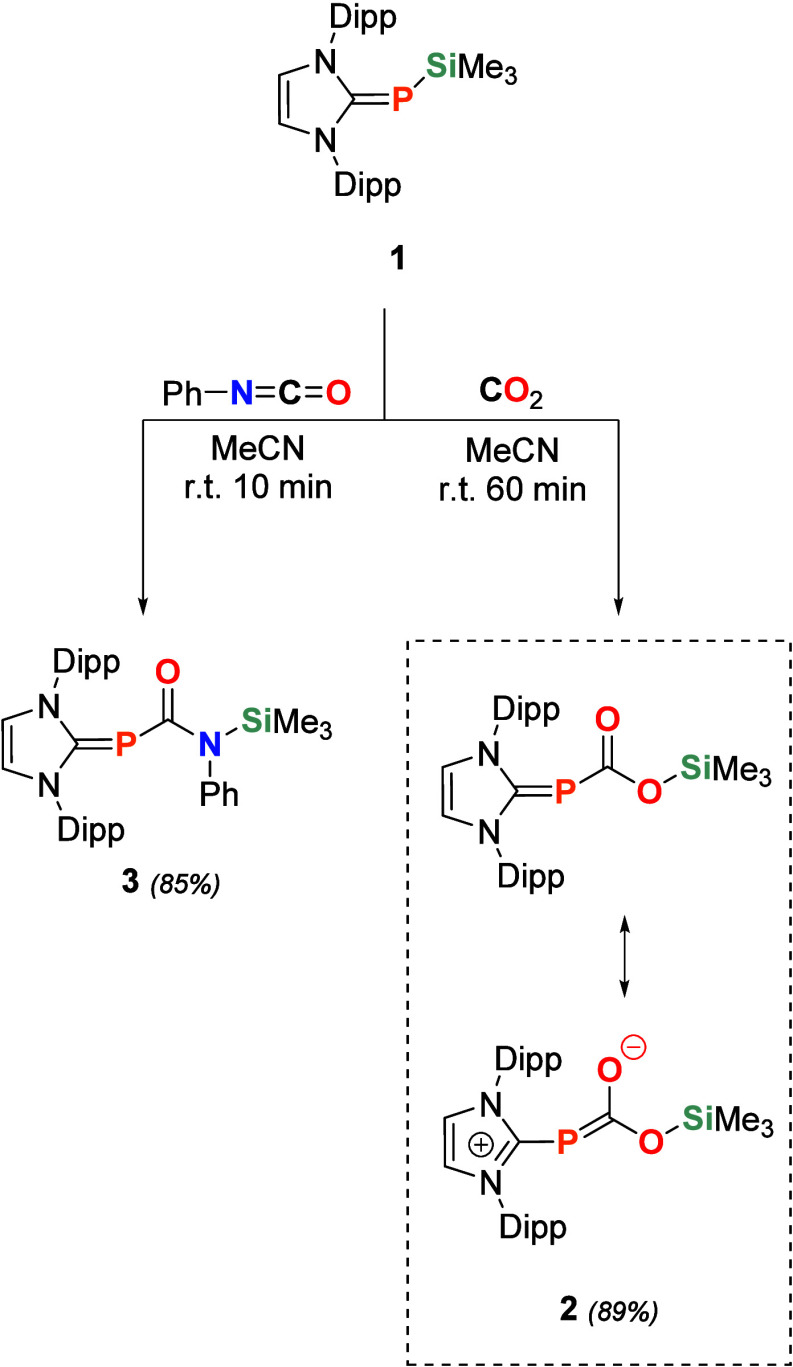 Figure 5
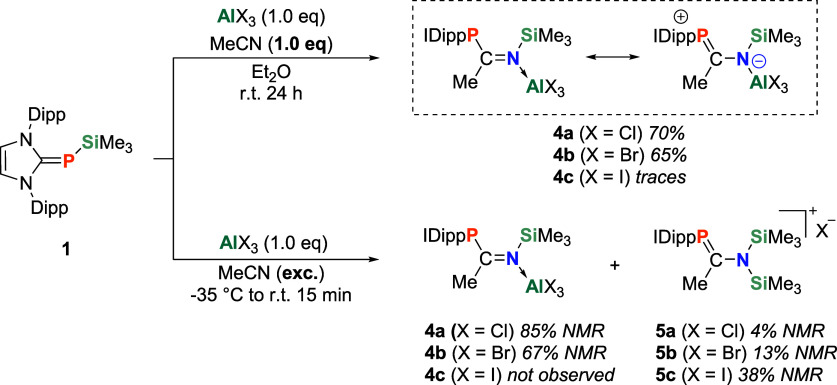 Figure 6
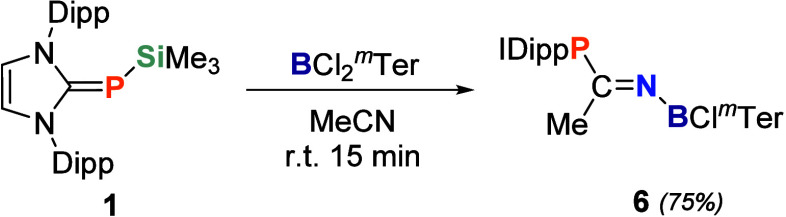 Figure 7
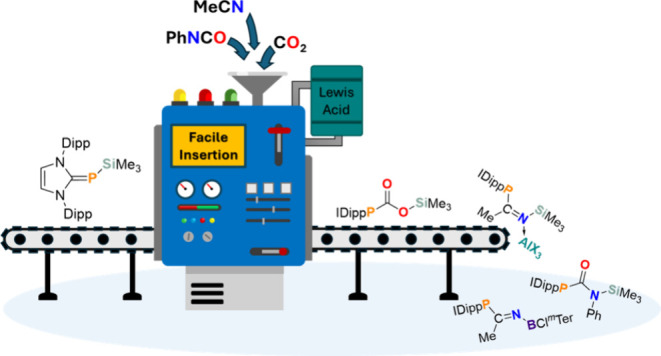 Figure 8
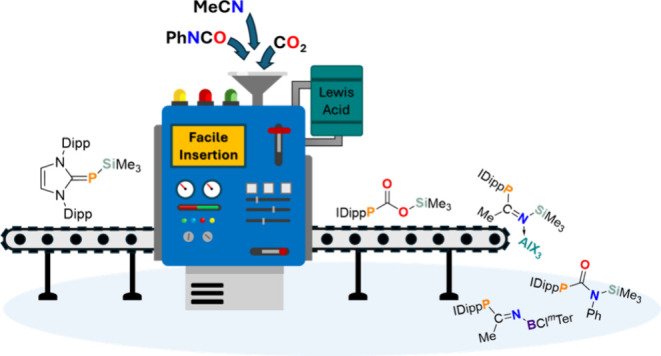 Figure 9
Peer Reviews
No public reviews on file for this paper yet. If you reviewed it on a platform where reviews are public (OpenReview, ICLR, NeurIPS, ICML), you can paste yours below so the community can read it here.
Videos
No videos yet. Explain this paper in a talk, walkthrough, or lecture? Add one.
Taxonomy
TopicsSynthesis and characterization of novel inorganic/organometallic compounds · N-Heterocyclic Carbenes in Organic and Inorganic Chemistry · Carbon dioxide utilization in catalysis