ChemTorch: A Deep Learning Framework for Benchmarking and Developing Chemical Reaction Property Prediction Models
Jasper De Landsheere, Anton Zamyatin, Johannes Karwounopoulos, Esther Heid

TL;DR
ChemTorch is a new deep learning framework designed to improve the development and benchmarking of models that predict chemical reaction properties.
Contribution
ChemTorch introduces a modular, open-source framework for reproducible benchmarking and model development in chemical reaction property prediction.
Findings
Structurally informed models show clear advantages in barrier-height prediction.
Performance drops significantly under out-of-distribution conditions.
Comparison of four modalities on RDB7 highlights the need for rigorous benchmarking.
Abstract
Modeling of chemical reactions is essential for understanding kinetic mechanisms and predicting possible outcomes of reacting systems. Quantum mechanical calculations are accurate but often prohibitively expensive. Deep learning has emerged as a faster alternative, but progress is slowed by a fragmented software ecosystem that hinders reuse, fair comparison, and reproducibility. We present ChemTorch, an open-source framework that streamlines model development, experimentation, hyperparameter tuning, and benchmarking through modular pipelines, standardized configuration, and built-in data splitters for in- and out-of-distribution evaluation. We envision ChemTorch as a foundation for community-driven method development and reproducible benchmarking in chemical reaction modeling. As a first step toward unified benchmarks, we compare four representative modalities for barrier-height…
Genes, proteins, chemicals, diseases, species, mutations and cell lines named across the full text — each resolved to its canonical identifier and authoritative record.
Click any figure to enlarge with its caption.
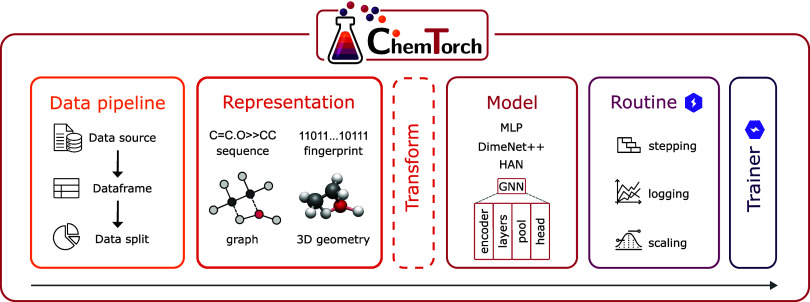 Figure 1
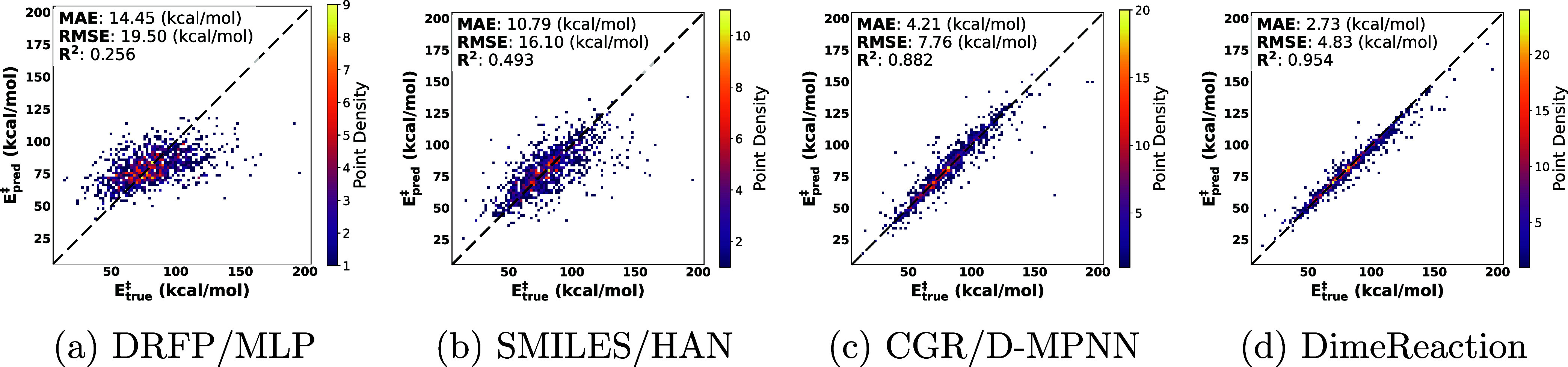 Figure 2
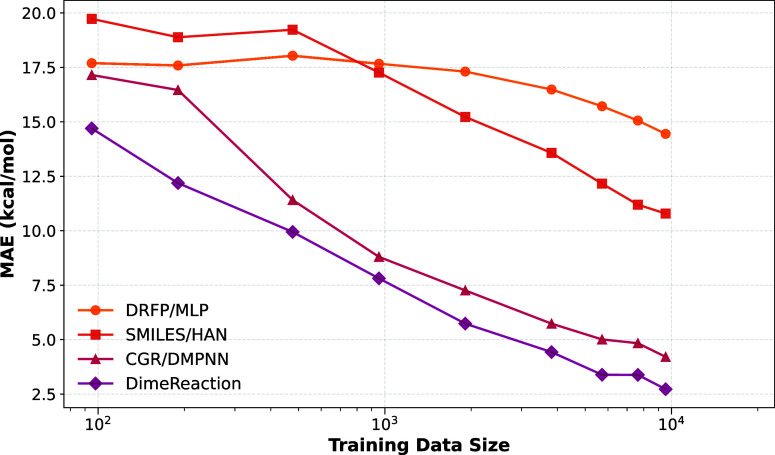 Figure 3
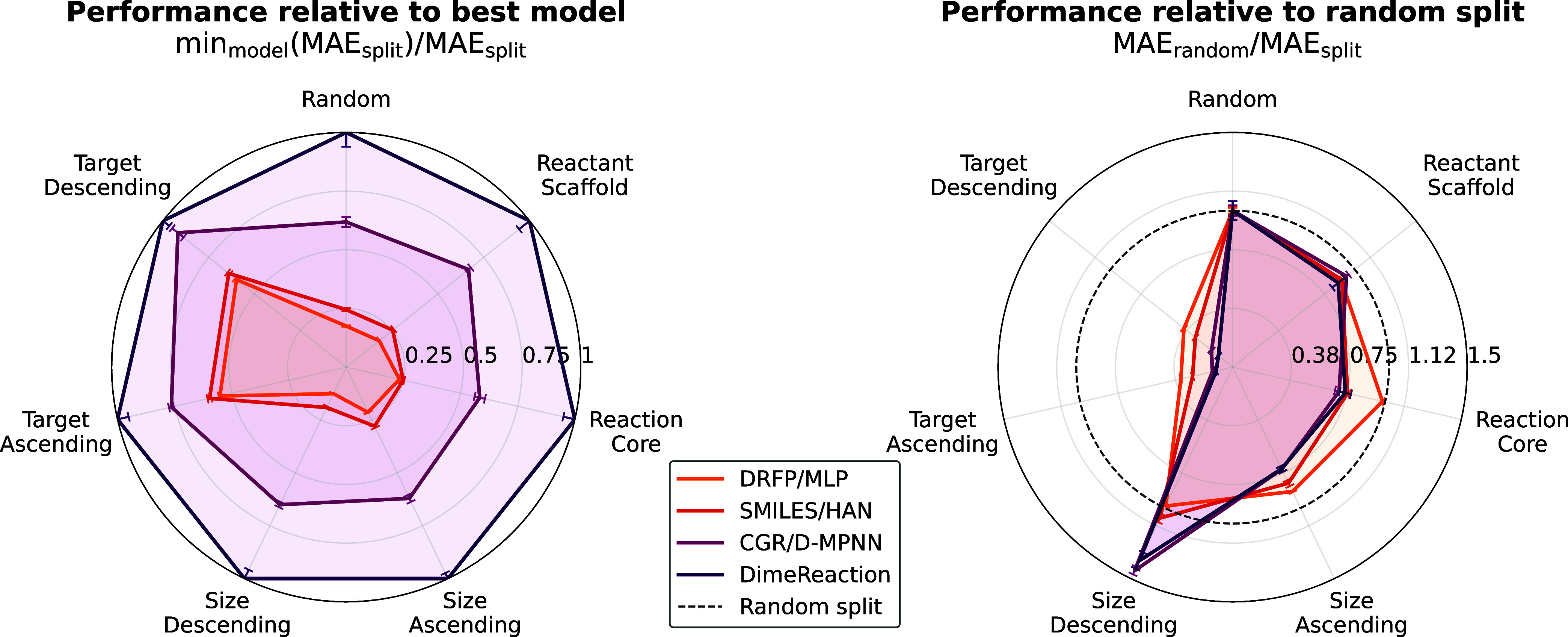 Figure 4
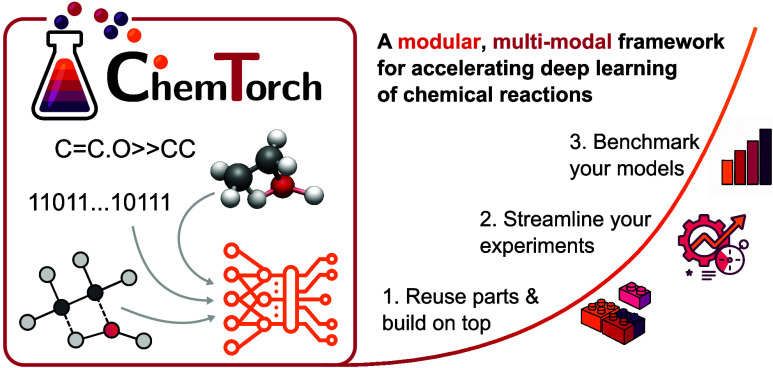 Figure 5
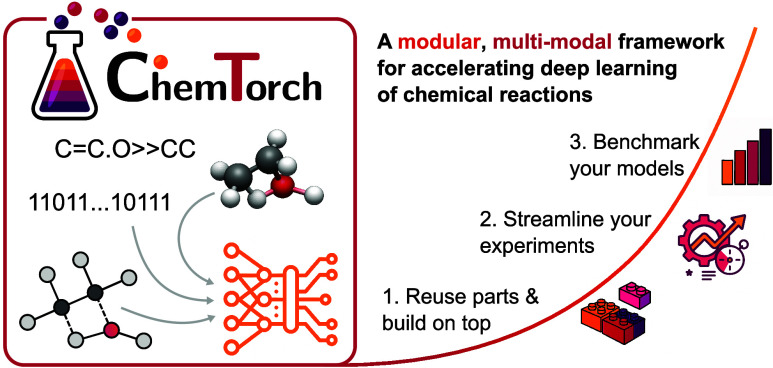 Figure 6
Peer Reviews
No public reviews on file for this paper yet. If you reviewed it on a platform where reviews are public (OpenReview, ICLR, NeurIPS, ICML), you can paste yours below so the community can read it here.
Videos
No videos yet. Explain this paper in a talk, walkthrough, or lecture? Add one.
Taxonomy
TopicsMachine Learning in Materials Science · Computational Drug Discovery Methods · Asymmetric Hydrogenation and Catalysis