A Chemocatalytic Route to Stereoregular Poly(3-hydroxyhexanoate) and Its Statistical and Tri-Block Copolymers
Min Zhu, Maëlle T. Gace, Zhen Zhang, Eugene Y.-X. Chen

TL;DR
Scientists developed a new chemical method to create a type of biodegradable plastic with specific structures and properties, which could be useful for various applications.
Contribution
A chemocatalytic route is introduced for synthesizing stereoregular P3HHx and its copolymers with tunable properties.
Findings
P3HBHx can be produced rapidly in high yield with high molar mass and excellent mechanical properties.
The tri-block copolymer P3HB-b-P3HHx-b-P3HB has a unique combination of low Tg and high Tm, expanding its application temperature range.
The chemocatalytic method allows for precise control over PHA structure and performance.
Abstract
Poly(3-hydroxyhexanoate) (P3HHx)-based poly(3-hydroxyalkanoate)s (PHAs) are biologically produced, commercially implemented PHAs, but little is known in the open literature about the structure and property characterizations of discrete, authentic homopolymer P3HHx, and its copolymers with poly(3-hydroxybutyrate) (P3HB). Here, we introduce a chemocatalytic route to stereoregular (both isotactic and syndiotactic) P3HHx and PHA copolymers with P3HB, including statistical copolymer P3HBHx with various levels of 3HHx incorporation and discrete hard–soft–hard triblock copolymer P3HB-b-P3HHx-b-P3HB, and present extensive characterizations of their structures, thermal properties, and mechanical performance. The synthesis is efficiently achieved by one-pot polymerization of eight-membered di(n-propyl) and dimethyl (for copolymerization) diolides catalyzed by chiral molecular catalysts.…
Genes, proteins, chemicals, diseases, species, mutations and cell lines named across the full text — each resolved to its canonical identifier and authoritative record.
Click any figure to enlarge with its caption.
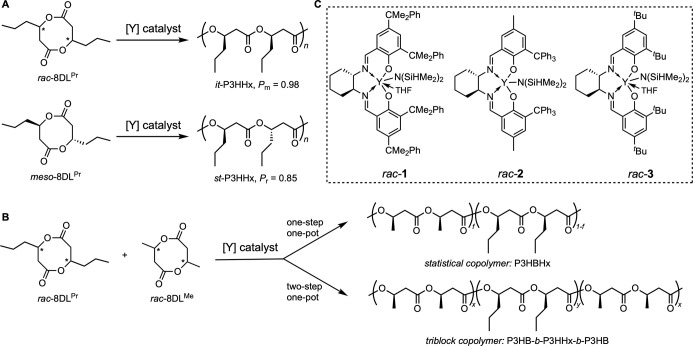 Figure 1
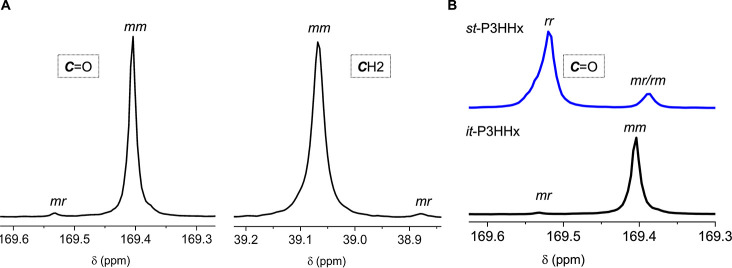 Figure 2
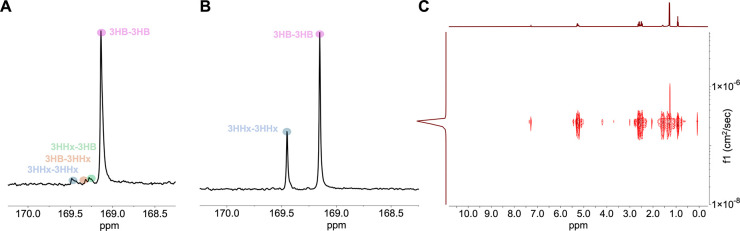 Figure 3
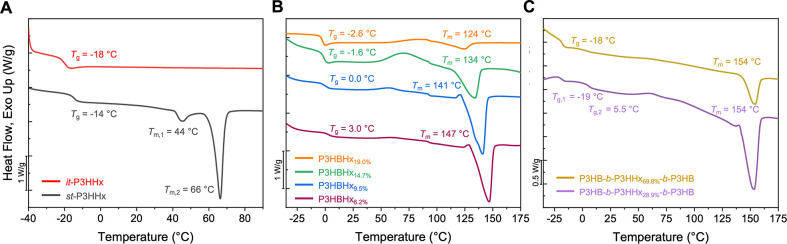 Figure 4
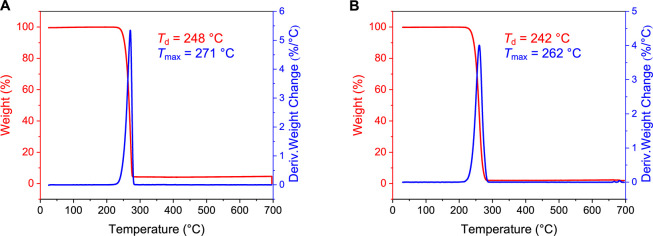 Figure 5
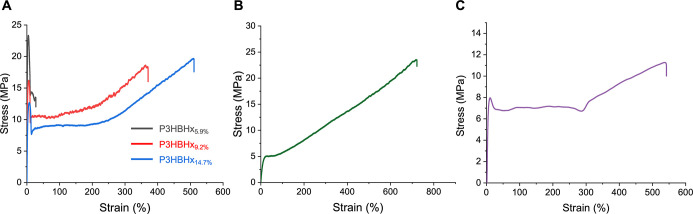 Figure 6
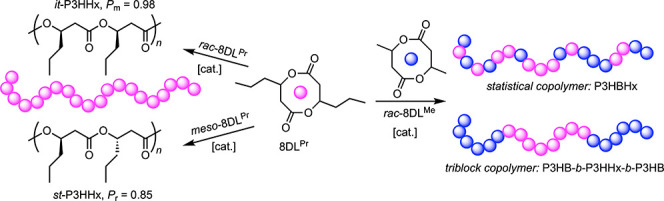 Figure 7
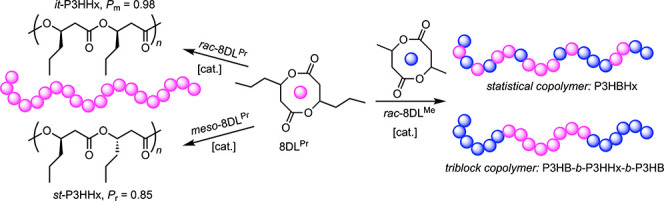 Figure 8
Peer Reviews
No public reviews on file for this paper yet. If you reviewed it on a platform where reviews are public (OpenReview, ICLR, NeurIPS, ICML), you can paste yours below so the community can read it here.
Videos
No videos yet. Explain this paper in a talk, walkthrough, or lecture? Add one.
Taxonomy
Topicsbiodegradable polymer synthesis and properties · Carbon dioxide utilization in catalysis · Catalysis for Biomass Conversion