Recasting Nitrogenase’s Carbide Role as a Beating Heart of Steel: A Joint Inorganic and Organic Perspective for μ6Carbide–Iron Bonding
Justin P. Joyce, Serena DeBeer

TL;DR
The paper explores the role of a carbide in the nitrogenase enzyme, suggesting it provides a stable structure with dynamic electronic properties for catalysis.
Contribution
The study proposes a new theoretical model for carbide-iron bonding in nitrogenase, integrating inorganic and organic chemistry perspectives.
Findings
The carbide in FeMoco's resting state forms six equivalent σ-bonds with half bond order from sp2-hybridization.
The carbide retains its trigonal prismatic geometry while adapting to spin coupling of iron centers through σ/π bonding.
The findings suggest the carbide provides an inert framework and dynamic electronic structure for catalytic versatility.
Abstract
Nitrogenase’s cofactor features a trigonal prismatic interstitial carbide, an architectural motif without parallel in other biological systems whose enzymatic significance remains unclear. A 13C ENDOR study indicated negligible hyperfine coupling at the carbide, hinting at an inert geometric and electronic structure that preserves its trigonal prismatic framework and the antiferromagnetic coupling of the Fe-sites. Contrary to the "heart of steel" interpretation, the "beating heart" model proposes that structural flexibility aids cofactor stabilization during catalysis. Here, we establish the theoretical foundation of the carbide’s bonding using valence bond (VB) and molecular orbital (MO) theory, both indicating a preference for the trigonal prismatic geometry with antiferromagnetic coupling. The carbide in FeMoco’s resting state shows six equivalent σ-bonds with half bond order from…
Genes, proteins, chemicals, diseases, species, mutations and cell lines named across the full text — each resolved to its canonical identifier and authoritative record.
Click any figure to enlarge with its caption.
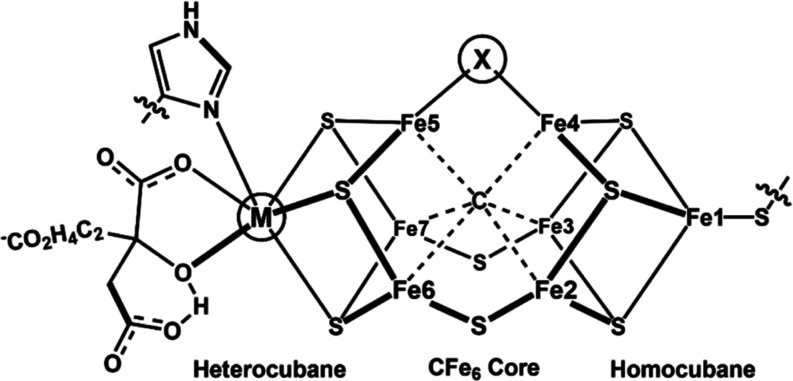 Figure 1
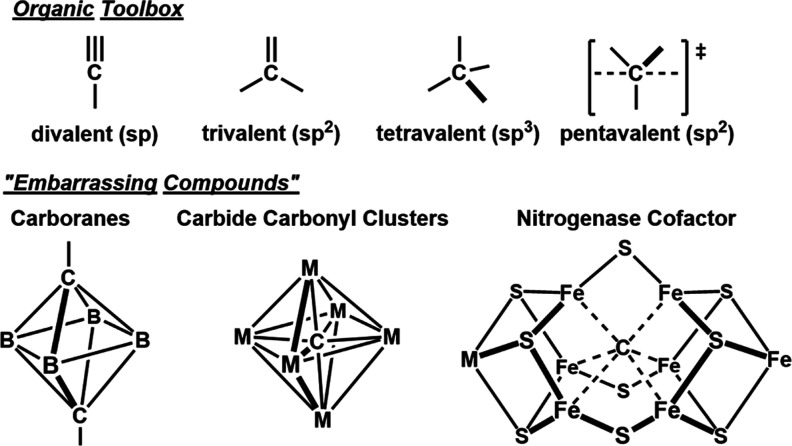 Figure 2
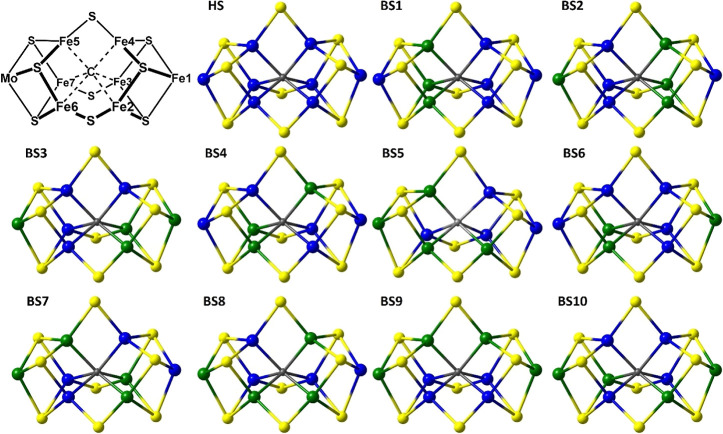 Figure 3
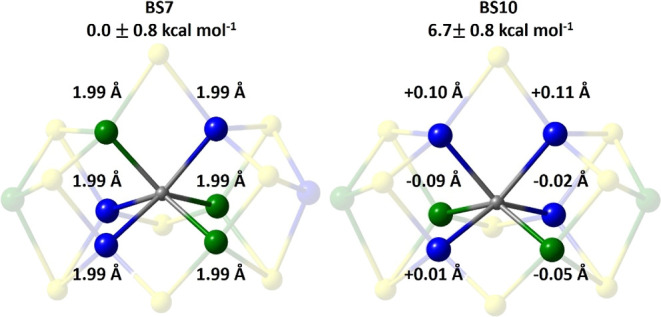 Figure 4
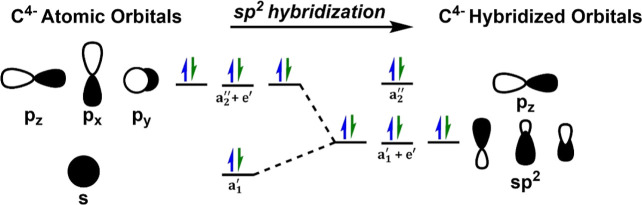 Figure 5
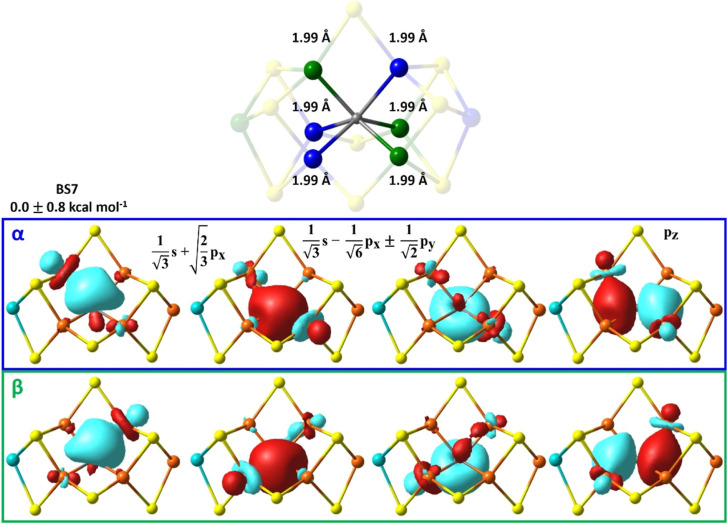 Figure 6
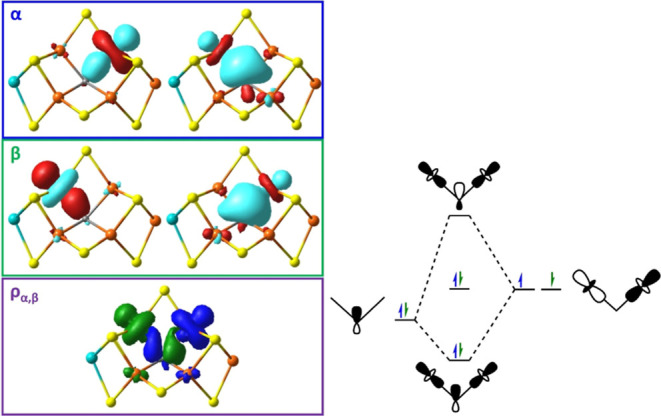 Figure 7
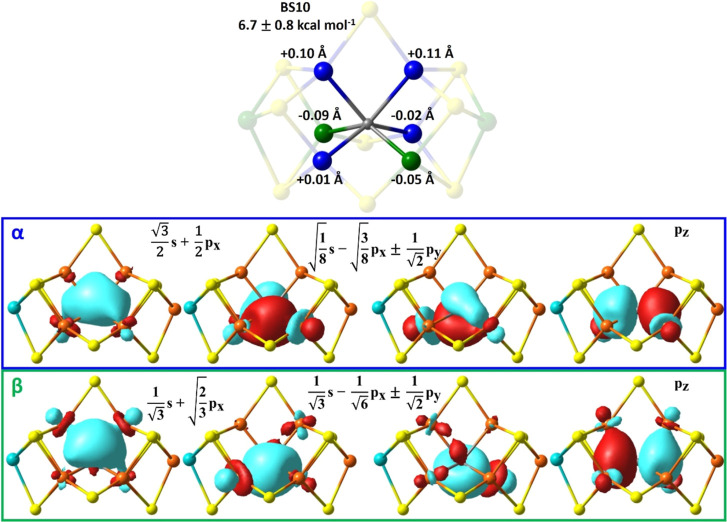 Figure 8
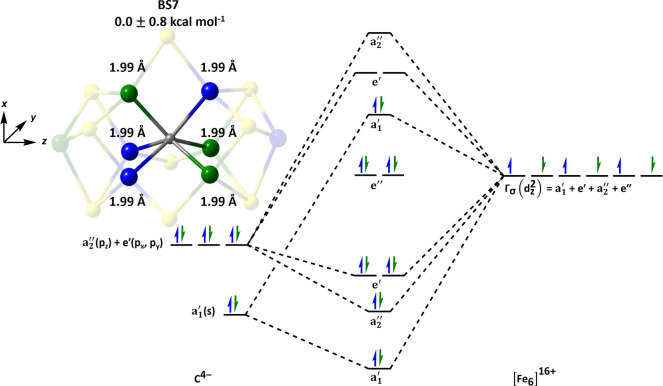 Figure 9
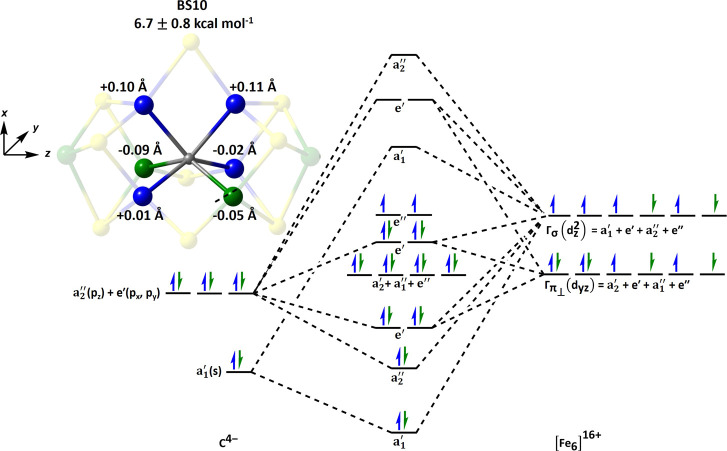 Figure 10
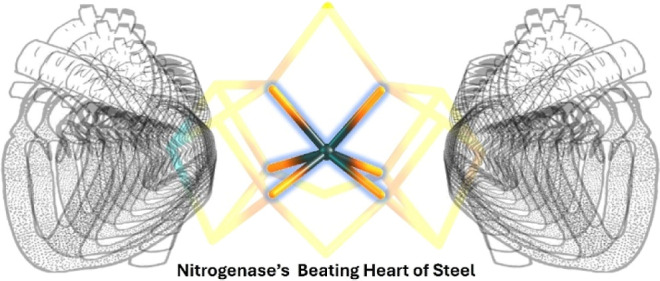 Figure 11
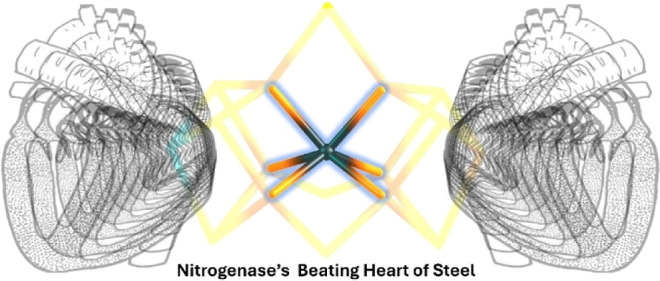 Figure 12
 Figure 13
 Figure 14
Peer Reviews
No public reviews on file for this paper yet. If you reviewed it on a platform where reviews are public (OpenReview, ICLR, NeurIPS, ICML), you can paste yours below so the community can read it here.
Videos
No videos yet. Explain this paper in a talk, walkthrough, or lecture? Add one.
Taxonomy
TopicsMetalloenzymes and iron-sulfur proteins · Metal-Catalyzed Oxygenation Mechanisms · Enzyme Catalysis and Immobilization