Thermal Limits and Decline of Synechococcus Under Accelerated Warming and Marine Heatwaves
Luthfiyyah Azizah, Eva Alou‐Font, Alexandra Coello‐Camba, Susana Agusti

TL;DR
Extreme warming and marine heatwaves in the Red Sea have reduced Synechococcus populations, challenging assumptions about their resilience to climate change.
Contribution
First evidence of thermal niche loss in Synechococcus due to extreme marine heatwaves and accelerated warming.
Findings
Synechococcus abundance peaked at ~30.2°C but declined sharply when temperatures exceeded 35°C.
Laboratory experiments confirmed strain-specific thermal optima and a maximum limit of 35.2°C.
2023–2024 heatwaves caused a ~4.5-fold reduction in Synechococcus blooms despite stable bloom timing.
Abstract
Marine picophytoplankton contribute roughly 20% of global oceanic primary production, including thermally resilient taxa such as Synechococcus, which dominate warm oceans and are projected to benefit from future warming. Tropical populations exist near their upper thermal limits, making them highly vulnerable to further warming, a largely unexplored risk for Synechococcus. Here, we combine high‐frequency in situ observations and laboratory experiments to examine the thermal tolerance of Synechococcus in the Red Sea, one of the warmest marine basins globally. Over a 7‐year period (2018–2024), we monitored population dynamics alongside continuous sea surface temperatures, capturing the increasing frequency and duration of marine heatwaves (MHWs) in 2023–2024, the warmest years on record. Abundance of Synechococcus increased with temperature and peaked at ~30.2°C, but extreme temperatures…
Genes, proteins, chemicals, diseases, species, mutations and cell lines named across the full text — each resolved to its canonical identifier and authoritative record.
Click any figure to enlarge with its caption.
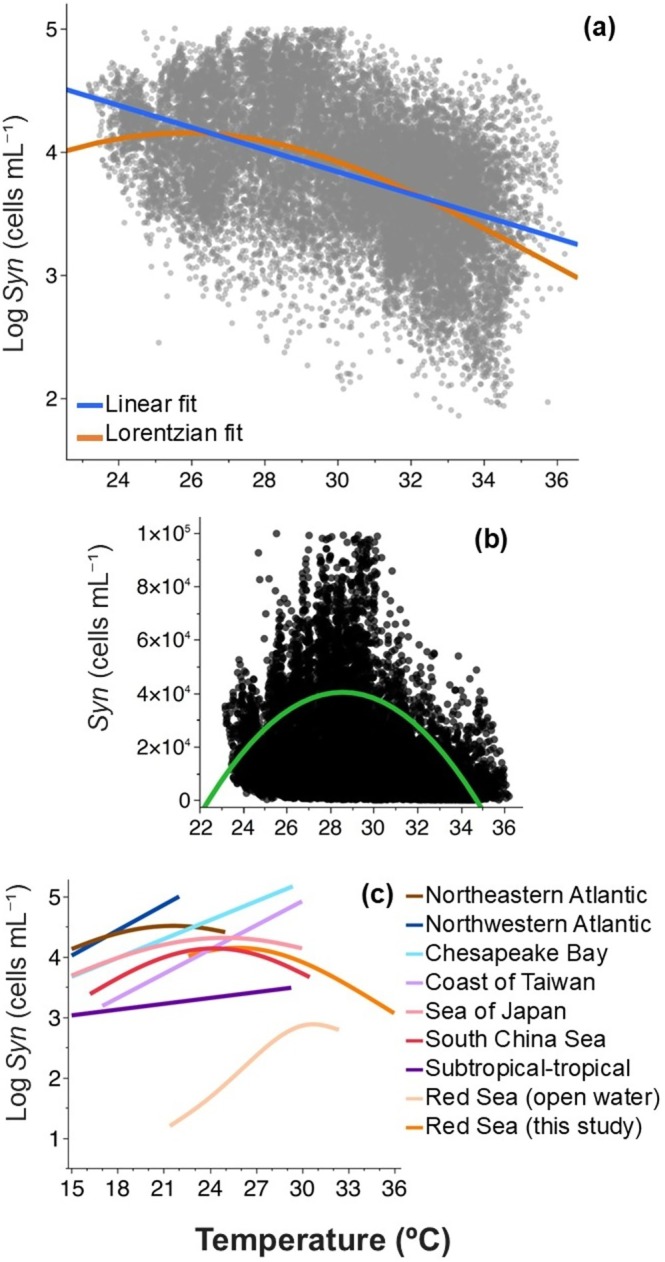 Figure 1
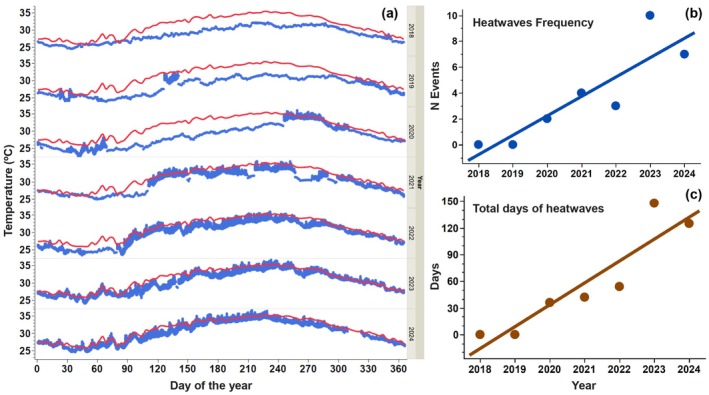 Figure 2
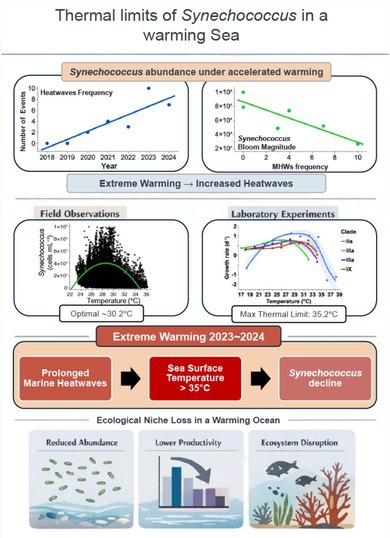 Figure 3
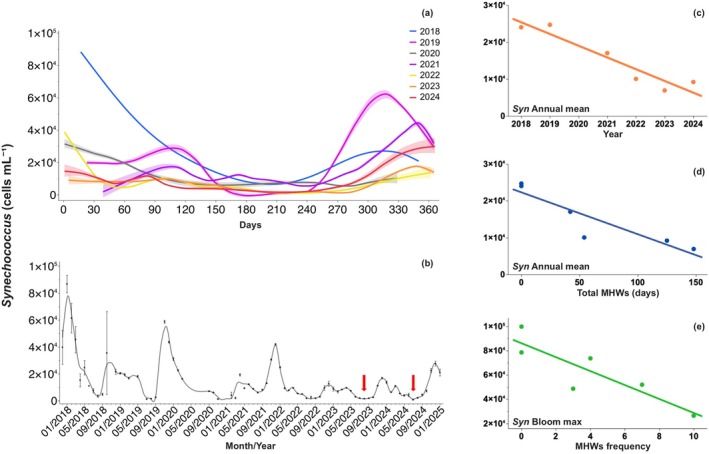 Figure 4
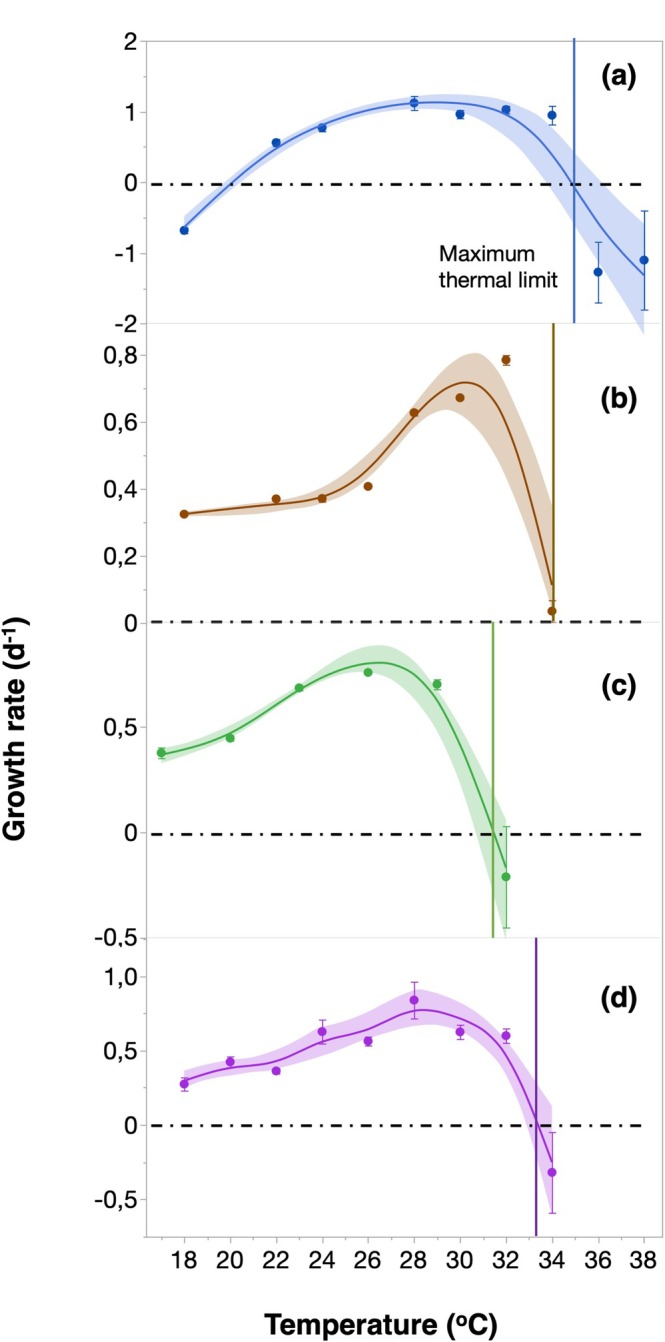 Figure 5
Peer Reviews
No public reviews on file for this paper yet. If you reviewed it on a platform where reviews are public (OpenReview, ICLR, NeurIPS, ICML), you can paste yours below so the community can read it here.
Videos
No videos yet. Explain this paper in a talk, walkthrough, or lecture? Add one.
Taxonomy
TopicsMarine and coastal ecosystems · Microbial Community Ecology and Physiology · Protist diversity and phylogeny