Effect of knee flexion on muscle oxygen saturation in adults during a 40‐s isometric squat
Enmanuel Portilla‐Dorado, Carlos Sendra‐Perez, Joaquín Martín Marzano‐Felisatti, Inmaculada Aparicio‐Aparicio, Rosa M. Cibrián Ortiz de Anda, Jose I. Priego‐Quesada

TL;DR
This study shows how different knee angles during a squat affect muscle oxygen levels and muscle activity in physically active adults.
Contribution
The study reveals that extreme knee angles during isometric squats cause significant differences in muscle oxygen saturation and excitation.
Findings
Muscle oxygen saturation differences emerged only between 80° and 100° knee angles during the squat.
Higher muscle excitation was observed at 80° knee flexion compared to 90° and 100°.
A 40-s isometric squat can reveal condition-specific differences in muscle oxygen saturation toward the end of the task.
Abstract
Monitoring internal load is essential to understanding fatigue and training adaptation in athletes. This study aimed to evaluate the effect of different knee flexion angles during a 40‐s isometric squat on muscle oxygen saturation (SmO2) responses. Seventeen physically active participants (9 males and 8 females: 28 ± 9 years old, 174 ± 12 cm, and 70.1 ± 16.6 kg) performed three randomized squats at 80°, 90°, and 100° knee angles. Muscle excitation (i.e., RMS) was measured using surface electromyography (EMG), and SmO2 was recorded with near‐infrared spectroscopy technology. Results indicated that SmO2 differed only between the most extreme angles (80° vs. 100°), with significantly greater deoxygenation at 80°, emerging in the final 20% of the squat (p < 0.01 and 95% CI of the differences [6, 21%]). In contrast, the RMS of the squat at 80° was higher than at 90° (p = 0.03 and 95% CI…
Genes, proteins, chemicals, diseases, species, mutations and cell lines named across the full text — each resolved to its canonical identifier and authoritative record.
Click any figure to enlarge with its caption.
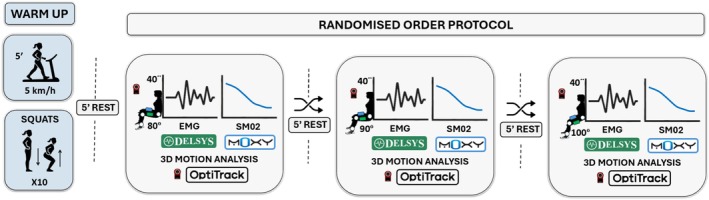 Figure 1
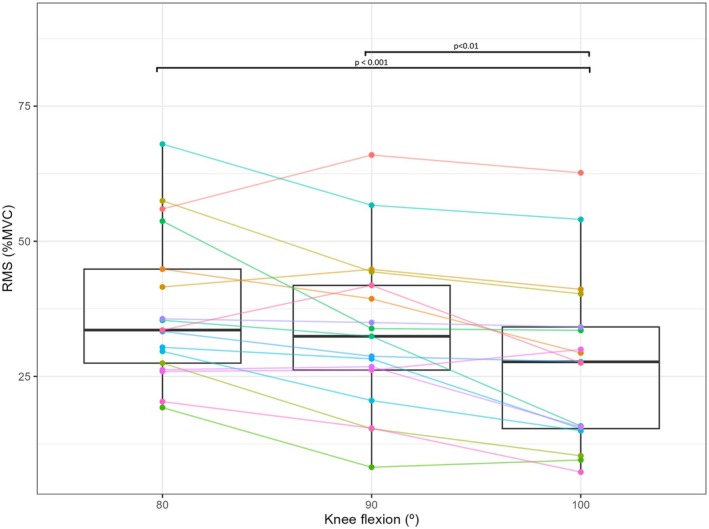 Figure 2
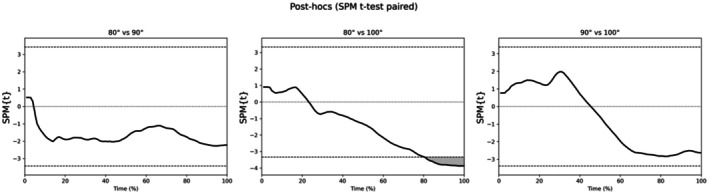 Figure 3
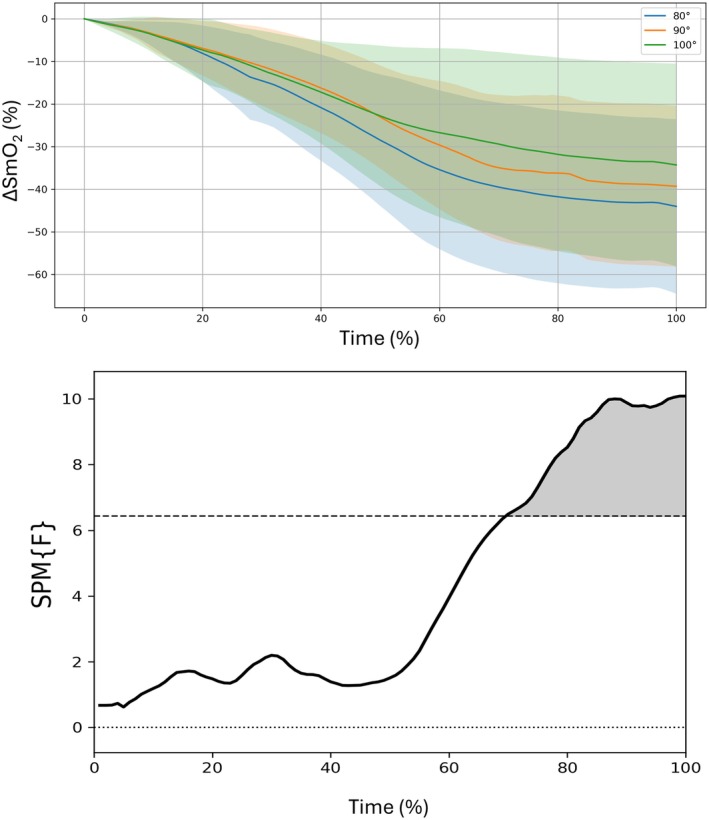 Figure 4
Peer Reviews
No public reviews on file for this paper yet. If you reviewed it on a platform where reviews are public (OpenReview, ICLR, NeurIPS, ICML), you can paste yours below so the community can read it here.
Videos
No videos yet. Explain this paper in a talk, walkthrough, or lecture? Add one.
Taxonomy
TopicsSports Performance and Training · Cardiovascular and exercise physiology · Muscle activation and electromyography studies