Investigation of genetic and lifestyle risk factors associated with Epstein-Barr virus reactivation in the Thai population
Janpen Bamrungthai, Tipaya Ekalaksananan, Sutida Pongpakdeesakul, Theeradon Rueankaew, Wanpiya Fhakdee, Darin Duangchai, Fernladda Kattiwong, Pornsiri Lanpol, Sasiwimon Sumala, Kachain Chantawong, Sureewan Duangjit, Sureewan Bumrungthai, Chamsai Pientong

TL;DR
This study explores genetic and lifestyle factors linked to Epstein-Barr virus reactivation in the Thai population, identifying age, habits, and genetic markers like TNF-α mutations as key contributors.
Contribution
The study provides novel insights into EBV reactivation risk factors specific to the Thai population, including age-specific trends and genetic associations.
Findings
EBV reactivation was detected in 36% of samples using the EBNA-1 gene and 52% using LMP-1 gene.
The TNF-α mutation rs1799964 was more common in EBV-positive individuals, particularly in those with mouth ulcers.
Lifestyle factors like alcohol consumption, smoking, and age (21-30 years) were significantly associated with EBV reactivation.
Abstract
Current data on the genetic and lifestyle factors associated with Epstein-Barr virus (EBV) reactivation in the oral cavity are limited for the Thai population. Furthermore, comprehensive data linking EBV reactivation to head and neck cancers in Thailand remains scarce. The present study aimed to detect EBV reactivation using quantitative PCR in normal oral buccal cells and to examine the associated risk factors. A total of 982 oral buccal cell samples collected across Thailand were analyzed. EBV was detected in 36% (350/974) of samples when targeting the Epstein-Barr nuclear antigen-1 gene, 52% (458/885) of samples when targeting latent membrane protein-1 (LMP-1) and 20% (196/981) of samples when both genes were investigated. The highest prevalence of LMP-1 and dual gene positivity was observed in individuals aged 11-20 years. Several SNPs in the TNF-α promoter region, including…
Genes, proteins, chemicals, diseases, species, mutations and cell lines named across the full text — each resolved to its canonical identifier and authoritative record.
Click any figure to enlarge with its caption.
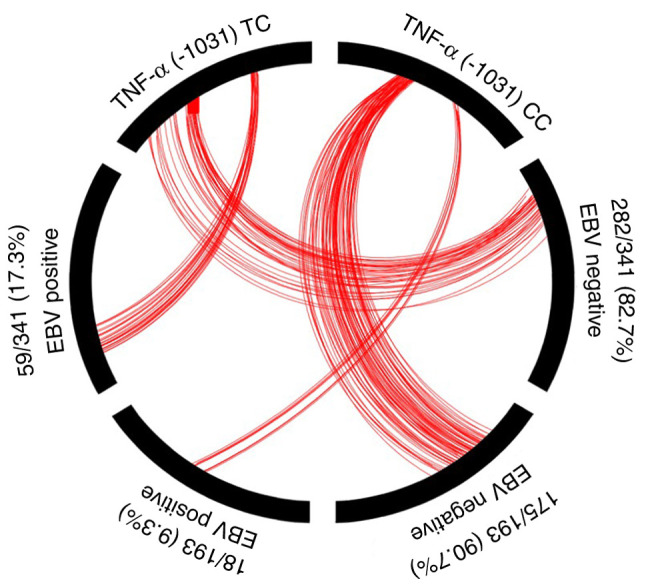 Figure 1
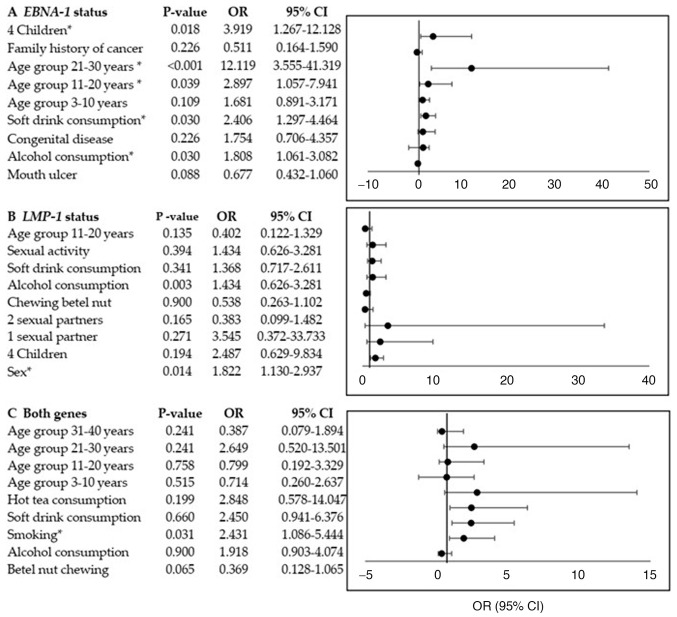 Figure 2
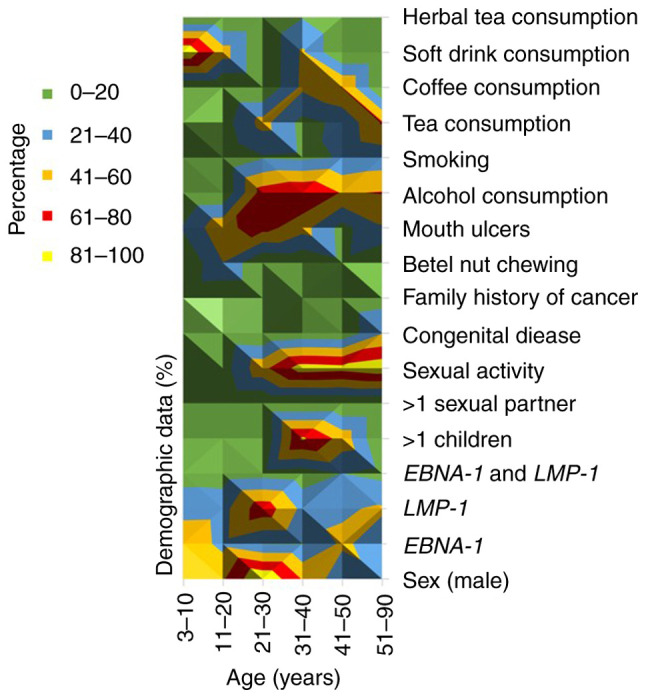 Figure 3
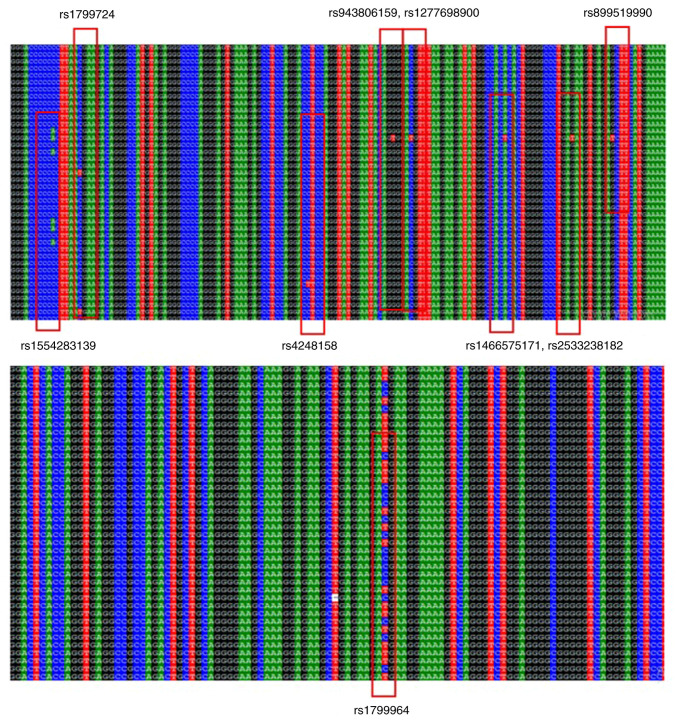 Figure 4
Peer Reviews
No public reviews on file for this paper yet. If you reviewed it on a platform where reviews are public (OpenReview, ICLR, NeurIPS, ICML), you can paste yours below so the community can read it here.
Videos
No videos yet. Explain this paper in a talk, walkthrough, or lecture? Add one.
Taxonomy
TopicsViral-associated cancers and disorders · Hepatitis C virus research · Head and Neck Cancer Studies