Increased neural responsiveness to distractors irrespective of perceptual load explains attention deficit in post‐stroke fatigue
Annapoorna Kuppuswamy, Anthony Harris, William De Doncker, Adrian Alexander, Nilli Lavie

TL;DR
The study finds that post-stroke fatigue is linked to an inability to ignore distractions, regardless of task difficulty.
Contribution
The study introduces a new perspective on post-stroke fatigue by linking it to impaired distractor suppression, independent of perceptual load.
Findings
Fatigue severity predicts increased response slowing, especially under higher perceptual load.
High fatigue severity correlates with increased neural responsiveness to distractors, regardless of task load.
Impaired distractor suppression may explain various PSF symptoms like sensory overload and concentration difficulties.
Abstract
Post‐stroke fatigue (PSF) is a prevalent symptom associated with attention deficits. However, it is currently unclear what drives these. Here we applied Load Theory of Attention to investigate the role of perceptual load in the relationship between attention, distraction and fatigue levels in PSF. Thirty‐two chronic stroke survivors performed a selective attention task of either low, medium or high perceptual load (varied through the number of relevant target features and their combinations). Neural responses to targets and distractor checkerboard flicker (vs. no flicker) were measured with frequency‐tagged EEG responses. The results showed that fatigue severity scores were predictive of response slowing, and that this slowing was increased with higher levels of perceptual load. Fatigue severity was also associated with increased neural responsiveness to distractors, specifically: EEG…
Genes, proteins, chemicals, diseases, species, mutations and cell lines named across the full text — each resolved to its canonical identifier and authoritative record.
Click any figure to enlarge with its caption.
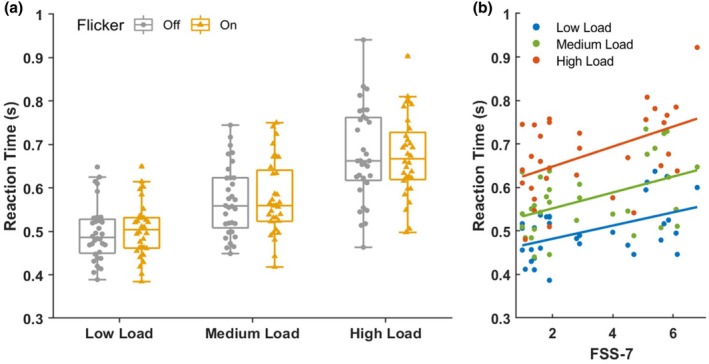 Figure 1
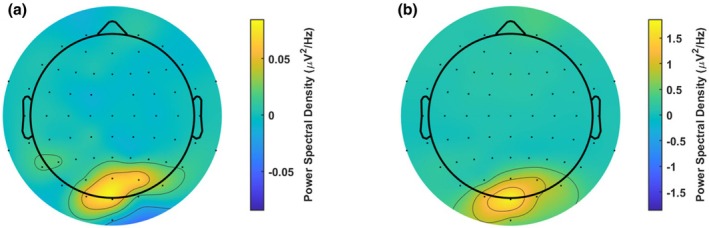 Figure 2
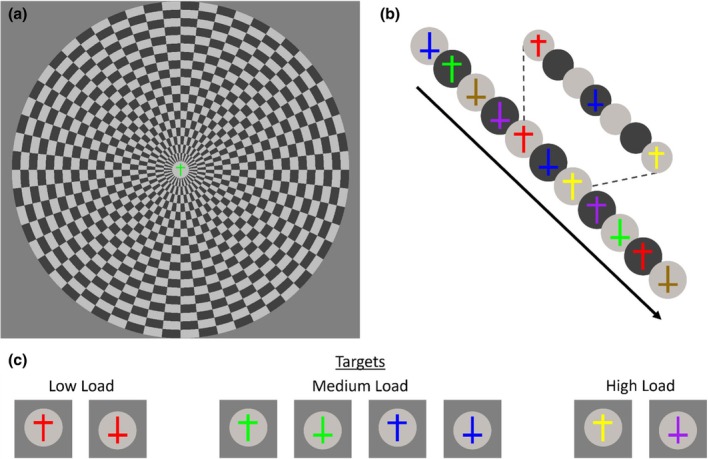 Figure 3
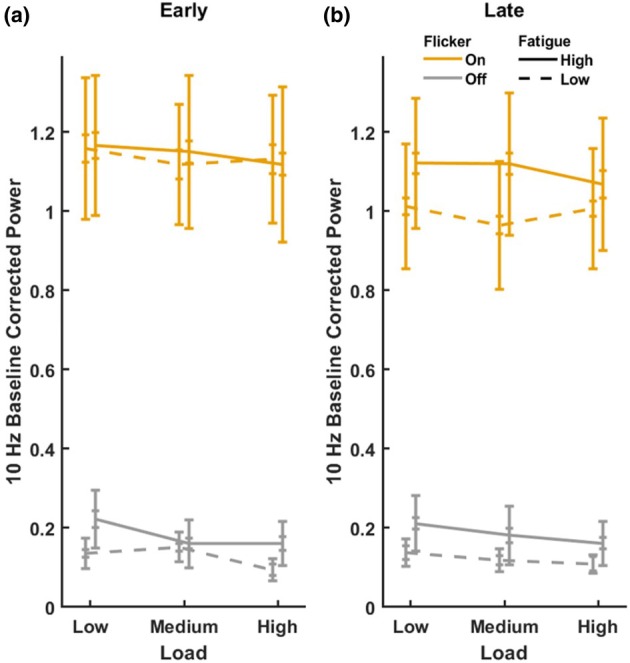 Figure 4
Peer Reviews
No public reviews on file for this paper yet. If you reviewed it on a platform where reviews are public (OpenReview, ICLR, NeurIPS, ICML), you can paste yours below so the community can read it here.
Videos
No videos yet. Explain this paper in a talk, walkthrough, or lecture? Add one.
Taxonomy
TopicsNeural and Behavioral Psychology Studies · EEG and Brain-Computer Interfaces · Visual perception and processing mechanisms