Self‐concept and depressive symptoms three years after stroke: An evaluation of predictive value, the role of subdomains and individual importance
Simon Ladwig, Katja Werheid

TL;DR
This study explores how self-concept and its subdomains predict depressive symptoms in stroke survivors three years after the event.
Contribution
The study introduces the individual importance of self-concept subdomains in predicting depressive symptoms after stroke.
Findings
Self-discrepancy significantly interacts with depressive symptoms (F (1, 118) = 32.69, p < .001).
Present self-concept is more strongly associated with depressive symptoms than past self-concept or self-discrepancy.
Age, history of depression, social support, and present self-concept are independent predictors of depressive symptoms.
Abstract
Depressive symptoms (DS) after stroke are associated with marked negative consequences for rehabilitation. Identifying determinants of DS is needed to enable prediction and develop psychological interventions. A promising candidate may be self‐concept and changes thereof, so‐called self‐discrepancy. Consulting recent self‐concept models, we investigated the role of self‐concept subdomains and their individual importance. Within a prospective longitudinal study, 120 stroke survivors were interviewed via telephone 3 years post‐ictus to assess present and past self‐concept, self‐discrepancy, self‐concept subdomains and DS. The association of self‐concept measures and DS was investigated using an ANCOVA. Controlling for established determinants (age, sex, history of depression, functional independence, social support), multiple regression analyses were used to examine the independent…
Genes, proteins, chemicals, diseases, species, mutations and cell lines named across the full text — each resolved to its canonical identifier and authoritative record.
Click any figure to enlarge with its caption.
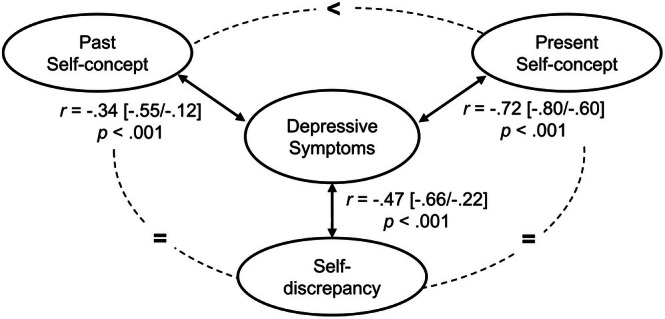 Figure 1
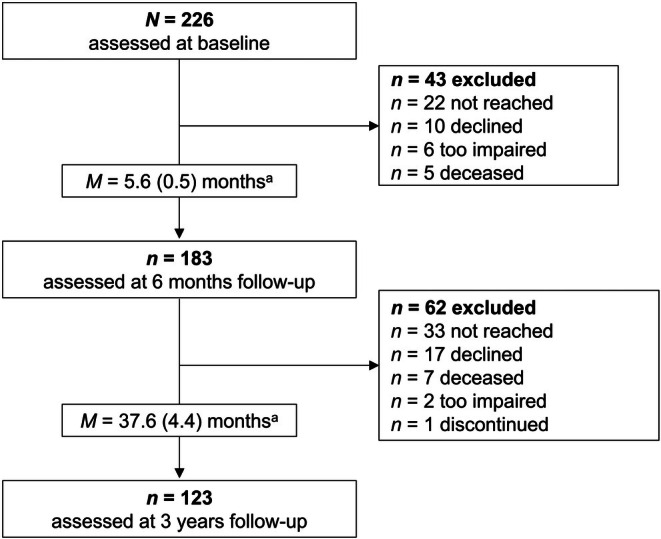 Figure 2
Peer Reviews
No public reviews on file for this paper yet. If you reviewed it on a platform where reviews are public (OpenReview, ICLR, NeurIPS, ICML), you can paste yours below so the community can read it here.
Videos
No videos yet. Explain this paper in a talk, walkthrough, or lecture? Add one.
Taxonomy
TopicsBehavioral Health and Interventions · Mental Health Research Topics · Motivation and Self-Concept in Sports