Optimizing a Conventional Multiplex PCR for Simultaneous Detection of Granulomatous Skin Infection Agents: Leishmania aethiopica, Mycobacterium leprae, and Mycobacterium tuberculosis
Selfu Girma, Mesfin Gemeda, Adugna Woldesemayat, Dawit Alemayehu, Dinksira Deneke, Semira Mekonen, Shimelis Doni, Hanna Beliye, Feleke Tilahun Zewdu, Tsegaye Kumssa, Tizita Kidane, Menberework Chanyalew, Almeseged Abdissa, Markos Alemayehu, Kidist Bobosha, Endalamaw Gadisa

TL;DR
This study develops a PCR test to detect three skin infections—cutaneous leishmaniasis, skin tuberculosis, and leprosy—with high accuracy.
Contribution
The study introduces a validated multiplex PCR assay for simultaneous detection of three granulomatous skin infection agents.
Findings
The mPCR showed 100% sensitivity and specificity on control DNA samples.
Among clinical cases, the mPCR had 75.8% sensitivity and 100% specificity.
The assay could aid diagnosis in regions where these infections coexist.
Abstract
Conventional polymerase chain reaction (PCR) assays are well‐established molecular techniques that can be integrated as standard diagnostic tools, especially in referral settings. This study aimed to assess the diagnostic potential of a multiplex PCR (mPCR) assay for the diagnosis of cutaneous leishmaniasis (CL), skin tuberculosis, and leprosy. A cross‐sectional study was carried out involving 62 patients in the study group, comprising 45 with CL, 9 with leprosy, 4 with skin tuberculosis, and 4 with coinfections. Additionally, 112 positive control DNA samples were analyzed, including 37 of M. tuberculosis, 46 of M. leprae, and 29 of L. aethiopica. The study assessed sensitivity, specificity, positive predictive value (PPV), negative predictive value (NPV), and detection limits. Sensitivity and specificity of the mPCR on positive and negative control samples were 100% (95% CI:…
Genes, proteins, chemicals, diseases, species, mutations and cell lines named across the full text — each resolved to its canonical identifier and authoritative record.
Click any figure to enlarge with its caption.
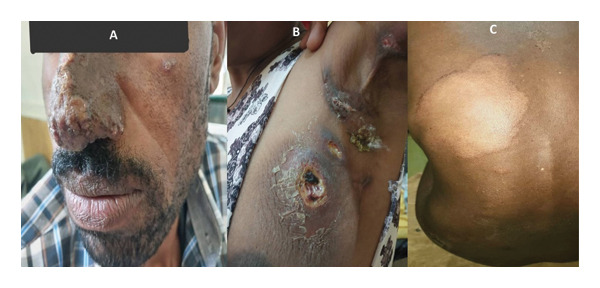 Figure 1
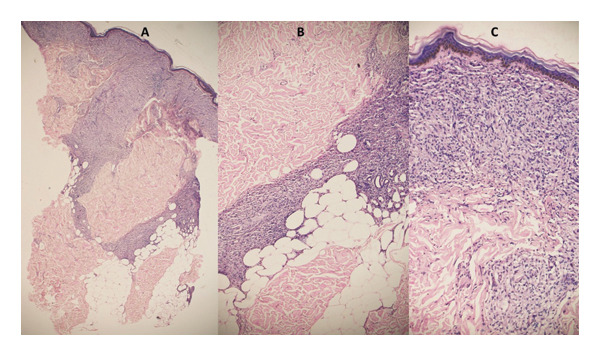 Figure 2
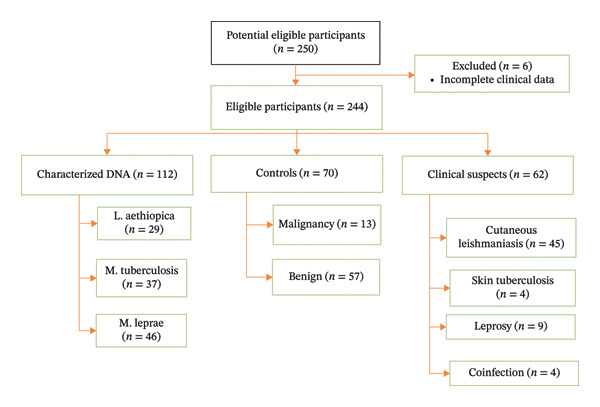 Figure 3
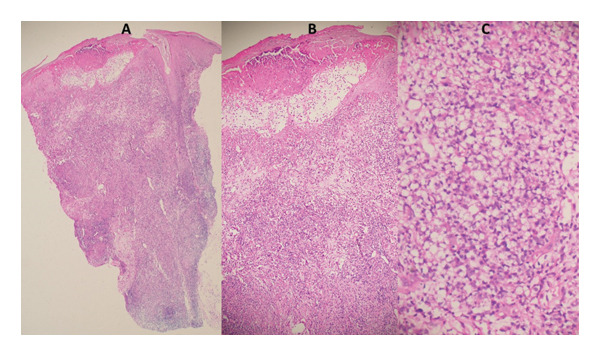 Figure 4
Peer Reviews
No public reviews on file for this paper yet. If you reviewed it on a platform where reviews are public (OpenReview, ICLR, NeurIPS, ICML), you can paste yours below so the community can read it here.
Videos
No videos yet. Explain this paper in a talk, walkthrough, or lecture? Add one.
Taxonomy
TopicsResearch on Leishmaniasis Studies · Leprosy Research and Treatment · Tuberculosis Research and Epidemiology