Description of a National Initiative to Train and Implement Processes of Primary Palliative Care in the Public Health System in Brazil
Maria Perez Soares D’Alessandro, Leonardo Bohner Hoffmann, Hieda Ludugerio de Souza, Fábio Holanda Lacerda, Fernanda Spiel Tuoto, Ana Paula Mirarchi Vieira Maiello, Daniel Felgueiras Rolo, Taís Milene Santos de Paiva, Eliana Maria Ribeiro Dourado, Carina Tischler Pires

TL;DR
This paper describes Brazil's first national initiative to implement palliative care training and services in public health, tailored to local needs and resources.
Contribution
The project introduced a scalable, low-cost model for integrating palliative care into Brazil's public health system through customized regional approaches.
Findings
The program was structured around three pillars and five stages, adapting to local realities without overburdening health services.
Remote activities and reduced visits enabled cost-effective scaling across Brazil's vast territory.
Engaging local health professionals improved intervention effectiveness and addressed work overload challenges.
Abstract
To describe the first national project in Brazil to systematically bring palliative care (PC) knowledge and practices to public health services. Descriptive case study of “Palliative Care Program in the SUS—hospital care, specialized outpatient care and home care,” based on three main pillars and carried out in five stages. The program took place from 2020 to 2024. Part of its fundamental design was the customization of PC initiatives to be implemented in the health care services based on the local reality of each region and its available resources. The target services were clusters of three public or philanthropic health care services comprising one hospital, one specialized outpatient clinic, and one home care service that allowed for the continual care of the patients. Considering the Brazilian territorial extension and the complexity of the public health system, the project was…
Genes, proteins, chemicals, diseases, species, mutations and cell lines named across the full text — each resolved to its canonical identifier and authoritative record.
Click any figure to enlarge with its caption.
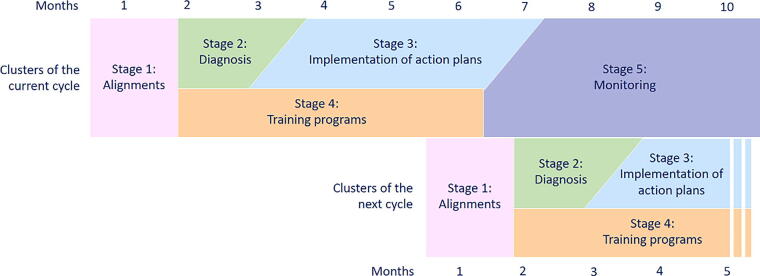 Figure 1
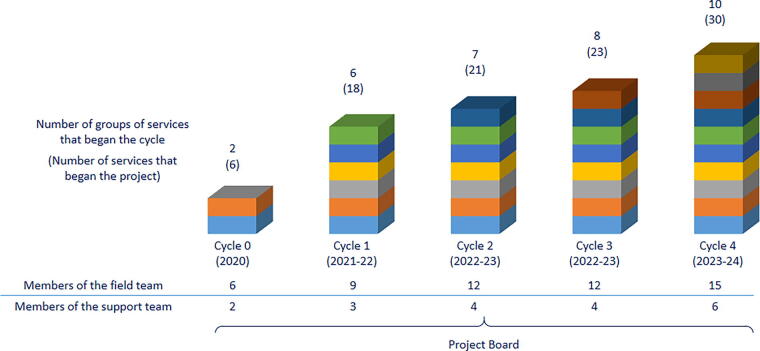 Figure 2
Peer Reviews
No public reviews on file for this paper yet. If you reviewed it on a platform where reviews are public (OpenReview, ICLR, NeurIPS, ICML), you can paste yours below so the community can read it here.
Videos
No videos yet. Explain this paper in a talk, walkthrough, or lecture? Add one.
Taxonomy
TopicsPalliative Care and End-of-Life Issues · Palliative and Oncologic Care · Patient Dignity and Privacy