Consumer resilience suppresses the recovery of overgrazed ecosystems
Nathan B. Spindel, Aaron W. E. Galloway, Julie B. Schram, Gwiisihlgaa Daniel McNeill, SG̱iids Ḵung Vanessa Bellis, Niisii Guujaaw, Jaasaljuus Yakgujanaas, Ondine Pontier, Markus Thompson, Lynn C. Lee, Daniel K. Okamoto

TL;DR
Sea urchins can survive in barren, overgrazed ecosystems and quickly recover when food returns, affecting ecosystem recovery.
Contribution
The study reveals how metabolic resilience in sea urchins influences ecosystem dynamics through compensatory feeding and metabolic flexibility.
Findings
Resting metabolic rates in kelp forest urchins were nearly twice those in barren urchins, but feeding rates were similar.
Diet quality strongly affects energy conversion efficiency, with diverse, PUFA-rich diets improving nutrient assimilation.
Starvation increases bacterial biomarkers in urchins, while algal diets enrich essential fatty acids.
Abstract
Many heterotroph species perish when faced with severe food limitation; others can persist, adapt, and thrive. Sea urchins are emblematic of this paradox: they can overgraze kelp forests to form barren habitats, but can then survive for decades in these nutritionally depauperate seascapes. Understanding the mechanisms enabling persistence under starvation and rapid recovery when food returns provides insights into how consumer resilience shapes ecosystem dynamics. We quantified how food abundance, quality, deprivation, and reintroduction influence bioenergetic performance in the red sea urchin (Mesocentrotus franciscanus), integrating field observations of kelp forest and barren populations with a controlled feeding experiment. We measured respiration, feeding rates, gonadal growth, and fatty acid biomarkers to test how habitat history and diet jointly govern metabolic plasticity and…
Genes, proteins, chemicals, diseases, species, mutations and cell lines named across the full text — each resolved to its canonical identifier and authoritative record.
Click any figure to enlarge with its caption.
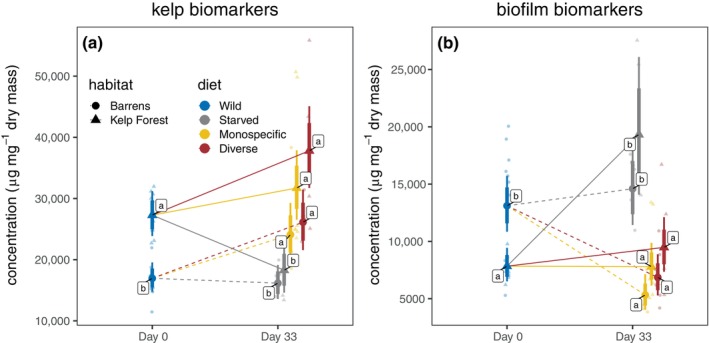 Figure 1
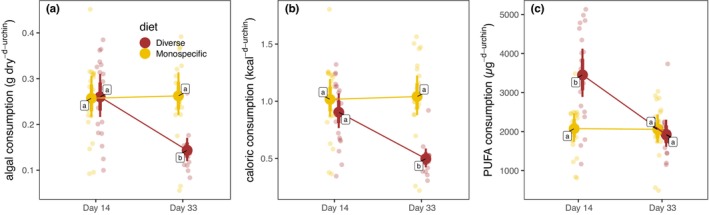 Figure 2
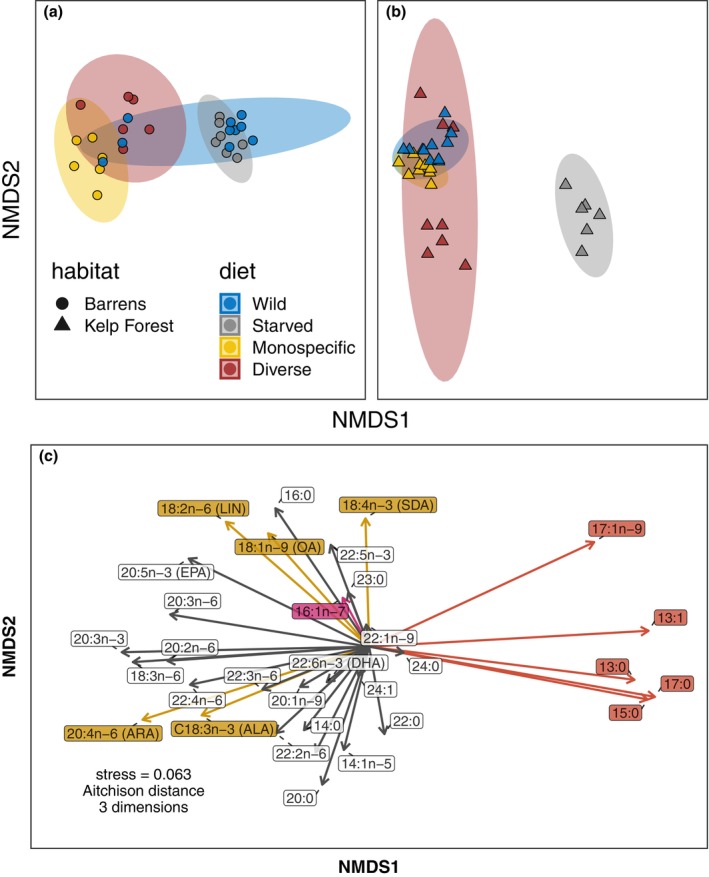 Figure 3
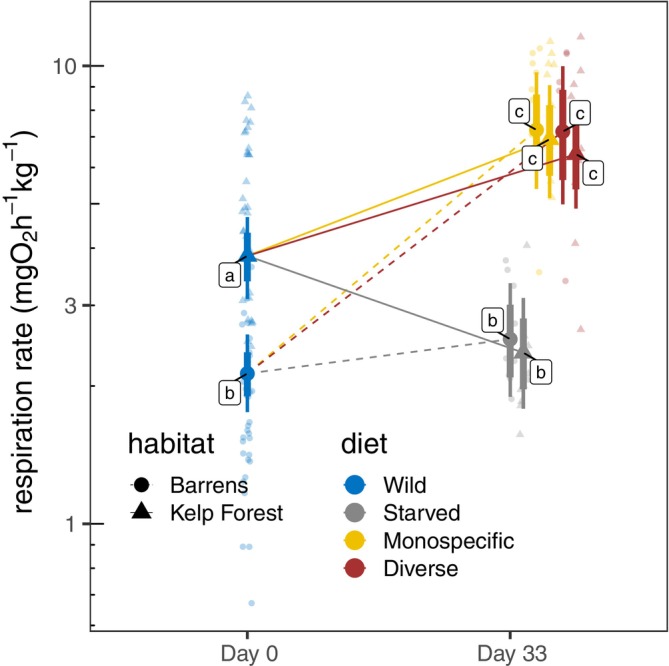 Figure 4
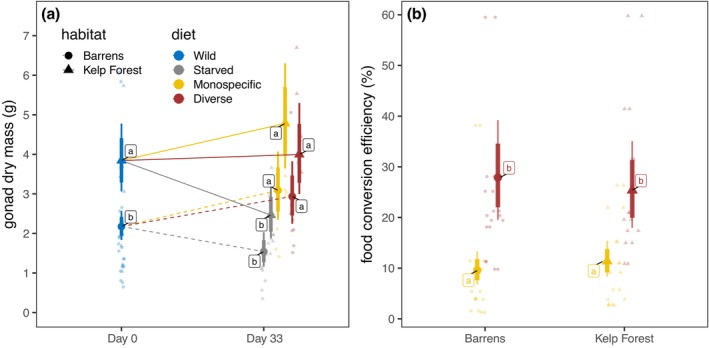 Figure 5
Peer Reviews
No public reviews on file for this paper yet. If you reviewed it on a platform where reviews are public (OpenReview, ICLR, NeurIPS, ICML), you can paste yours below so the community can read it here.
Videos
No videos yet. Explain this paper in a talk, walkthrough, or lecture? Add one.
Taxonomy
TopicsMarine and coastal plant biology · Ocean Acidification Effects and Responses · Coastal wetland ecosystem dynamics