StaggR: an interactive R/Shiny application for planning and visualizing staggered experimental protocols
Alex Michael Francette, Thomas Darde, Alex Francette

TL;DR
StaggR is a web tool that helps scientists plan and visualize complex staggered experiments with multiple samples and precise timing.
Contribution
StaggR introduces an interactive R/Shiny application for designing and visualizing conflict-free staggered experimental protocols.
Findings
StaggR automates the calculation of valid treatment intervals for complex workflows.
The tool provides color-coded visualizations and a built-in timer for executing staggered protocols.
StaggR supports reproducibility by allowing users to save, share, and re-import experimental designs.
Abstract
Biological experiments often require a series of precisely timed operations, and small variations in treatment can result in inconsistent or biased results. To handle multiple samples in parallel with precise temporal resolution, experimentalists may stagger treatments by initiating the workflow of one sample during the wait or incubation time of another. However, as the number of samples processed in parallel and the number of operations increase, it becomes increasingly difficult to identify and execute valid treatment regimens that permit the handling of each sample. To address this, I developed StaggR, an interactive web application that calculates and visualizes compatible staggering intervals for complex experimental workflows. This tool provides a user-friendly interface for defining protocol operations, durations, and wait times. It can automatically calculate the shortest…
Click any figure to enlarge with its caption.
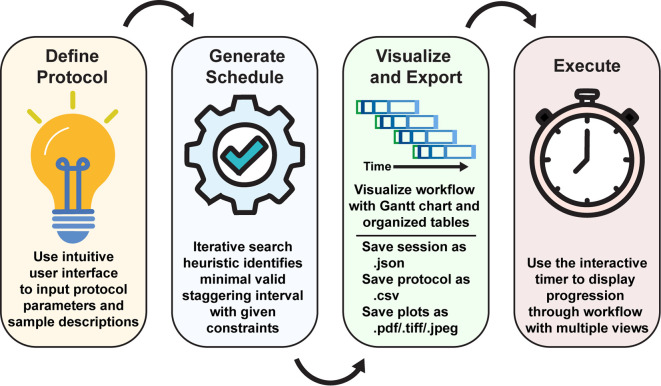 Figure 1
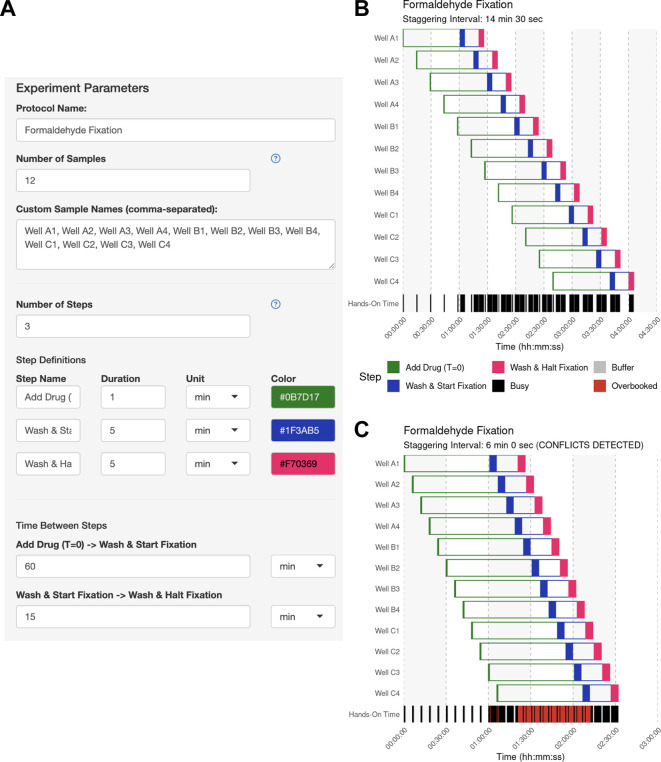 Figure 2
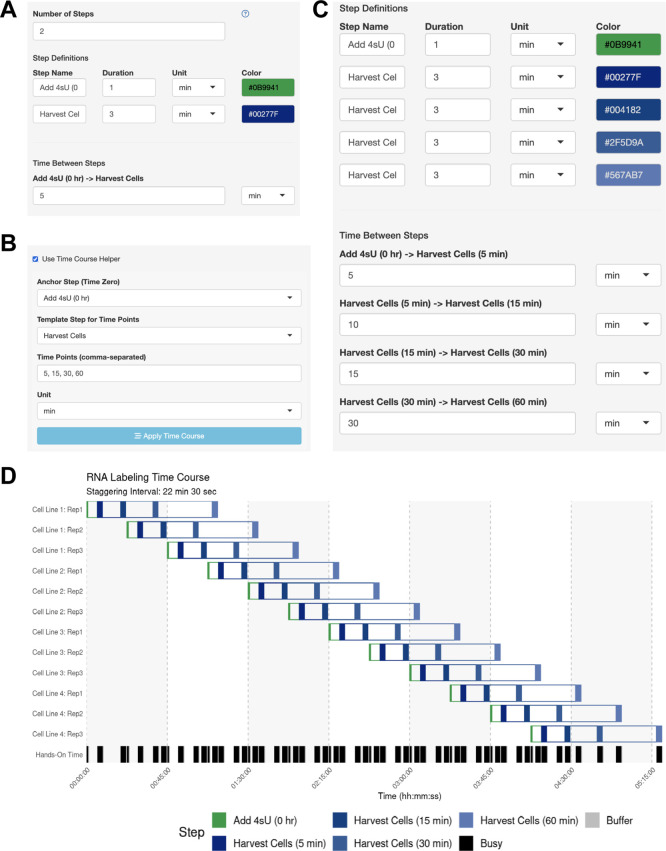 Figure 3
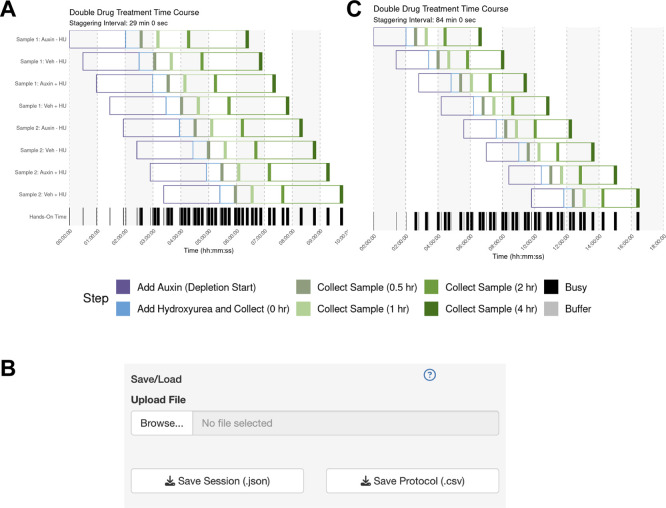 Figure 4
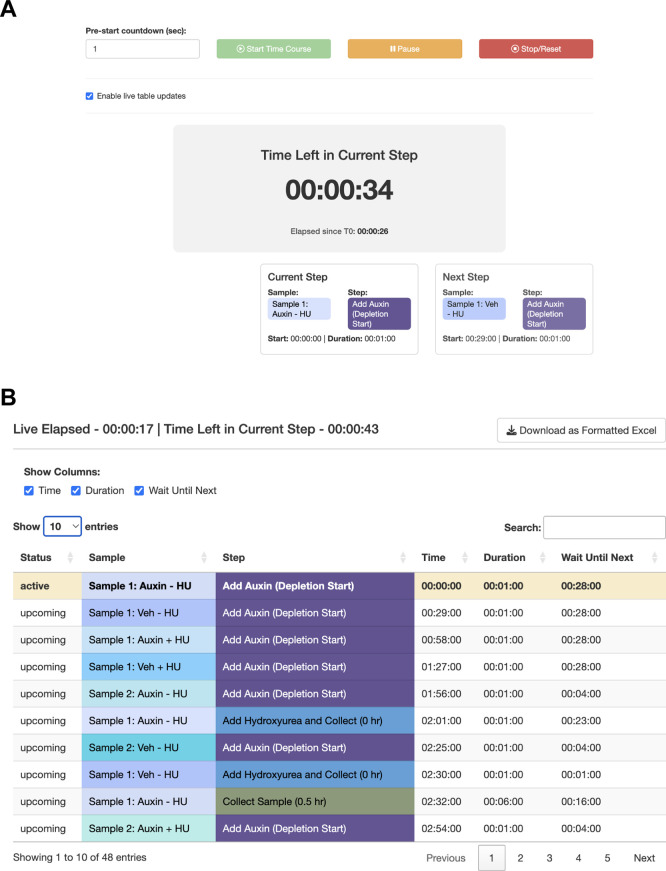 Figure 5
Peer Reviews
No public reviews on file for this paper yet. If you reviewed it on a platform where reviews are public (OpenReview, ICLR, NeurIPS, ICML), you can paste yours below so the community can read it here.
Videos
No videos yet. Explain this paper in a talk, walkthrough, or lecture? Add one.
Taxonomy
TopicsGene expression and cancer classification · Optimal Experimental Design Methods · Genetic Mapping and Diversity in Plants and Animals