Providing Psychological Therapy Support and Improving Postdischarge Data Collection: Preliminary Evaluation of the “Paddle” App
Graham R Thew, Michelle Lee, Ineke Wolsey, Fiona Giles, Emma Hayden, Grace Jell, Jamie Peacock, John Pimm, Joanne Ryder, Alison Salvadori, David M Clark

TL;DR
The Paddle app helps patients track therapy progress and well-being after treatment, showing promise in improving follow-up data collection and post-discharge support.
Contribution
Paddle introduces a novel digital tool for post-discharge psychological therapy support and introduces the concept of 'reliable relapse' in mental health monitoring.
Findings
66% of patients used Paddle during treatment, finding it acceptable and helpful for organizing therapy information.
49% of post-discharge users submitted follow-up data for 6 months, with 73% maintaining improvement and 20% showing further improvement.
36% of users who improved during treatment experienced 'reliable relapse' during follow-up, highlighting the need for continued monitoring.
Abstract
Clinical trials of psychological therapies such as cognitive behavioral therapy typically show sustained posttreatment effects. However, less is known about individuals’ outcomes following treatment in routine practice, and additionally, patient representatives have highlighted a need for better postdischarge support. The “Paddle” app aims to address these issues. Paddle allows patients to store their therapy materials, reflect on sessions, and monitor their well-being during and after treatment, completing outcome questionnaires and monthly reviews. Study 1 evaluated patients’ use of Paddle during treatment in routine practice. Patient and therapist surveys explored feasibility, acceptability, and helpfulness. Study 2 examined the feasibility of using the app post discharge, inviting users to submit monthly questionnaires for 6 months, and seeking feedback via survey. Our findings…
Genes, proteins, chemicals, diseases, species, mutations and cell lines named across the full text — each resolved to its canonical identifier and authoritative record.
Click any figure to enlarge with its caption.
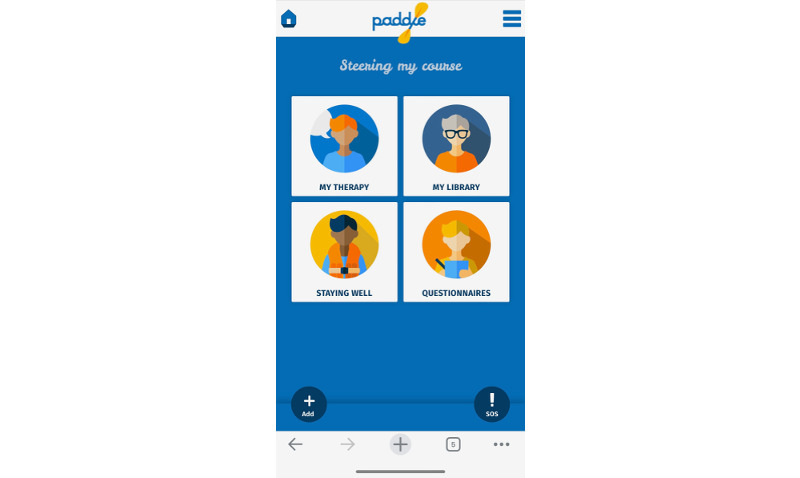 Figure 1
Peer Reviews
No public reviews on file for this paper yet. If you reviewed it on a platform where reviews are public (OpenReview, ICLR, NeurIPS, ICML), you can paste yours below so the community can read it here.
Videos
No videos yet. Explain this paper in a talk, walkthrough, or lecture? Add one.
Taxonomy
TopicsDigital Mental Health Interventions · Mobile Health and mHealth Applications · Social Media in Health Education