Quality of Life Trajectories With Integration Into Electronic Health Records for High-Resolution Patient Outcomes: Algorithm Development and Validation Study
Martin Dugas, Robin Fleige, Max Christian Blumenstock, Stephan Christoph Feder, Tobias Dittrich, Niels Siegel, Celine Fabienne Bergmann, Luis Wettach, Sandra Sauer, Pavlina Lenga, Sandro M Krieg, Susanne Dugas-Breit, Lucy Joanne Kessler, Kosima Kosmalla, Fleur Fritz-Kebede

TL;DR
This study shows that integrating frequent quality of life assessments into electronic health records is technically and clinically feasible, offering new insights into patient outcomes.
Contribution
The study demonstrates the feasibility of high-resolution quality of life tracking integrated into EHRs for personalized care.
Findings
HRQoL assessments showed clinically relevant results across four medical domains.
Significant correlations were found between HRQoL and other clinical metrics like pain levels and global health status.
High-resolution QoL data revealed considerable variability in patient outcomes over time.
Abstract
Patient-reported outcome measures (PROMs) such as health-related quality of life (HRQoL) are usually assessed at greater time intervals such as diagnostic time points, after treatment, and during follow-up. Many PROMs require frequent data collection (weekly or daily). Electronic PROMs enable high-resolution tracking but face declining response rates. Integrating PROMs into electronic health records (EHRs) could improve response rates and personalize therapy. This study aimed to evaluate the technical and clinical feasibility of high-frequency HRQoL assessments for routine care in EHRs. Patients receive emails on their mobile devices with 1-time links to a web-based app called MyEDC. This app communicates with an electronic data capture proxy in the demilitarized zone of the hospital. With a polling mechanism, these patient data are transferred to the protected hospital network and…
Genes, proteins, chemicals, diseases, species, mutations and cell lines named across the full text — each resolved to its canonical identifier and authoritative record.
Click any figure to enlarge with its caption.
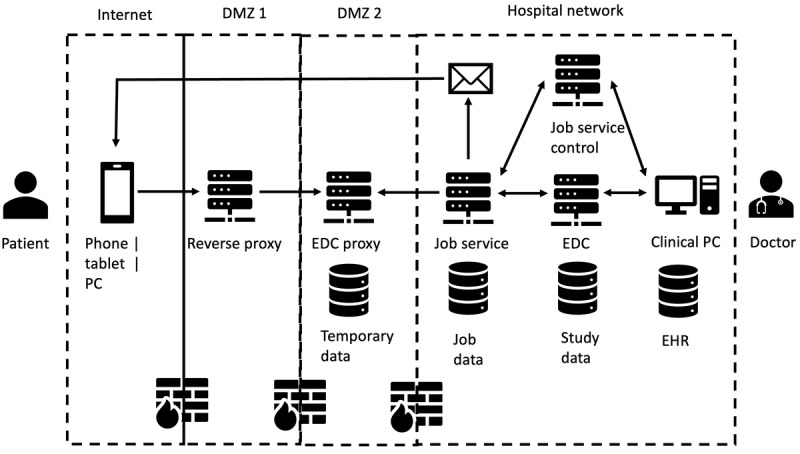 Figure 1
 Figure 2
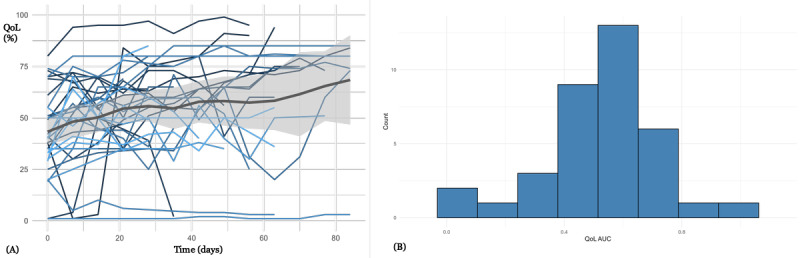 Figure 3
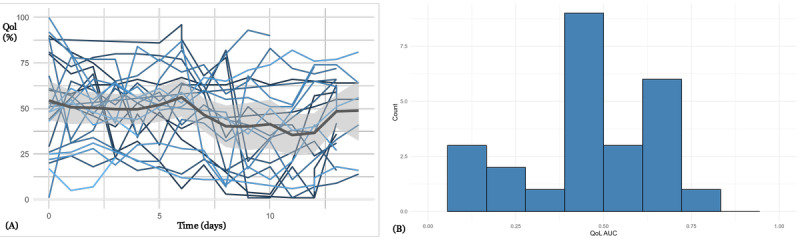 Figure 4
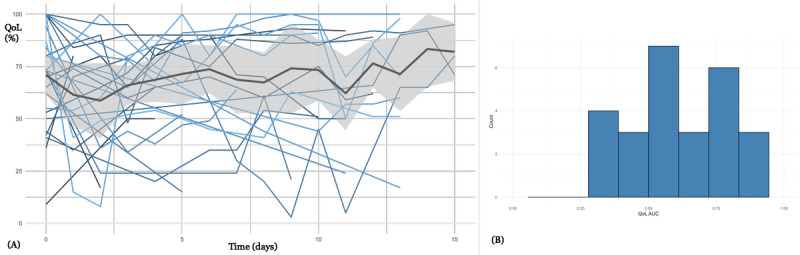 Figure 5
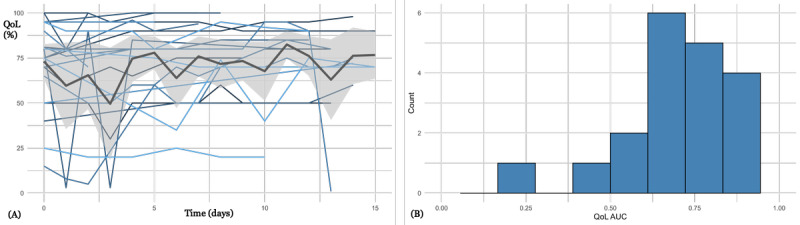 Figure 6
Peer Reviews
No public reviews on file for this paper yet. If you reviewed it on a platform where reviews are public (OpenReview, ICLR, NeurIPS, ICML), you can paste yours below so the community can read it here.
Videos
No videos yet. Explain this paper in a talk, walkthrough, or lecture? Add one.
Taxonomy
TopicsCancer survivorship and care · Machine Learning in Healthcare · Chronic Disease Management Strategies