Genetic deletion of ASIC3 alters left ventricular remodeling and autonomic function after myocardial infarction in mice
Karley M. Monaghan, David D. Gibbons, Chad C. Ward, Maram El‐Geneidy, William J. Kutschke, Kathy A. Zimmerman, Donald A. Morgan, Harald M. Stauss, Anne Marie S. Harding, Michelle C. M. Bader, Peter M. Snyder, Rasna Sabharwal, Robert M. Weiss, Kamal Rahmouni, Christopher J. Benson

TL;DR
Deleting ASIC3 in mice reduces harmful heart changes after a heart attack by affecting nerve signaling and blood pressure variability.
Contribution
This study reveals that ASIC3 deletion modulates cardiac remodeling and autonomic function after MI in mice.
Findings
ASIC3−/− mice showed reduced left ventricular dilation and improved cardiac function after MI.
ASIC3−/− mice exhibited altered autonomic responses, including lower baroreceptor sensitivity and higher systolic blood pressure variability.
ASIC3 may serve as a potential therapeutic target for heart failure.
Abstract
Cardiac afferent neurons have been shown to trigger overactivation of neurohormonal systems known to drive adverse cardiac remodeling following myocardial infarction (MI). Acid‐sensing ion channels (ASICs) that are highly expressed in cardiac sympathetic afferents sense ischemia‐induced myocardial acidosis. We hypothesized that genetic deletion of ASICs might abrogate disadvantageous remodeling after MI by disrupting afferent signaling pathways otherwise resulting in overactivation of neurohormonal responses. To test this, we induced MI in wild type (WT) and ASIC3−/− mice and assessed cardiac remodeling by serial echocardiography. We found that ASIC3−/− mice had less LV dilation relative to ischemic zone fraction, increased LV mass and wall thickness, and increased stroke volume compared to WT mice after MI. To investigate a potential role of the autonomic nervous system, we measured…
Genes, proteins, chemicals, diseases, species, mutations and cell lines named across the full text — each resolved to its canonical identifier and authoritative record.
Click any figure to enlarge with its caption.
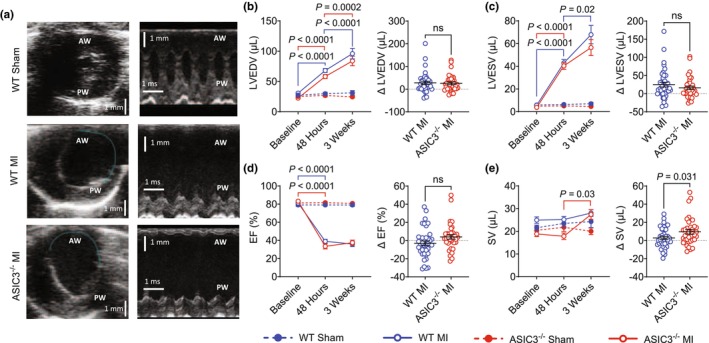 Figure 1
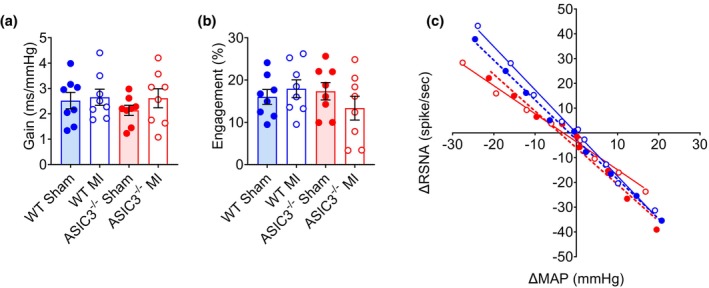 Figure 2
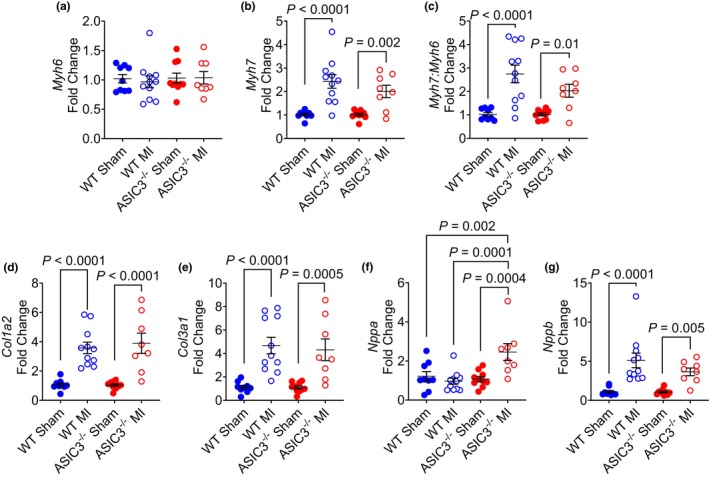 Figure 3
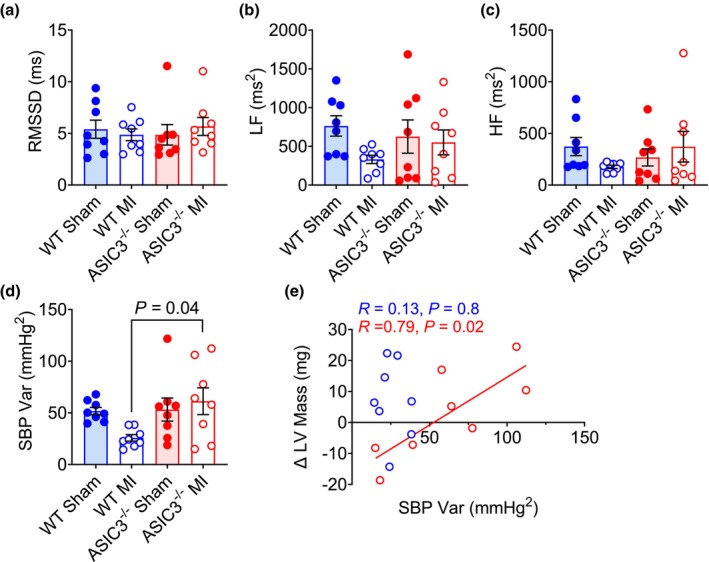 Figure 4
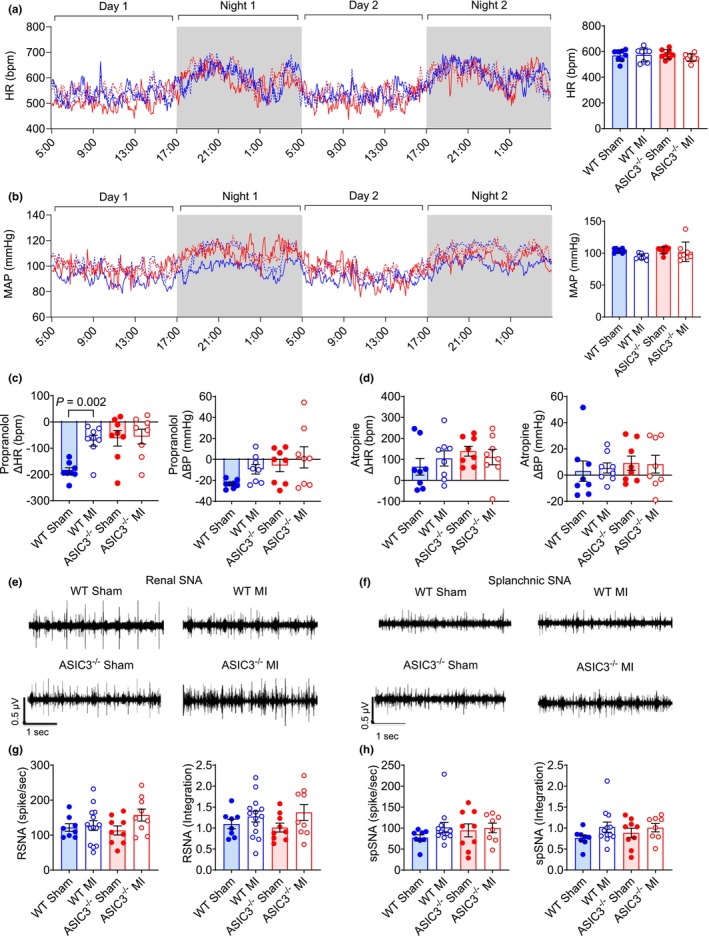 Figure 5
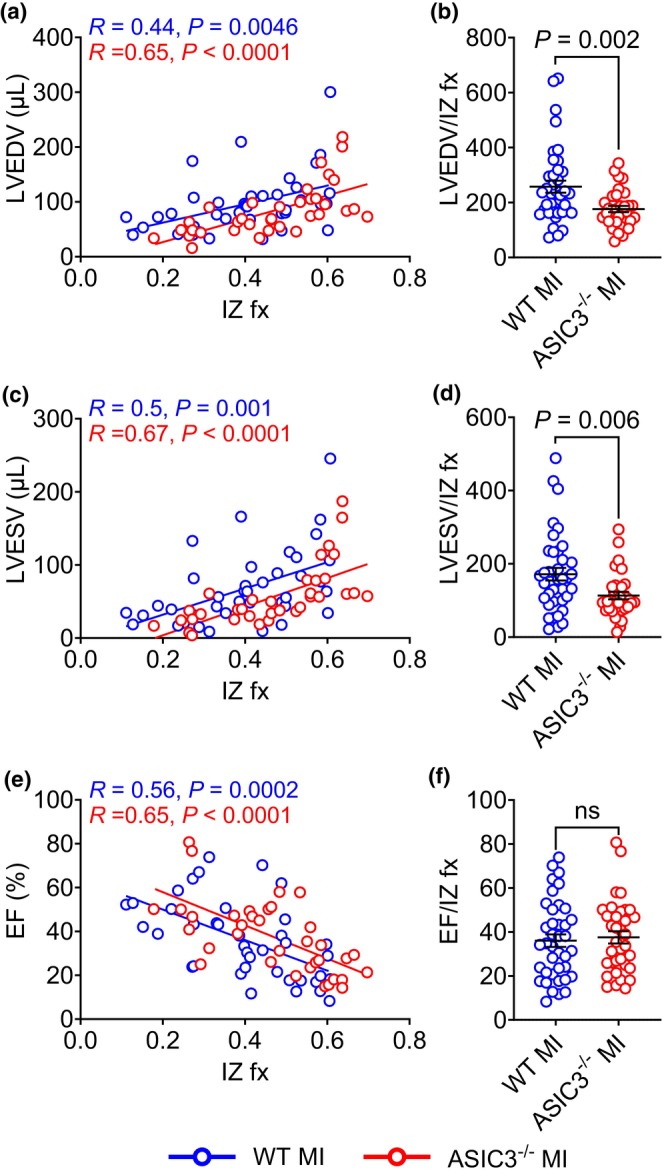 Figure 6
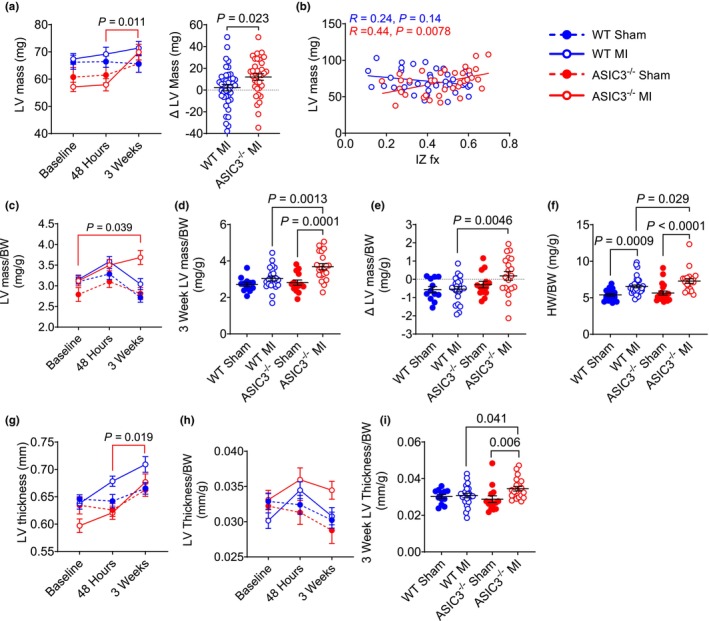 Figure 7
Peer Reviews
No public reviews on file for this paper yet. If you reviewed it on a platform where reviews are public (OpenReview, ICLR, NeurIPS, ICML), you can paste yours below so the community can read it here.
Videos
No videos yet. Explain this paper in a talk, walkthrough, or lecture? Add one.
Taxonomy
TopicsIon Transport and Channel Regulation · Ion Channels and Receptors · Cardiac electrophysiology and arrhythmias