Downregulation of Organ‐Derived Activin A Attenuates Muscle Atrophy and Intramuscular Fat Infiltration in Cancer Cachexia Mice
Cui Wang, Lin Gao, Rui Xue, Jia Su, Honghui Li, Wei Yang, Yan Tang, Zhihang Su, Shasha Min, Changyong Tang, Yuqi Zhu, Bo Mu, John R. Speakman, Xina Xie, Zesong Li

TL;DR
Reducing Activin A in the heart and kidney of cancer cachexia mice improves muscle mass and function by decreasing fat infiltration and reversing muscle wasting.
Contribution
This study identifies heart- and kidney-derived Activin A as a key driver of cachexia through combined effects, offering a novel therapeutic target.
Findings
Organ-derived Activin A in the heart and kidney contributes to cachexia and systemic muscle wasting.
Downregulating Activin A in these organs restores body weight, food intake, and muscle function in cancer cachexia mice.
Activin A suppression improves mitochondrial function and reduces intramuscular fat infiltration.
Abstract
Cancer cachexia is a multifactorial wasting syndrome marked by profound skeletal muscle loss. Tumours can release high levels of Activin A (ActA), which activates the ubiquitin‐proteasome pathway (UPP) and drives muscle wasting. Systemic blockade of the ActA pathway is associated with inflammatory adverse effects, and tumour‐restricted targeting alone often fails to reverse cachexia. We asked whether ActA produced by host (nontumour) organs contributes to circulating ActA and muscle wasting. We profiled ActA across tissues and in serum in Lewis lung carcinoma (LLC) cancer cachexia mice to generate an organ‐wide expression map. Functional studies were then performed using adeno‐associated‐virus (AAV)‐knockdown in the heart (cTnT/hTCF21 promoters) and kidney (CMV promoter), followed by cachexia induction. Body weight (BW), food intake, skeletal muscle mass, muscle function and muscle…
Genes, proteins, chemicals, diseases, species, mutations and cell lines named across the full text — each resolved to its canonical identifier and authoritative record.
Click any figure to enlarge with its caption.
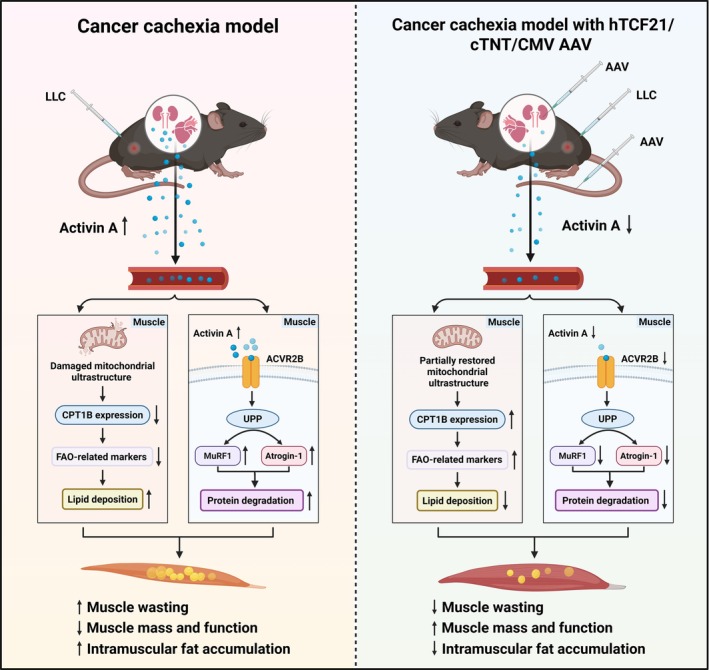 Figure 1
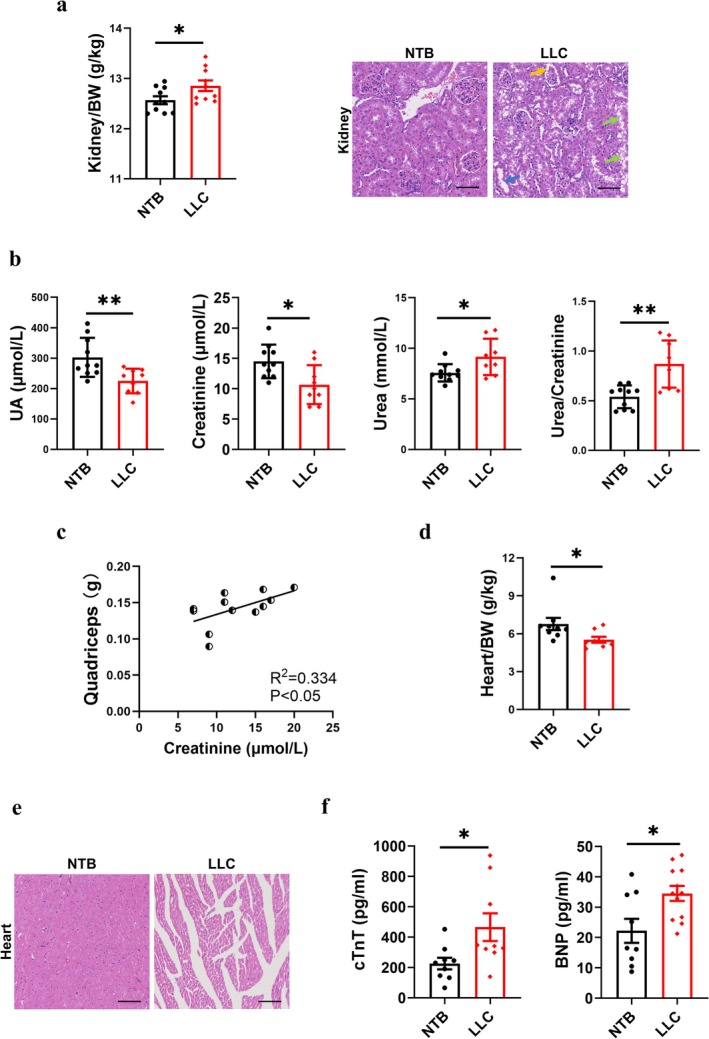 Figure 2
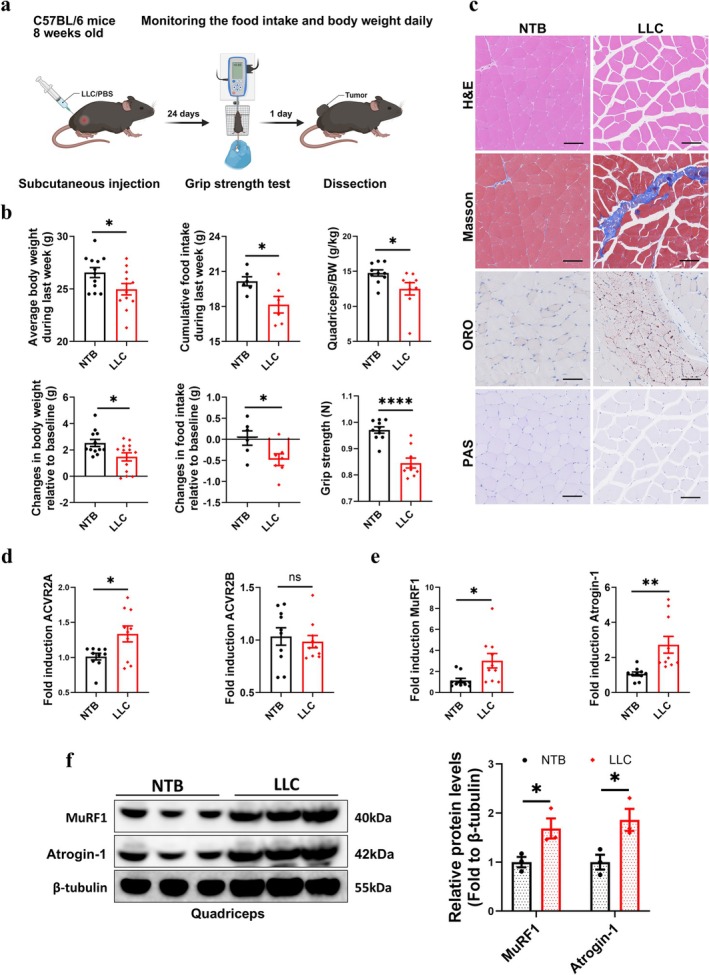 Figure 3
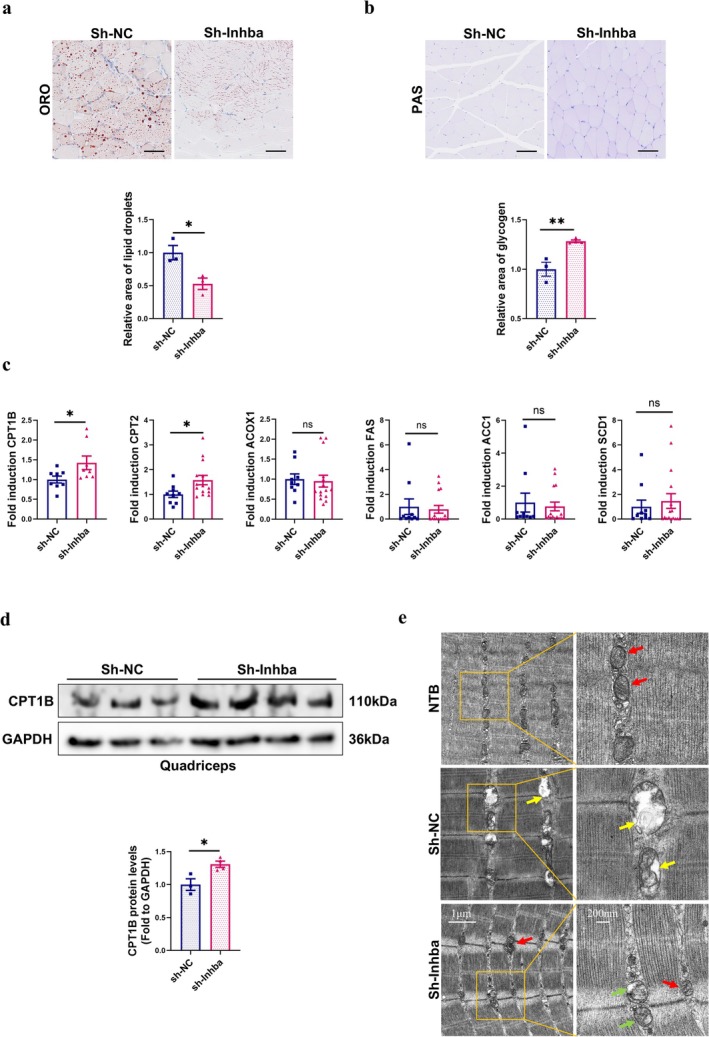 Figure 4
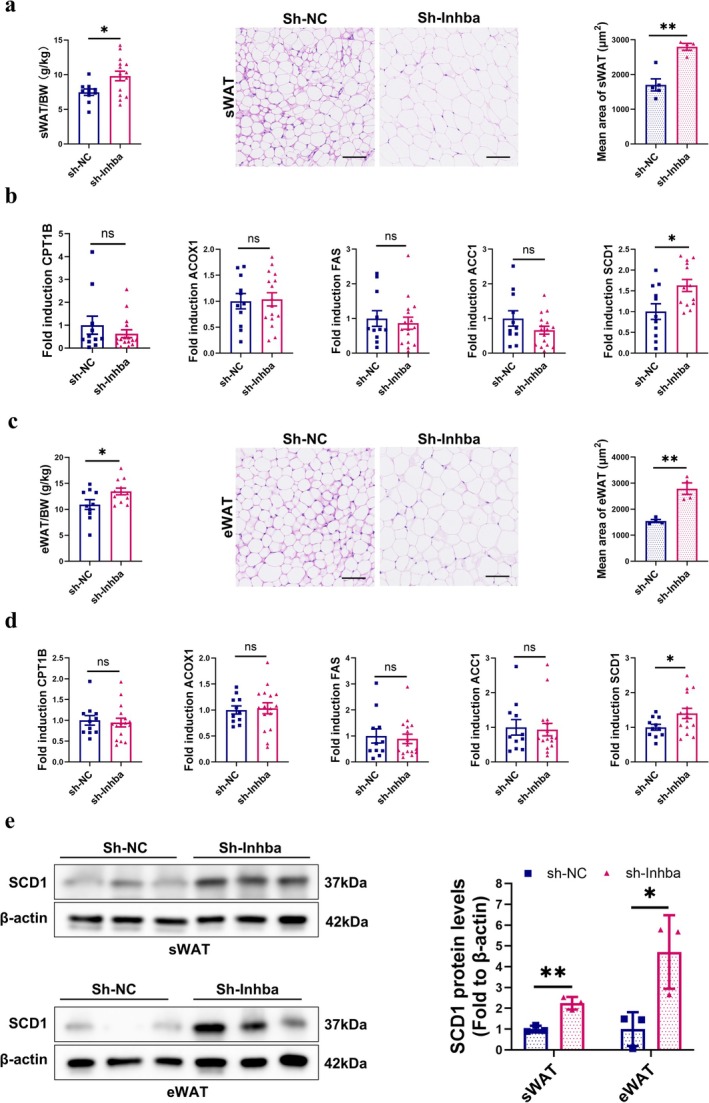 Figure 5
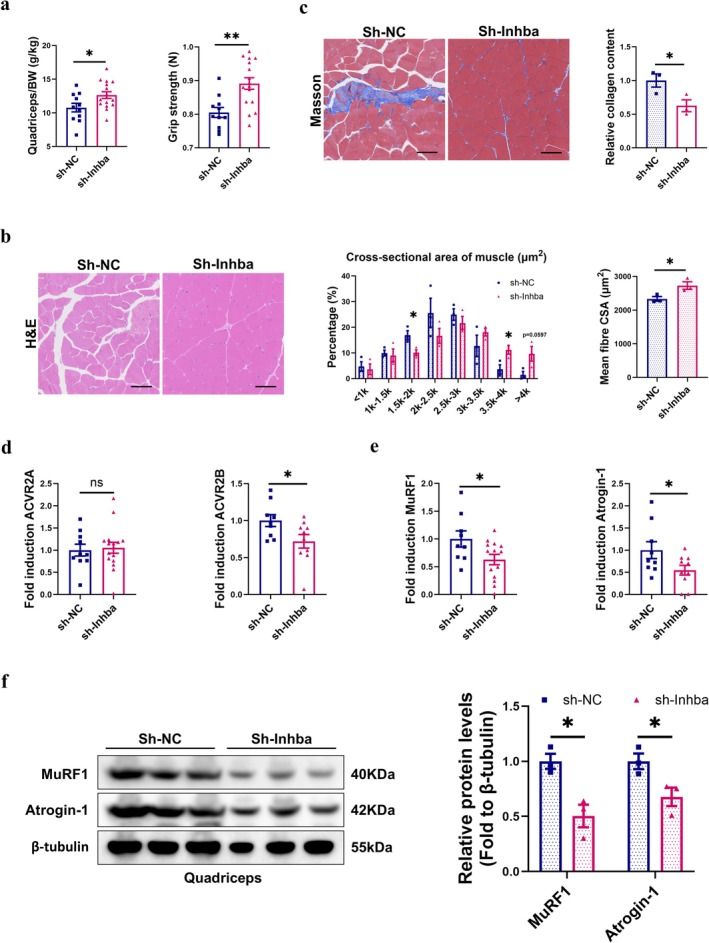 Figure 6
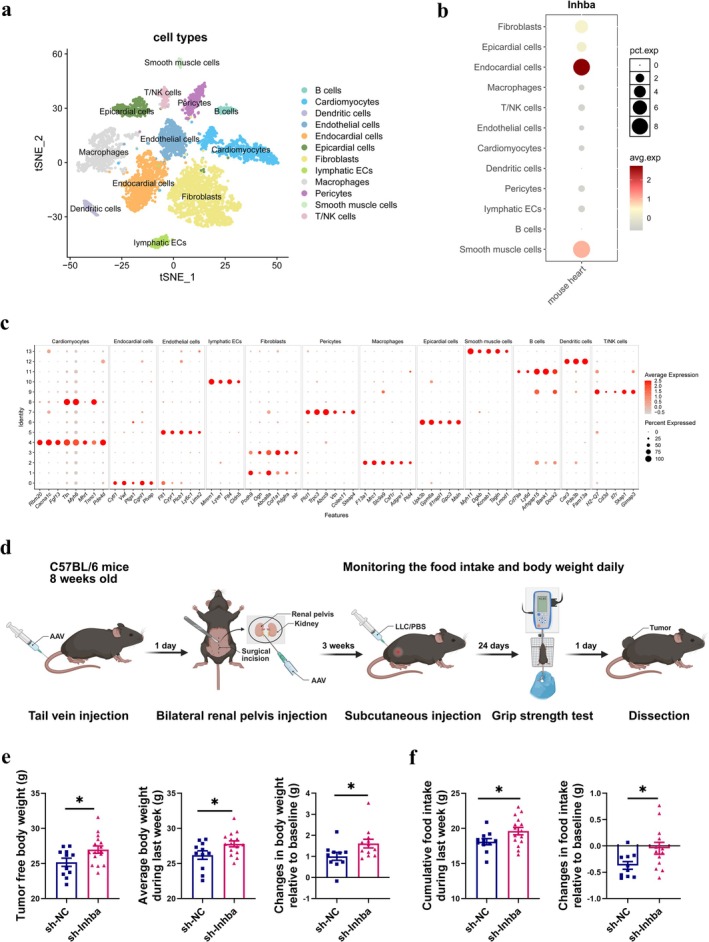 Figure 7
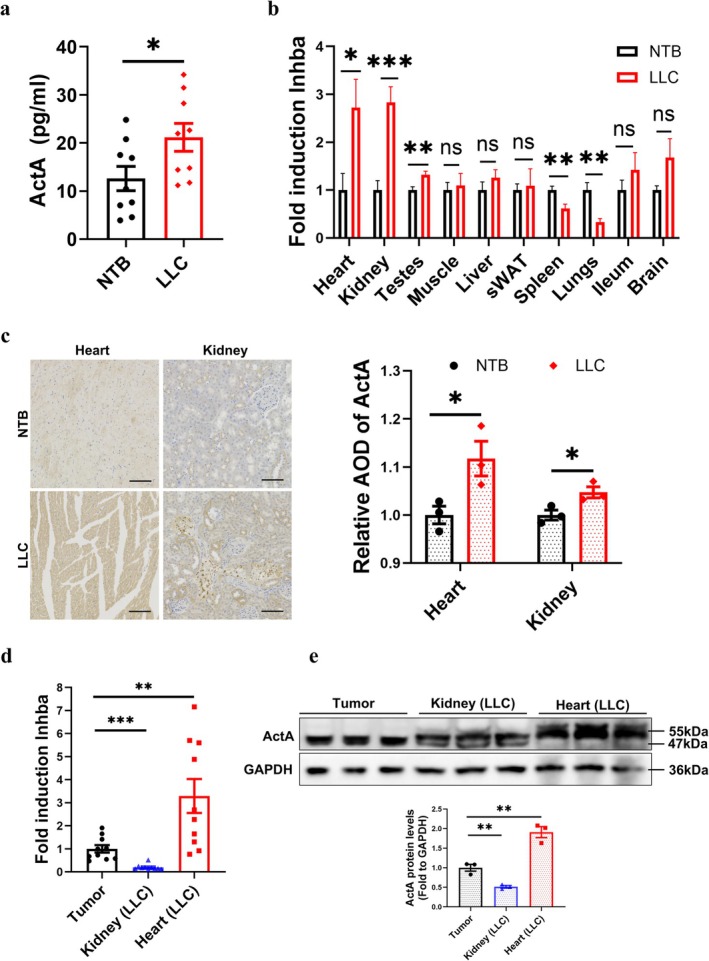 Figure 8
Peer Reviews
No public reviews on file for this paper yet. If you reviewed it on a platform where reviews are public (OpenReview, ICLR, NeurIPS, ICML), you can paste yours below so the community can read it here.
Videos
No videos yet. Explain this paper in a talk, walkthrough, or lecture? Add one.
Taxonomy
TopicsTGF-β signaling in diseases · Muscle Physiology and Disorders · GDF15 and Related Biomarkers