Uncovering the role of c-Fos in the bidirectional relationship between depression/anxiety behaviors and α-synuclein propagation in Parkinson’s disease
Soo-Jeong Kim, Jae-Bong Kim, Seonghui Ham, Sang Myun Park

TL;DR
This study explores how depression and anxiety in Parkinson’s disease may worsen alpha-synuclein spread, a key driver of the disease, through a mechanism involving c-Fos and mGluR5.
Contribution
The study reveals a bidirectional feedback loop between affective symptoms and alpha-synuclein pathology in Parkinson’s disease, mediated by c-Fos and mGluR5.
Findings
Chronic stress enhances alpha-synuclein propagation and worsens depression/anxiety in Parkinson’s disease models.
Pharmacological inhibition of c-Fos reduces both behavioral and pathological changes in the disease.
mGluR5 activation partially contributes to c-Fos induction and alpha-synuclein spread.
Abstract
Parkinson’s disease (PD) presents with both motor and non-motor symptoms, including depression and anxiety, which often precede motor onset, yet the mechanisms linking these affective symptoms to PD pathology remain unclear. In this study, we investigated the bidirectional relationship between depression/anxiety behaviors and α-synuclein (α-syn) propagation using A53T α-syn transgenic mice subjected to chronic restraint stress (CRS) and/or intrastriatal injection of α-syn preformed fibrils (PFFs). Behavioral testing and immunohistochemical analyses revealed that CRS enhanced PFF-induced α-syn propagation and exacerbated depression/anxiety-like behaviors, while α-syn propagation was associated with aggravated CRS-induced behavioral deficits, indicating a potential reciprocal association that could contribute to accelerating PD progression. This interaction was mediated by the neuronal…
Genes, proteins, chemicals, diseases, species, mutations and cell lines named across the full text — each resolved to its canonical identifier and authoritative record.
Click any figure to enlarge with its caption.
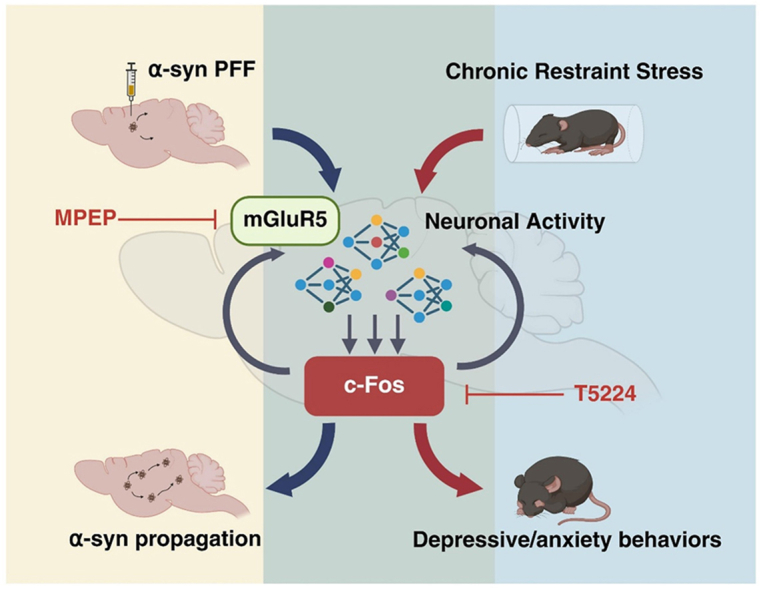 Figure 1
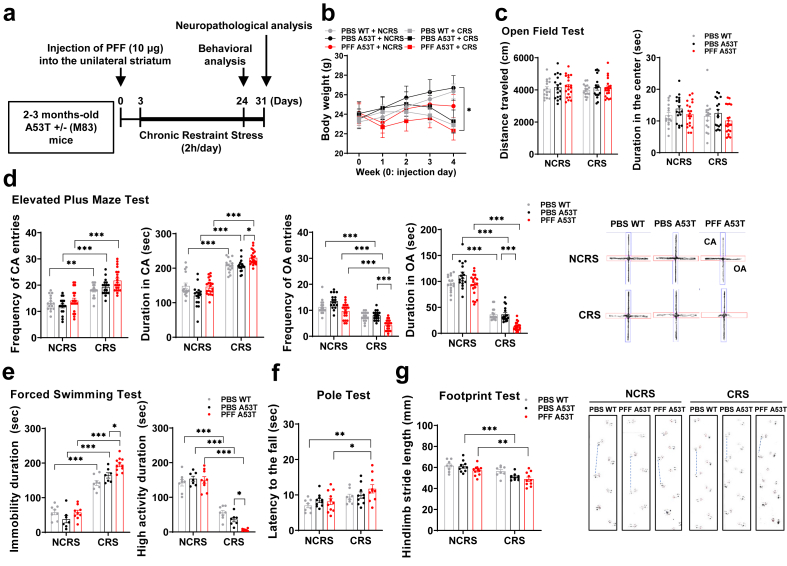 Figure 2
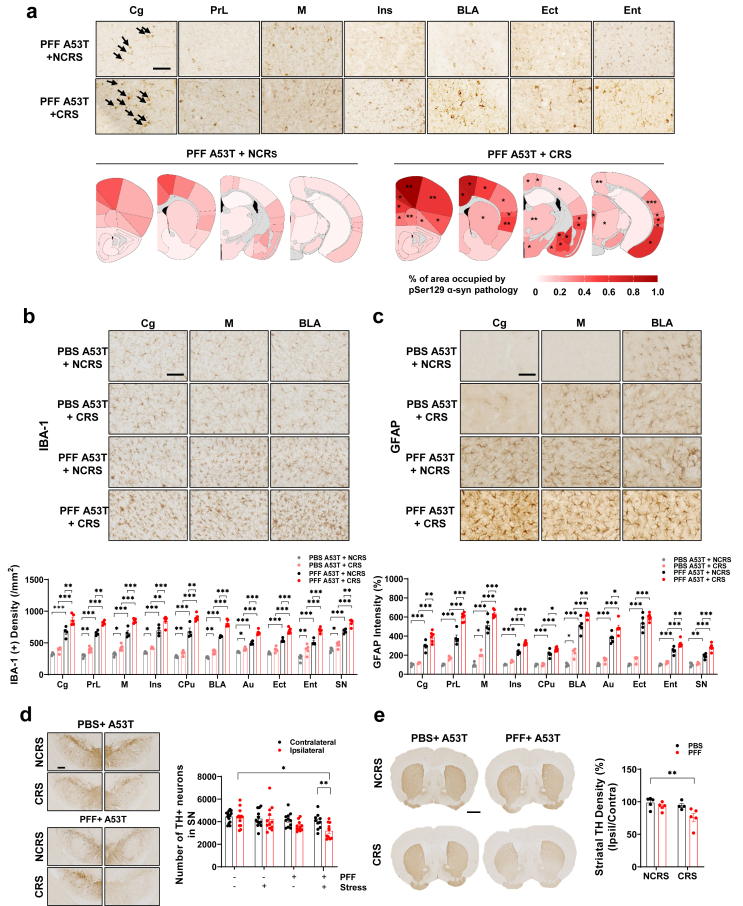 Figure 3
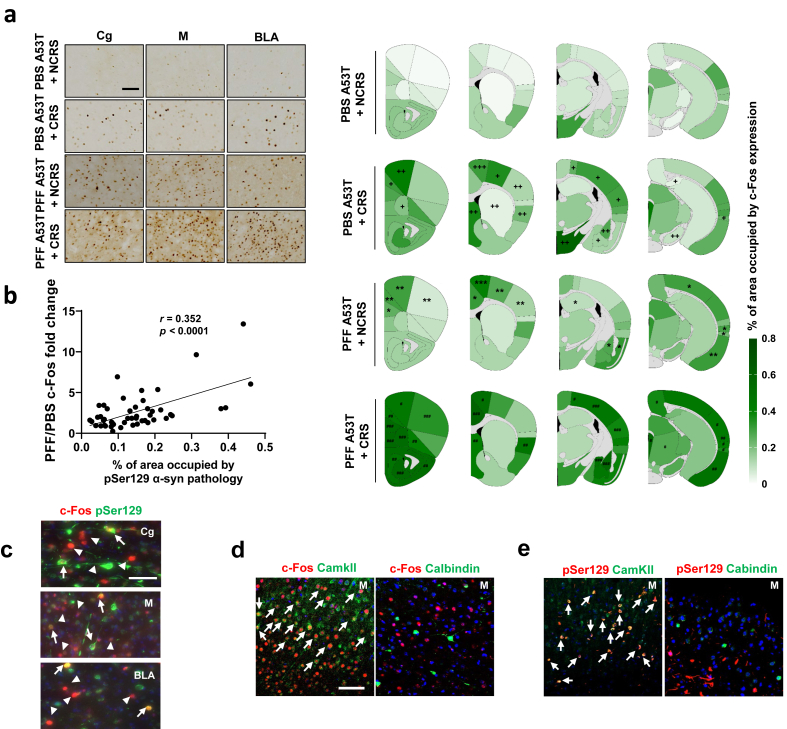 Figure 4
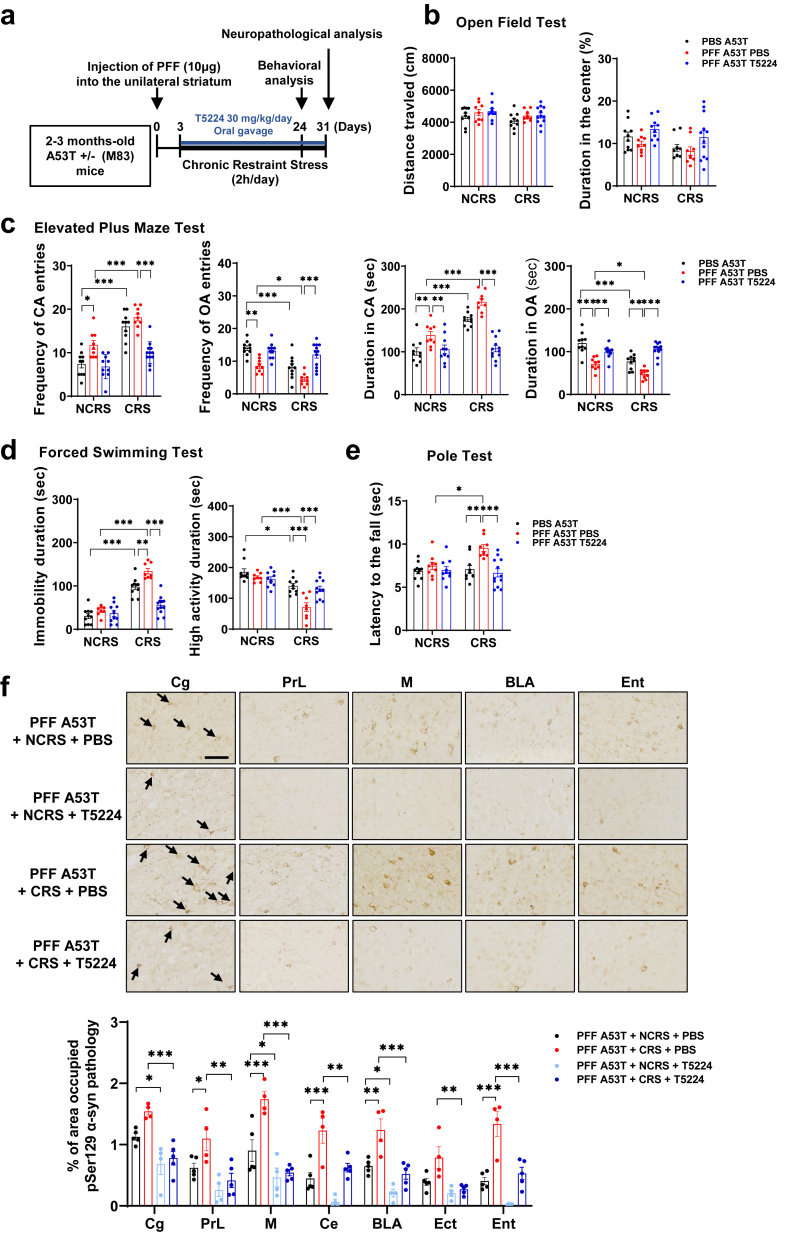 Figure 5
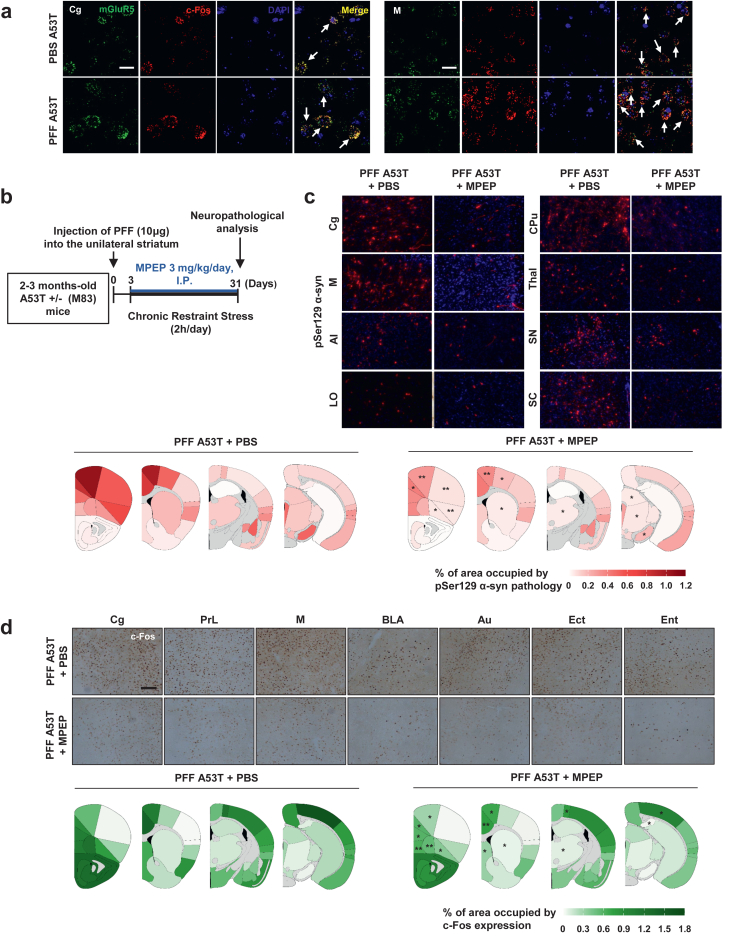 Figure 6
Peer Reviews
No public reviews on file for this paper yet. If you reviewed it on a platform where reviews are public (OpenReview, ICLR, NeurIPS, ICML), you can paste yours below so the community can read it here.
Videos
No videos yet. Explain this paper in a talk, walkthrough, or lecture? Add one.
Taxonomy
TopicsParkinson's Disease Mechanisms and Treatments · Neurological disorders and treatments · Neurotransmitter Receptor Influence on Behavior