Deep learning analysis of urine-derived stem cell mitochondrial morphology as a non-invasive Alzheimer’s disease biomarker
Ran Yan, Wenhua Zhang, Wenjing Wang, Jiaqi Wu, Jun Zhang, Yingjie Xu, Wei Xu, Wen Yang

TL;DR
This study explores using urine-derived stem cell mitochondrial imaging and AI to detect Alzheimer's disease non-invasively.
Contribution
A novel AI framework using live cell imaging to detect mitochondrial changes linked to Alzheimer's disease.
Findings
AI models effectively identified mitochondrial hyperfission and hyperfusion in HeLa cells.
The system successfully distinguished mitochondrial patterns in urine-derived stem cells from cognitively impaired individuals.
The approach shows promise for early Alzheimer's detection and requires further validation.
Abstract
Alzheimer’s disease (AD), closely associated with mitochondrial dysfunction, currently lacks convenient and non-invasive biomarkers for mitochondrial assessment. In this study, we developed an artificial intelligence framework leveraging live urine-derived stem cell (USC) mitochondrial fluorescence imaging to investigate differences between cognitively impaired individuals (AD and mild cognitive impairment (MCI)) and cognitively normal (CN) subjects. Mitochondrial fluorescence images from living HeLa cells were first segmented, and two binary classification models based on the ResNet-18 convolutional neural network were trained to identify mitochondrial hyperfission and hyperfusion relative to normal morphology. The models demonstrated robust performance in detecting intermediate mitochondrial states during validation. When applied to USCs, the system effectively distinguished…
Genes, proteins, chemicals, diseases, species, mutations and cell lines named across the full text — each resolved to its canonical identifier and authoritative record.
Click any figure to enlarge with its caption.
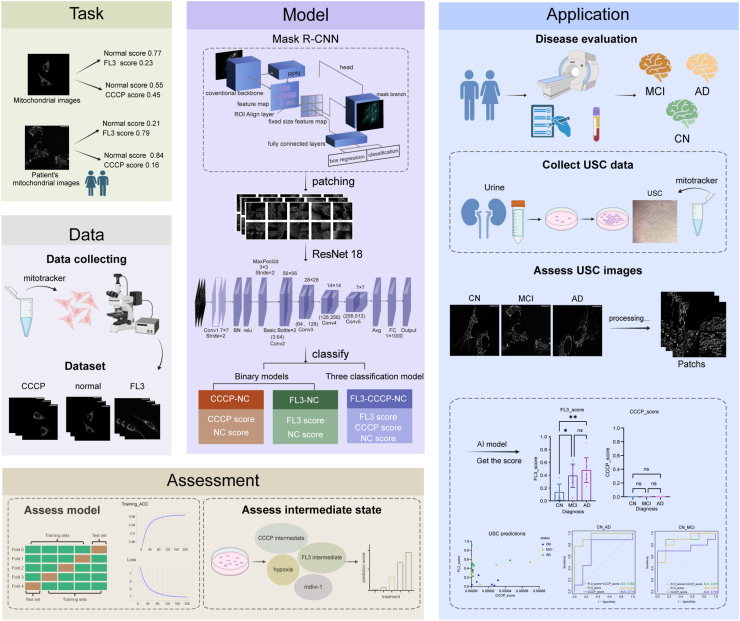 Figure 1
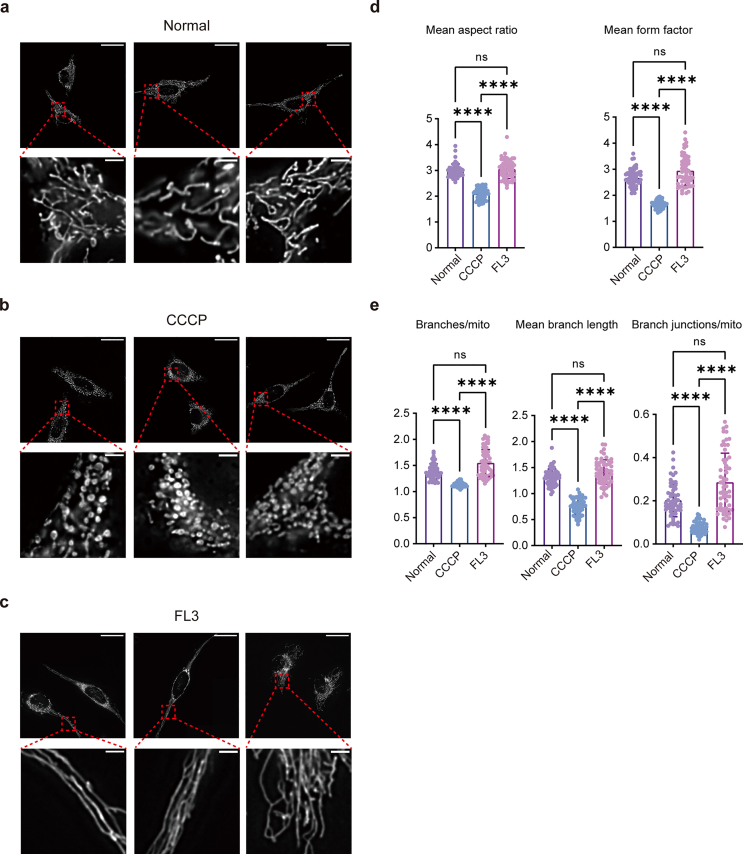 Figure 2
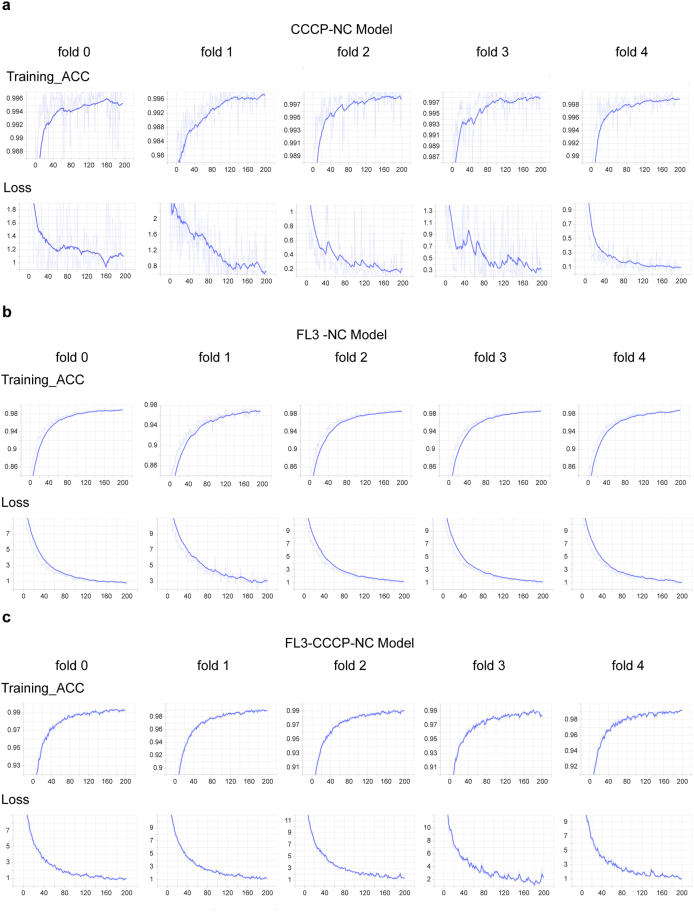 Figure 3
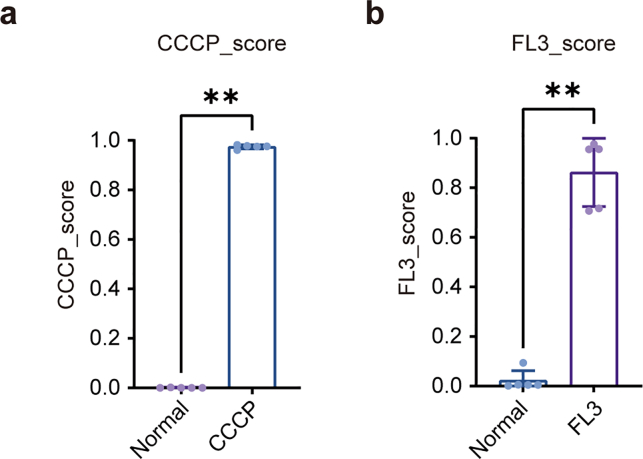 Figure 4
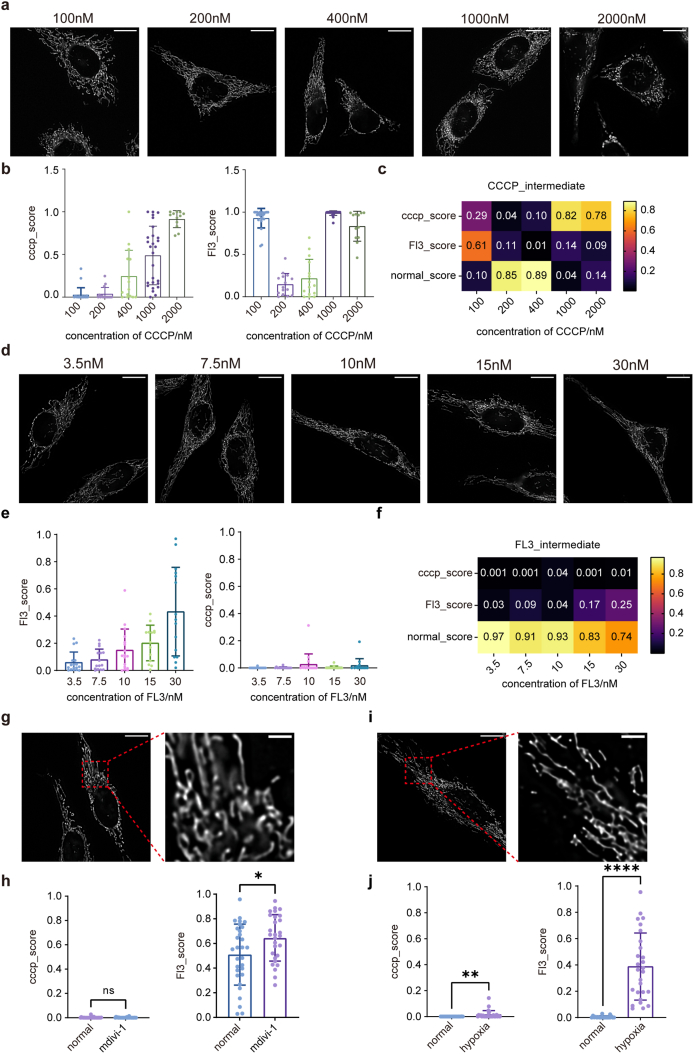 Figure 5
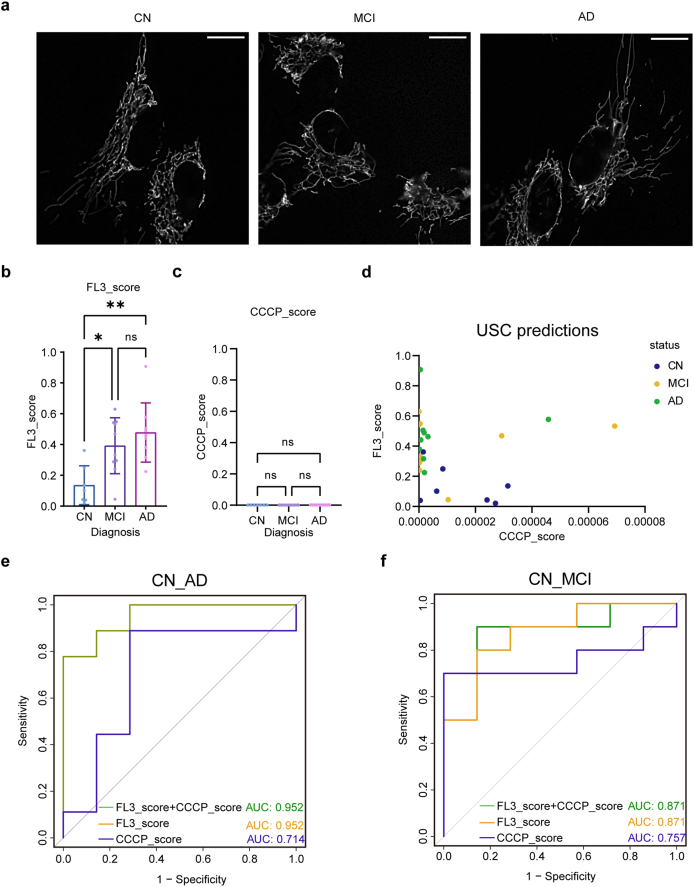 Figure 6
Peer Reviews
No public reviews on file for this paper yet. If you reviewed it on a platform where reviews are public (OpenReview, ICLR, NeurIPS, ICML), you can paste yours below so the community can read it here.
Videos
No videos yet. Explain this paper in a talk, walkthrough, or lecture? Add one.
Taxonomy
TopicsMitochondrial Function and Pathology · Dementia and Cognitive Impairment Research · Alzheimer's disease research and treatments