A 16-amino acid peptide delays the progression of motor neuron degeneration and pathogenic symptoms in ALS models
Cheng-Yung Lin, Bing-Chang Lee, Po-Hsiang Zhang, Shao-Chi Lu, Wei-Zen Chang, Chia-Chuan Wang, Huai-Jen Tsai

TL;DR
A 16-amino acid peptide delays motor neuron degeneration and improves symptoms in models of amyotrophic lateral sclerosis (ALS).
Contribution
The discovery of two 16-amino acid peptides that mimic the neuroprotective effects of full-length Pgk1 in ALS models.
Findings
FD-1 and FD-2 peptides reduce p-Cofilin and promote neurite outgrowth in ALS-like NSC34 cells.
FD peptides rescue axonal growth and motor function in zebrafish and improve survival in ALS mice.
FD peptides delay neuromuscular junction denervation and preserve motor neuron cell bodies in ALS models.
Abstract
Amyotrophic lateral sclerosis (ALS) is a progressive motor neurons (MNs) degenerative disease. Despite advancements in understanding ALS pathogenesis, drug development lags far behind. The reduced secretion of phosphoglycerate kinase 1 (Pgk1) by NogoA-overexpressing muscle cells inhibits neurite outgrowth of MNs (NOMNs). However, administration of extracellular Pgk1 (ePgk1) reduces phospho-Cofilin (p-Cofilin), a growth cone collapse marker, and mitigates MN degeneration. This improves NOMNs in NSC34 neural cells and locomotion in SOD1-G93A ALS-mice by suppressing the p-P38-T180/p-MK2-T334/p-Limk1-S323/p-Cofilin-S3 signaling pathway. Here, we identified two Pgk1-based 16-amino acid (aa) short peptides, FD-1 and FD-2, with neuroprotective effects equivalent to those of full-length ePgk1. Administration of FD-1 or FD-2 (FD-1/-2) reduced p-Cofilin and promoted NOMNs in NSC34 cells cultured…
Genes, proteins, chemicals, diseases, species, mutations and cell lines named across the full text — each resolved to its canonical identifier and authoritative record.
Click any figure to enlarge with its caption.
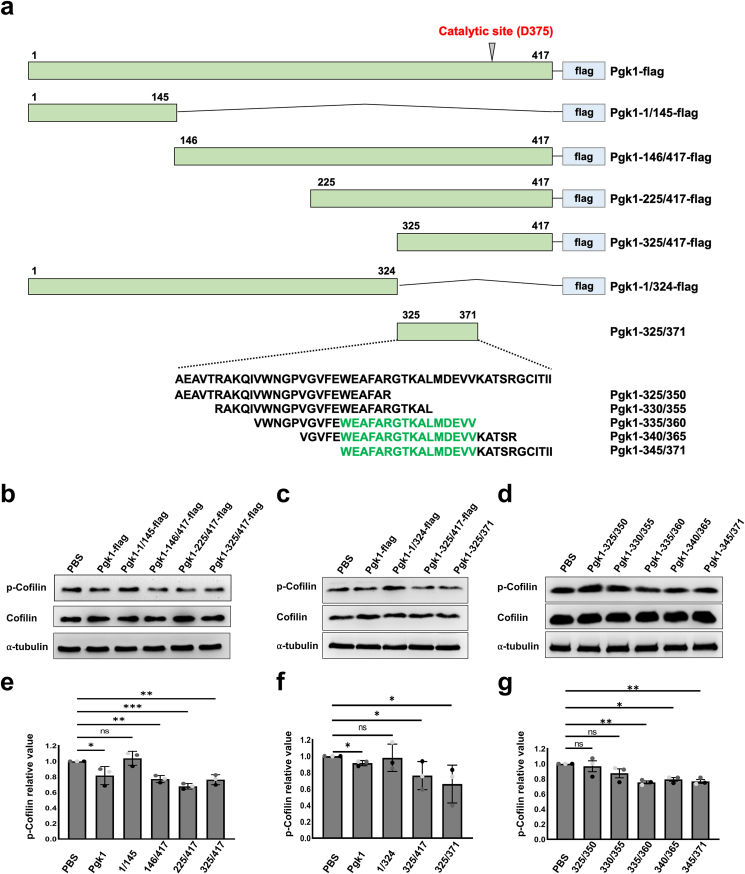 Figure 1
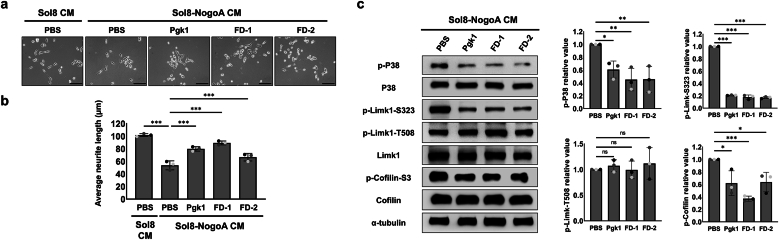 Figure 2
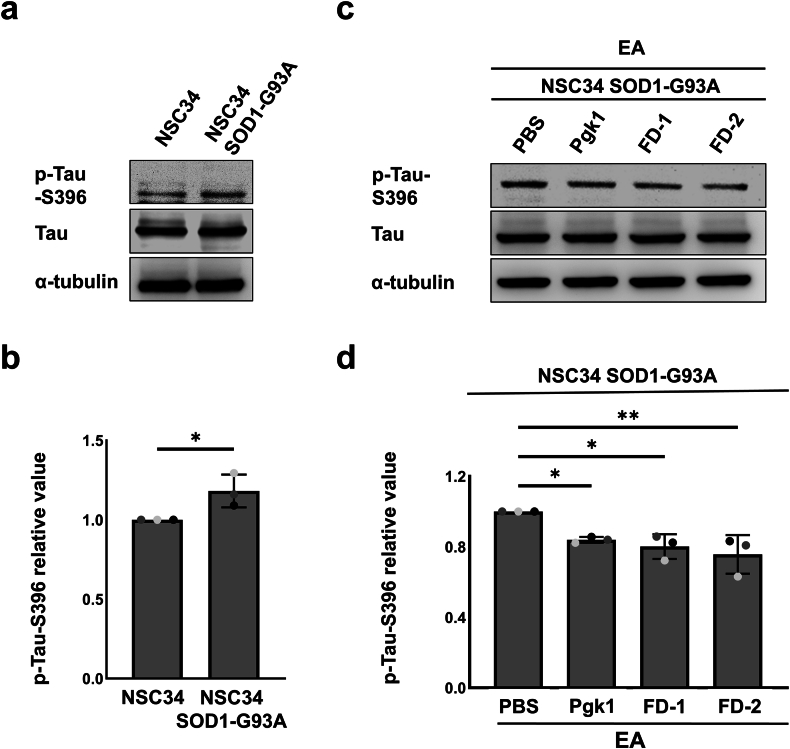 Figure 3
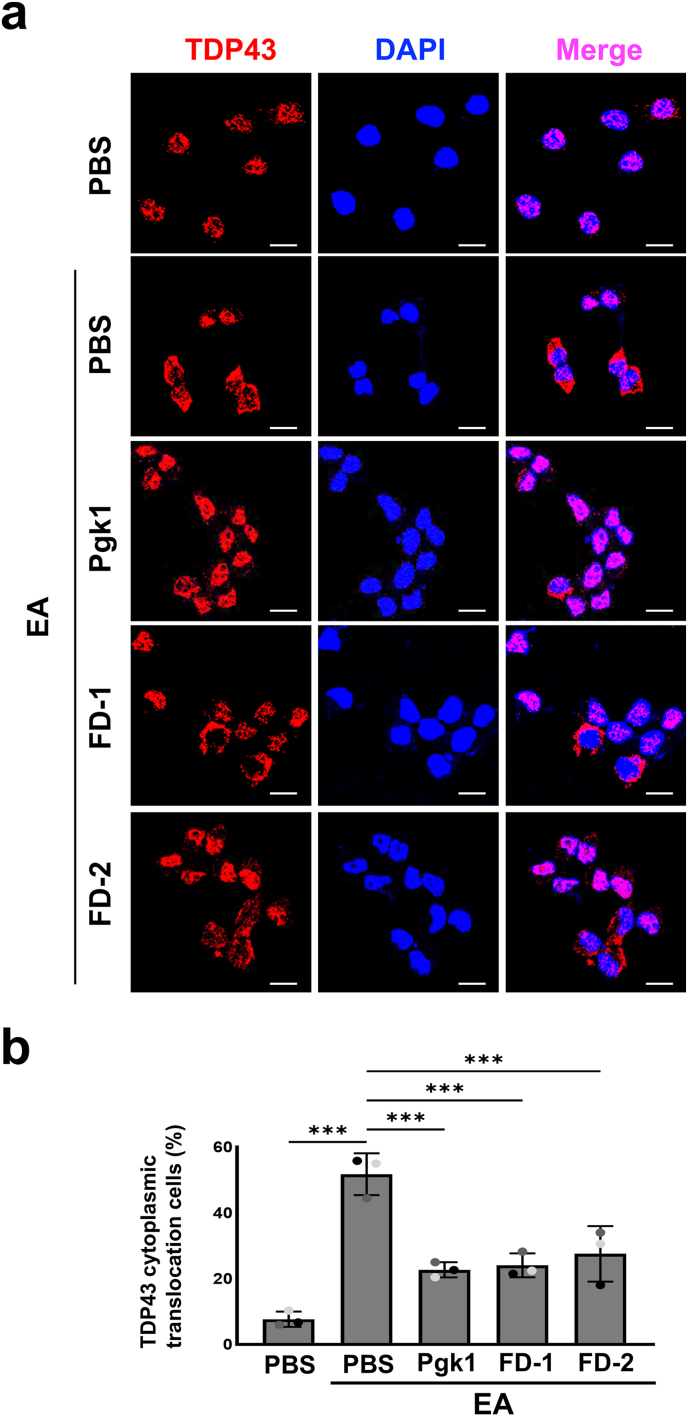 Figure 4
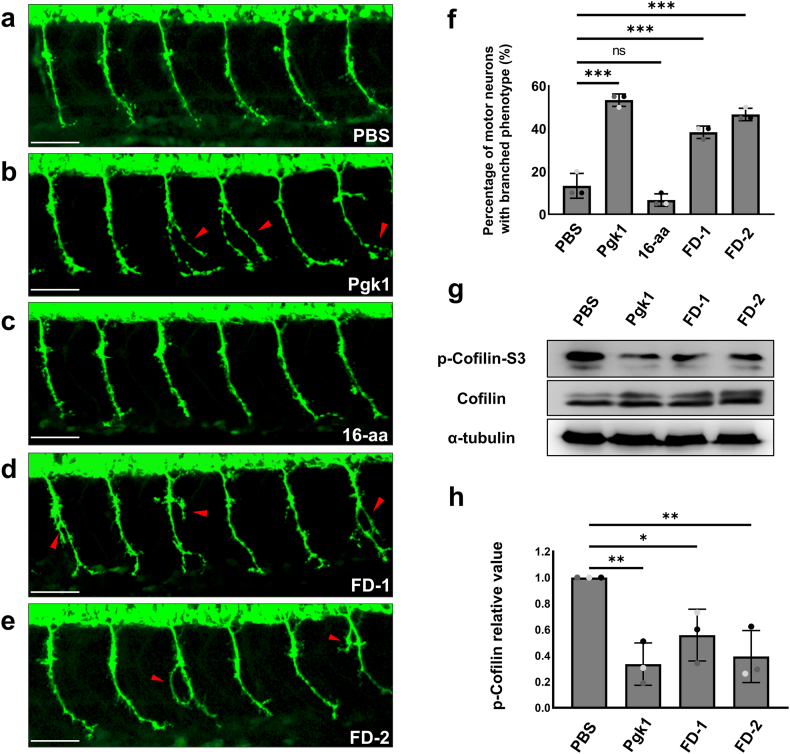 Figure 5
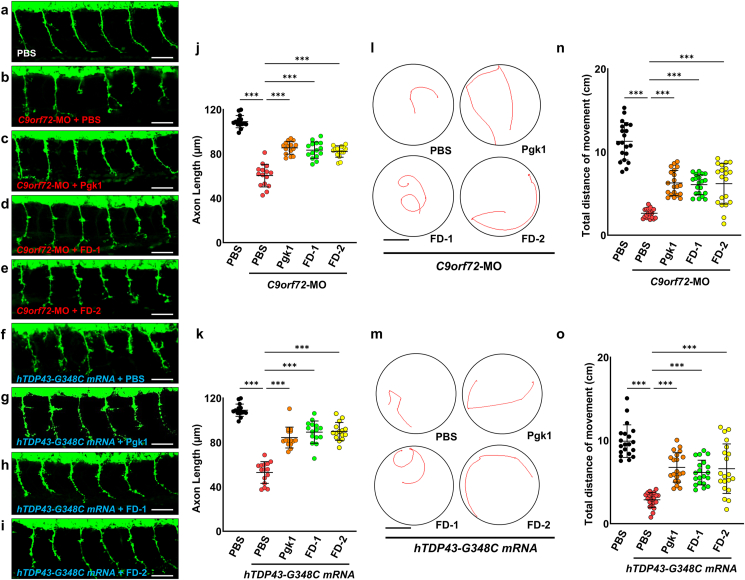 Figure 6
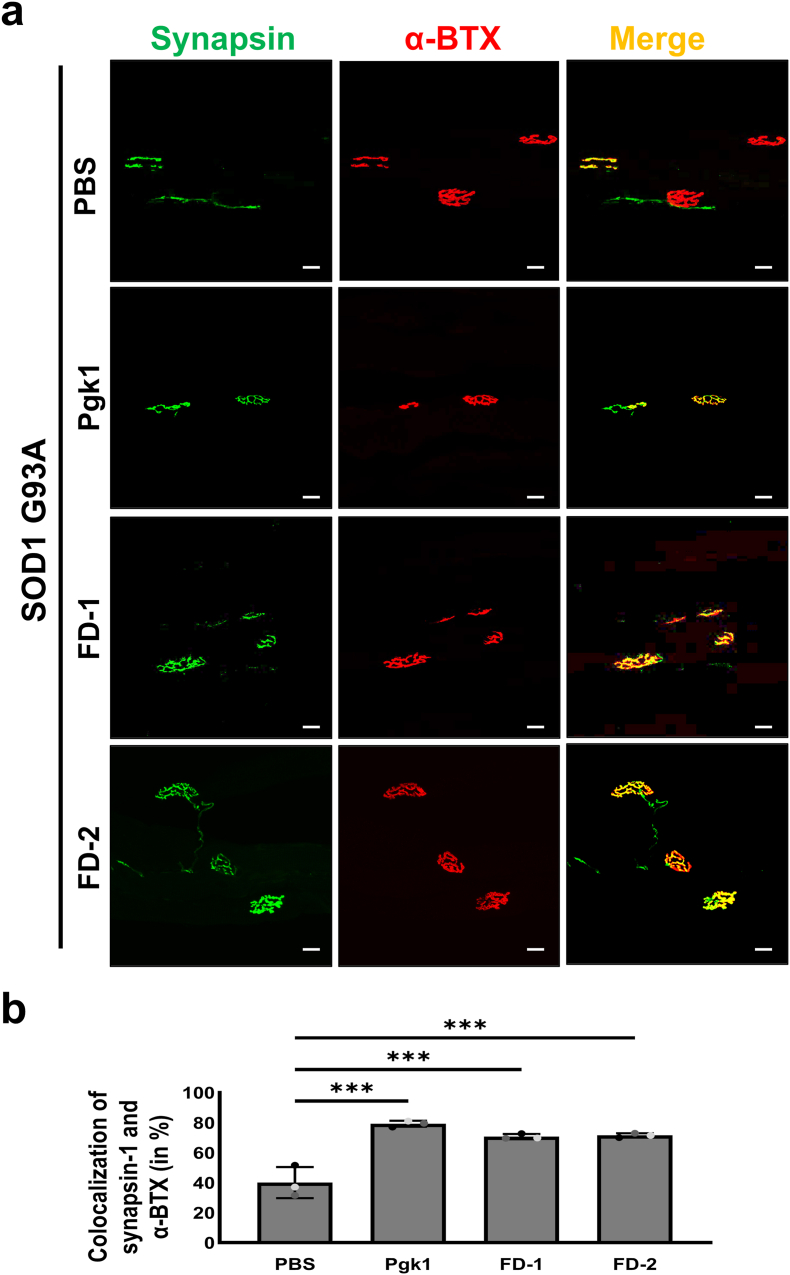 Figure 7
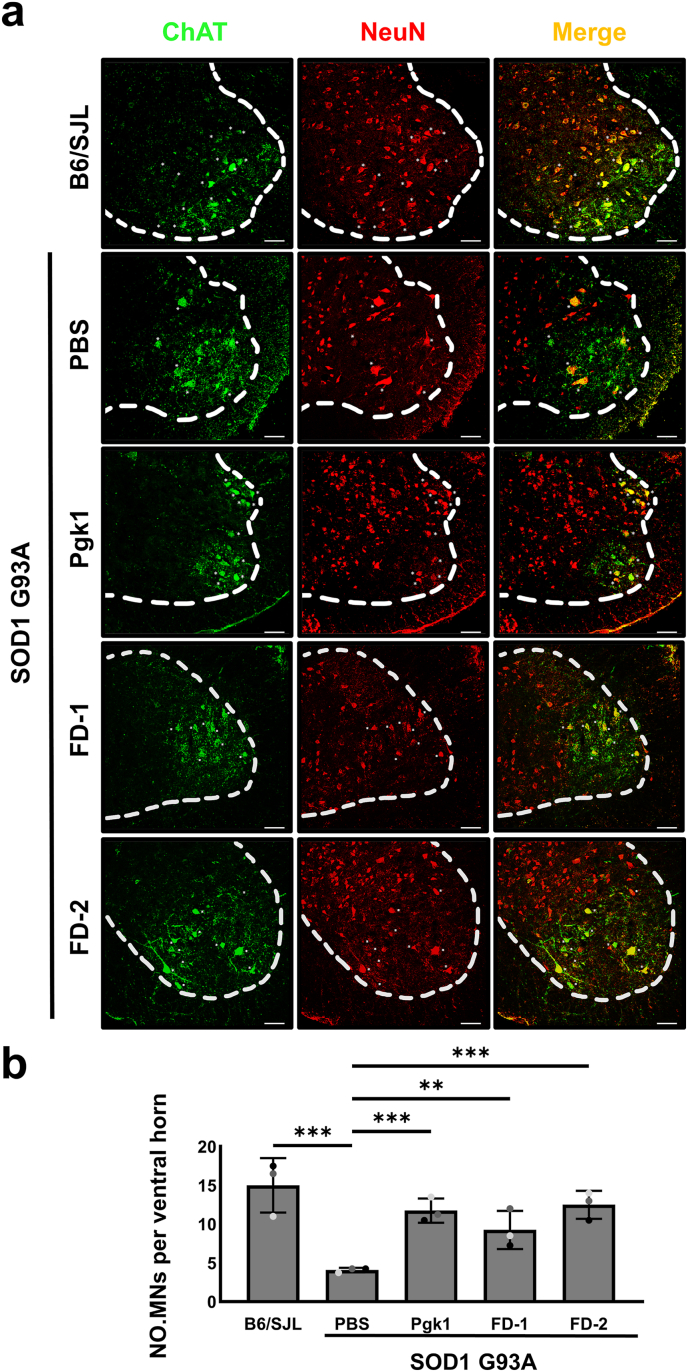 Figure 8
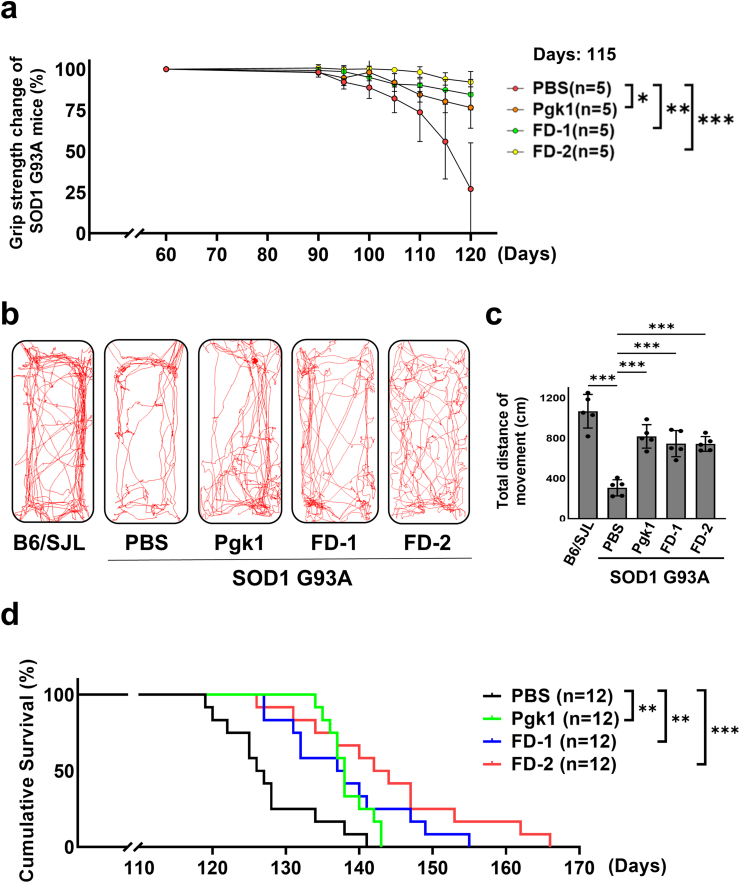 Figure 9
Peer Reviews
No public reviews on file for this paper yet. If you reviewed it on a platform where reviews are public (OpenReview, ICLR, NeurIPS, ICML), you can paste yours below so the community can read it here.
Videos
No videos yet. Explain this paper in a talk, walkthrough, or lecture? Add one.
Taxonomy
TopicsAmyotrophic Lateral Sclerosis Research · Alzheimer's disease research and treatments · Neurogenetic and Muscular Disorders Research