Vebreltinib for Previously Treated Astrocytoma, IDH-Mutant, Grade 4, and Glioblastoma, IDH Wild-Type with PTPRZ1–MET Fusion Gene: A Multicenter, Phase III Randomized, Open-Label Trial
Zhaoshi Bao, Yake Xue, Yanhui Liu, Shouwei Li, Liang Wang, Yan Qu, Yonggao Mou, Rutong Yu, Jinsong Wu, Yu Yao, Kai Shu, Guangyuan Hu, Linbo Cai, Wenbin Li, Xiaoguang Qiu, Yunqian Li, Lei Zhang, Songtao Qi, Ying Ji, Chunxiao Ma, Wenbin Ma, Gang Li, Rongjie Tao, Chongran Sun

TL;DR
Vebreltinib, a drug targeting a specific genetic fusion, significantly improved survival in patients with certain types of brain cancer compared to standard treatments.
Contribution
This is the first Phase III trial showing vebreltinib's effectiveness in treating high-grade gliomas with the PTPRZ1–MET fusion gene.
Findings
Vebreltinib significantly increased median overall survival compared to control treatment (6.3 vs. 3.4 months).
In the IDH-mutant subgroup, vebreltinib extended survival to 7.7 months versus 3.3 months with control.
The drug showed a manageable safety profile with no treatment-related deaths.
Abstract
Background: High-grade gliomas, including isocitrate dehydrogenase (IDH)-mutant astrocytoma and IDH wild-type glioblastoma, have a poor prognosis and limited treatment options. The PTPRZ1–MET (ZM) fusion gene is a potential therapeutic target. This study evaluated vebreltinib, a highly selective, adenosine-triphosphate-competitive inhibitor of the mesenchymal–epithelial transition factor (MET), in patients with ZM-fusion-positive glioma. Methods: In this multicenter, open-label ZM FUsion GENe (FUGEN) trial, patients with previously treated astrocytoma, IDH-mutant, grade 4, or glioblastoma, IDH wild-type, harboring the ZM fusion were randomized in a 1:1 ratio to receive vebreltinib (300 mg orally twice daily) or control treatment (temozolomide or cisplatin plus etoposide) in 28-d cycles. The primary end point was overall survival (OS). Key secondary end points included progression-free…
Genes, proteins, chemicals, diseases, species, mutations and cell lines named across the full text — each resolved to its canonical identifier and authoritative record.
Click any figure to enlarge with its caption.
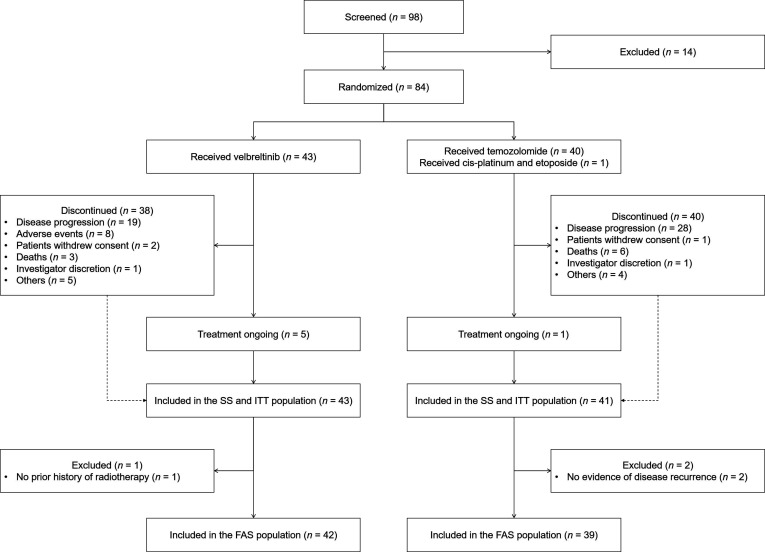 Figure 1
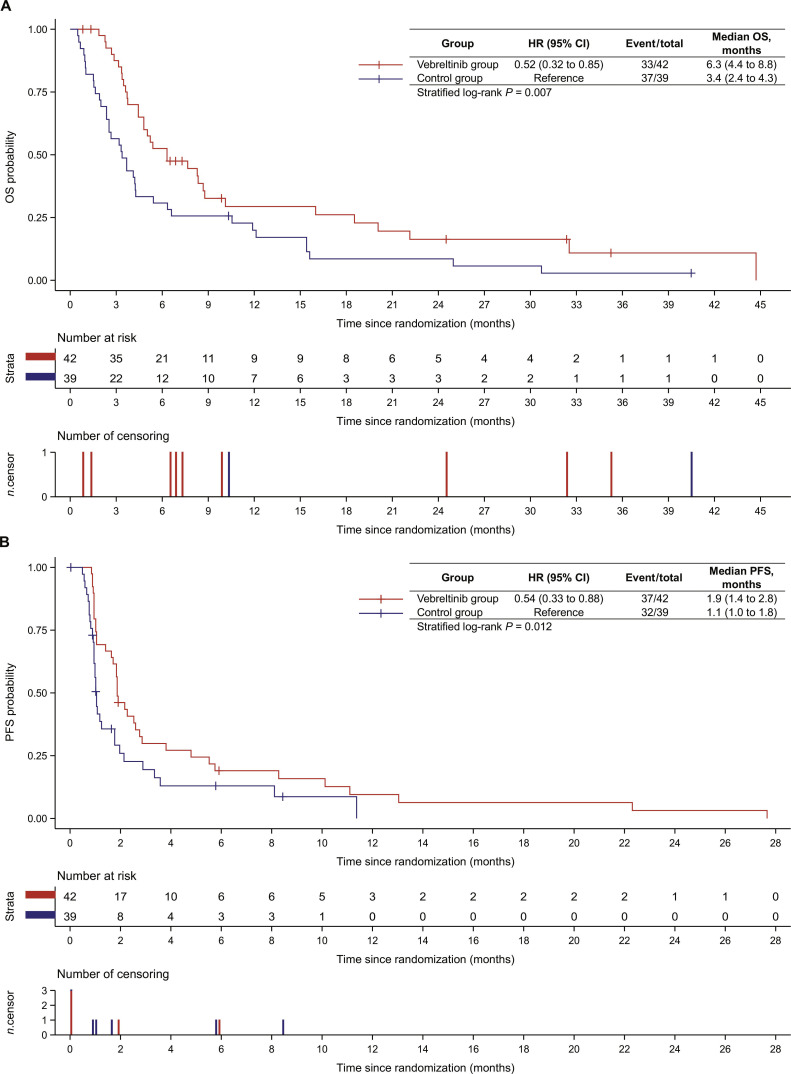 Figure 2
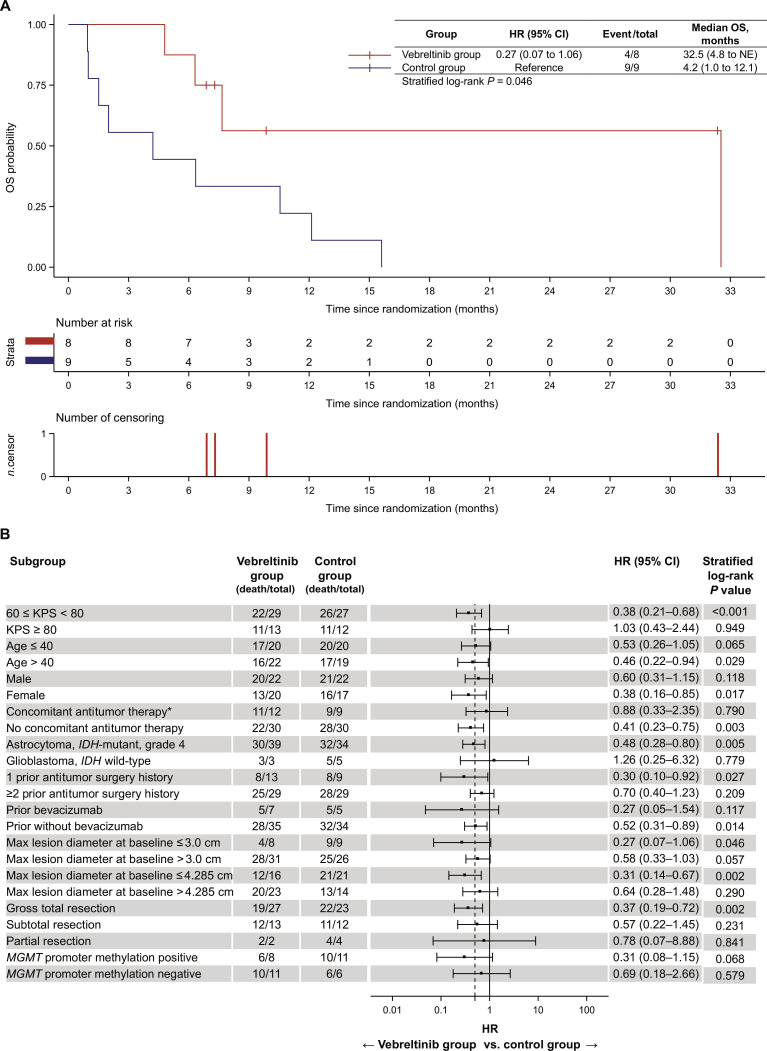 Figure 3
Peer Reviews
No public reviews on file for this paper yet. If you reviewed it on a platform where reviews are public (OpenReview, ICLR, NeurIPS, ICML), you can paste yours below so the community can read it here.
Videos
No videos yet. Explain this paper in a talk, walkthrough, or lecture? Add one.
Taxonomy
TopicsGlioma Diagnosis and Treatment · Peptidase Inhibition and Analysis · Neuroblastoma Research and Treatments