Reduced serum and skeletal muscle MOTS c levels in women with polycystic ovary syndrome are associated with mitochondrial dysfunction
Irem Sonmezoglu Kutuk, Senay Akin, Haydar Demirel, Sezcan Mumusoglu, Turkmen Ciftci, Bulent Okan Yildiz

TL;DR
Women with polycystic ovary syndrome have lower levels of MOTS-c in their blood and muscles, which may be linked to mitochondrial dysfunction and metabolic issues.
Contribution
This study is the first to show reduced MOTS-c levels in both serum and skeletal muscle in PCOS patients.
Findings
PCOS patients had significantly lower serum MOTS-c levels compared to healthy controls.
Skeletal muscle MOTS-c expression was also reduced in PCOS patients.
Lower MOTS-c levels were associated with higher testosterone and cholesterol in PCOS patients.
Abstract
Polycystic ovary syndrome (PCOS) is characterized by insulin resistance and metabolic dysfunction. Mitochondrial-derived peptides (MDPs), including MOTS-c, regulate glucose homeostasis and skeletal muscle metabolism. Whether MOTS-c expression is altered in PCOS across different physiological compartments remains unknown. The aim was to assess circulating and skeletal muscle MOTS-c levels in women with PCOS and to examine their associations with metabolic and hormonal parameters. Forty women with PCOS and 40 age- and BMI-matched healthy controls underwent clinical, biochemical, and hormonal phenotyping. Serum MOTS-c concentrations were quantified by ELISA. In a representative subgroup, skeletal muscle MOTS-c expression was assessed in vastus lateralis biopsy specimens using Western blotting. Women with PCOS exhibited lower circulating MOTS-c concentrations compared with controls (220.2 ±…
Genes, proteins, chemicals, diseases, species, mutations and cell lines named across the full text — each resolved to its canonical identifier and authoritative record.
Click any figure to enlarge with its caption.
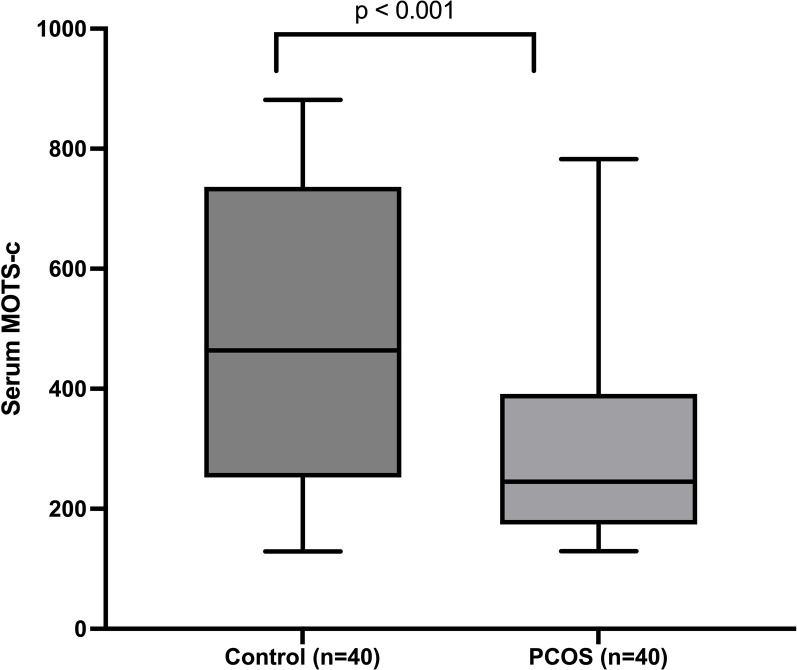 Figure 1
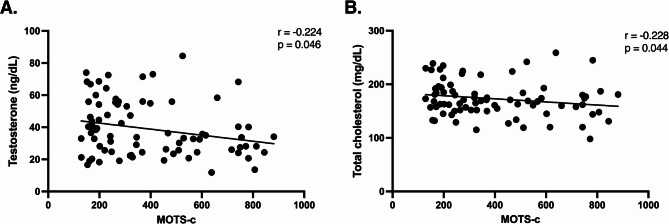 Figure 2
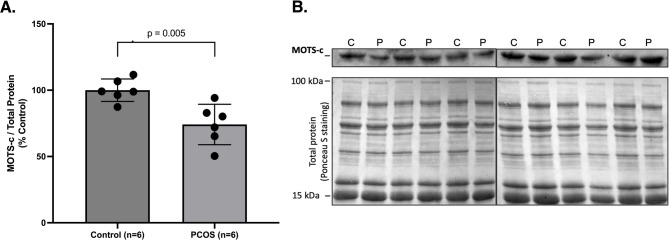 Figure 3
Peer Reviews
No public reviews on file for this paper yet. If you reviewed it on a platform where reviews are public (OpenReview, ICLR, NeurIPS, ICML), you can paste yours below so the community can read it here.
Videos
No videos yet. Explain this paper in a talk, walkthrough, or lecture? Add one.
Taxonomy
TopicsGDF15 and Related Biomarkers · Apelin-related biomedical research · Inflammation biomarkers and pathways