Over 1.65 GW cm−2 sr−1 brightness 590 nm yellow second-harmonic generation in MOCVD-grown high-strain InGaAs/GaAs quantum well VECSEL
Zhicheng Zhang, Wenbo Zhan, Yao Xiao, Chen Luo, Hao Zhou, Wenfan Yang, Yang Cheng, Hao Yu, Quanling Li, Xiao Li, Chaofan Zhang, Jun Wang

TL;DR
This paper presents a high-brightness yellow laser using MOCVD-grown InGaAs quantum wells, achieving record performance for applications like atomic cooling and optogenetics.
Contribution
The study introduces a novel MOCVD growth strategy for high-strain InGaAs quantum wells, enabling efficient yellow second-harmonic generation with exceptional brightness.
Findings
MOCVD-grown gain chips produced over 45 W output power with >50% slope efficiency.
Yellow SHG achieved 6.2 W at 590 nm with 17% slope efficiency and near-diffraction-limited beam quality.
Brightness of ~1.65 GW cm−2 sr−1 was attained, the highest reported for yellow lasers.
Abstract
High-brightness yellow lasers are in high demand for applications such as atomic cooling and trapping, optogenetics, and sodium laser guide stars. Herein, we demonstrate the potential of Metal-Organic Chemical Vapor Deposition (MOCVD) for the rapid mass production of high-strain 1.2 μm InGaAs quantum well vertical external cavity surface emitting lasers (VECSELs). Two distinct growth strategies were explored, with a primary focus on enhancing crystal thermal stability and mitigating indium segregation. The as-grown gain chips achieved over 45 W of output power and a slope efficiency exceeding 50%. Furthermore, we verified the feasibility of generating yellow second harmonic generation (SHG), attaining a 590 nm CW power of ~6.2 W with a slope efficiency of 17%. The beam quality factor (M²) was <1.1, approaching diffraction-limited performance, corresponding to a brightness of ~1.65 GW…
Genes, proteins, chemicals, diseases, species, mutations and cell lines named across the full text — each resolved to its canonical identifier and authoritative record.
Click any figure to enlarge with its caption.
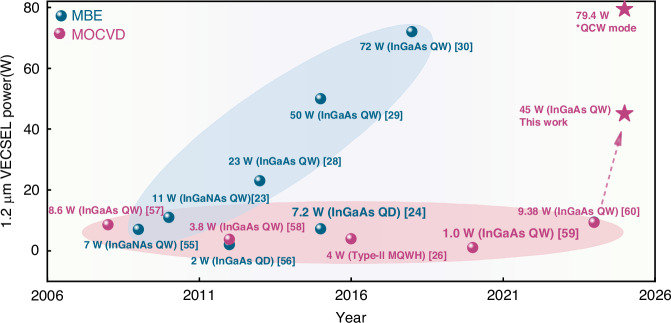 Figure 10
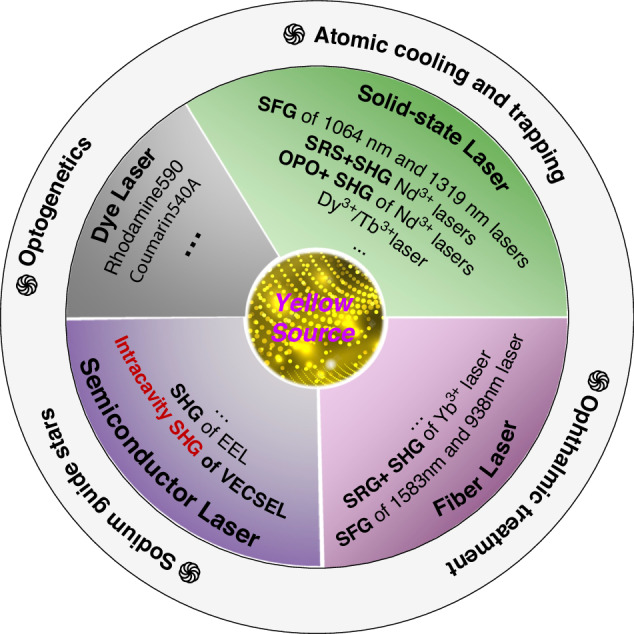 Figure 1
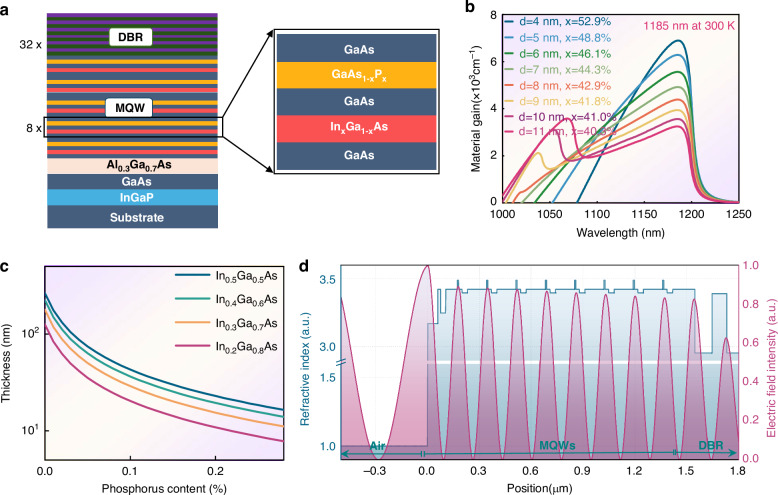 Figure 2
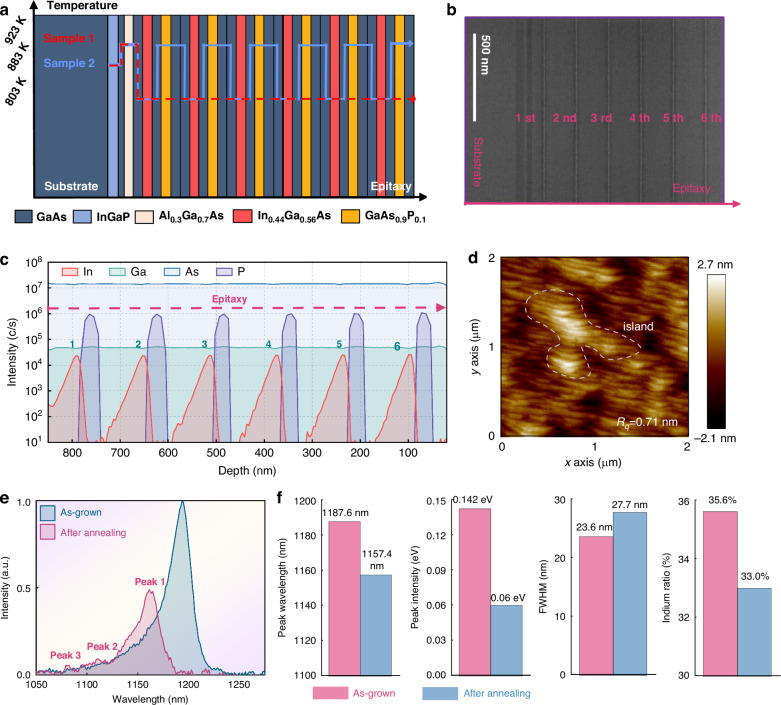 Figure 3
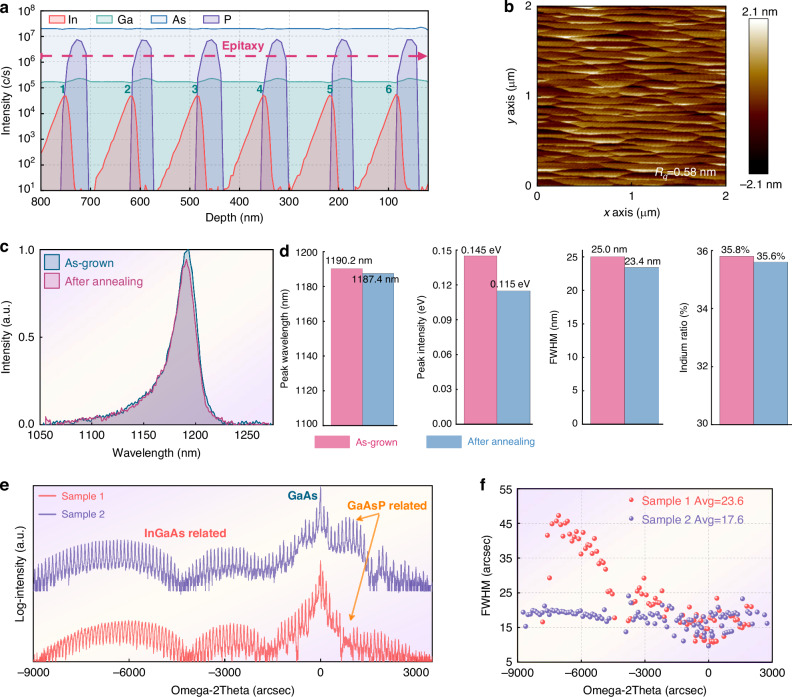 Figure 4
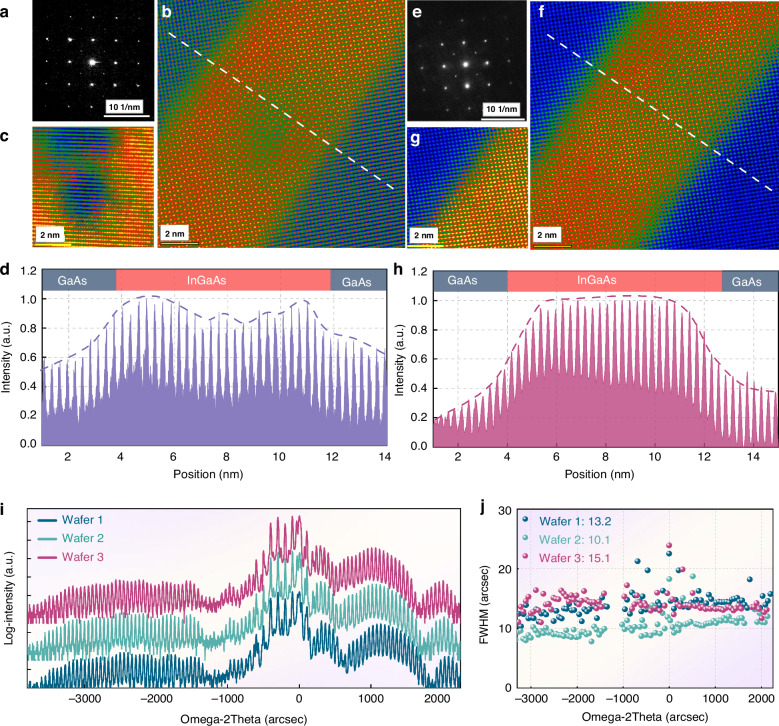 Figure 5
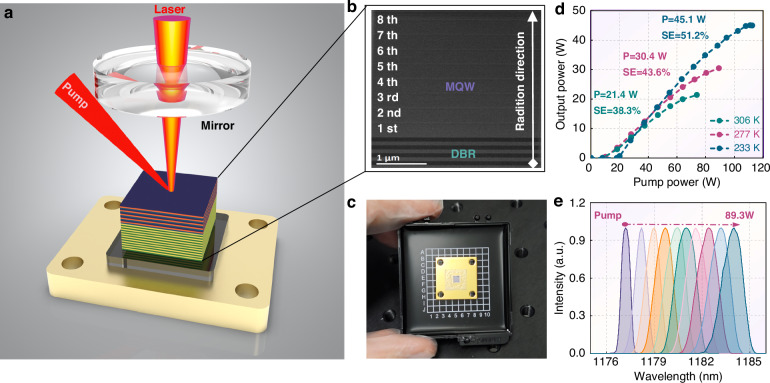 Figure 6
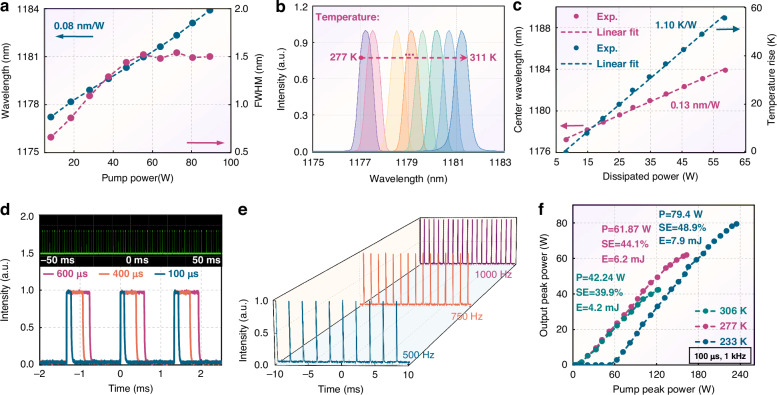 Figure 7
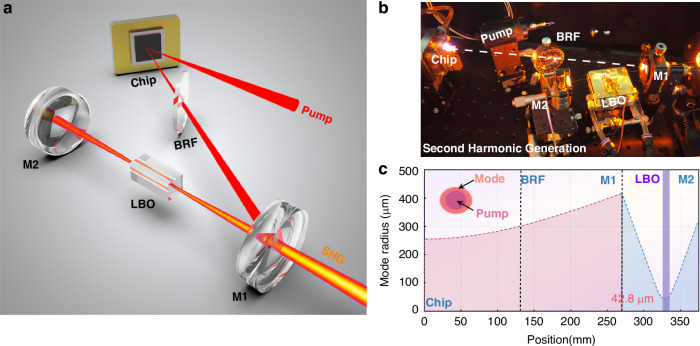 Figure 8
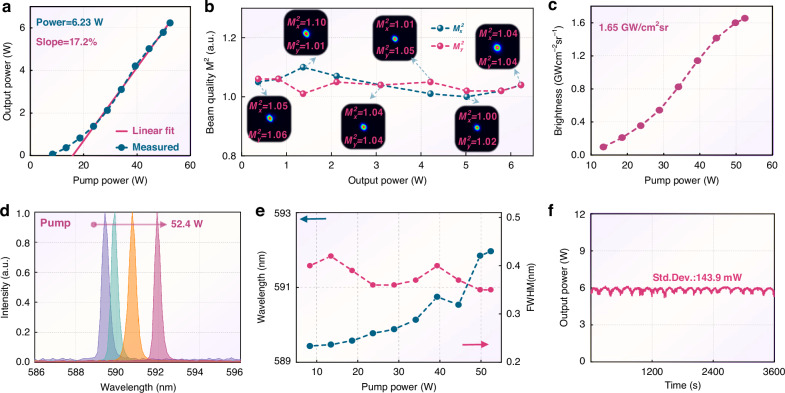 Figure 9
Peer Reviews
No public reviews on file for this paper yet. If you reviewed it on a platform where reviews are public (OpenReview, ICLR, NeurIPS, ICML), you can paste yours below so the community can read it here.
Videos
No videos yet. Explain this paper in a talk, walkthrough, or lecture? Add one.
Taxonomy
TopicsOptical properties and cooling technologies in crystalline materials · Semiconductor Lasers and Optical Devices · Semiconductor Quantum Structures and Devices